Astemo Americas plans expansion of two manufacturing sites in Kentucky. Chobani announced its first production plant in Pennsylvania. The framework has been established for Cleveland-Cliffs to begin upgrades at its steel plant in Ohio.
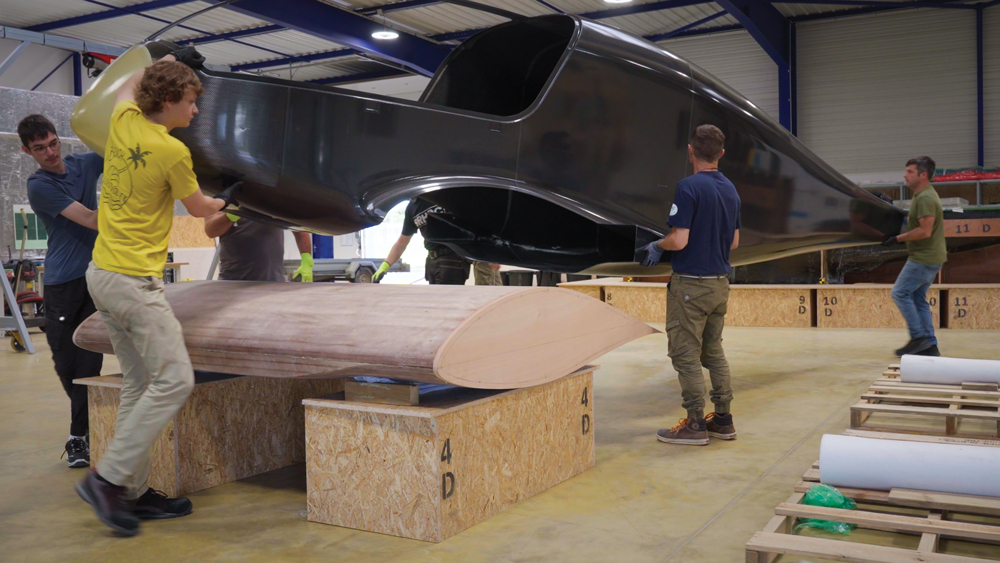
Leaders at Climate Impulse and Syensqo talk to us about the innovation that will help Climate Impulse make the world’s first non-stop, zero-emission flight around the globe, powered entirely by green hydrogen, thus demonstrating the EU’s twin commitments to industrial strength and to sustainability.
Workforce housing projects continue to rise from coast to coast. Last week, Miami-based development firm DFRE announced The Triangle (rendering above), a $35 million mixed-use workforce housing development designed by ODP Architects that will bring 112 rental residences to Miami’s Health District. DFRE said the project “will provide thoughtfully designed, attainable housing within close proximity to the district’s major employers and transit connections.
“The development comes as Miami-Dade County faces a need for approximately 35,000 additional workforce housing units to address the growing gap between housing costs and local incomes, a challenge particularly relevant in the Health District, which supports more than 46,000 jobs across healthcare, institutional and other essential sectors,” DFRE’s release explained. “The Triangle is being developed under Florida’s Live Local Act, with all 112 rental residences income-restricted to households earning up to 120% of Area Median Income (AMI).”
More than 3,000 miles to the west in Marin County, California, the Point Reyes Workforce Housing Project — led by the County of Marin, the Community Land Trust Association of West Marin (known as CLAM), and a group of pro-bono service providers including architect and structures firm the Office of Charles F. Bloszies — is addressing a very specific housing challenge as the ending of commercial cattle business on 12 ranches at the Bay Area seashore by the National Park Service left more than 100 workers at the ranches and other firms in the community without homes.
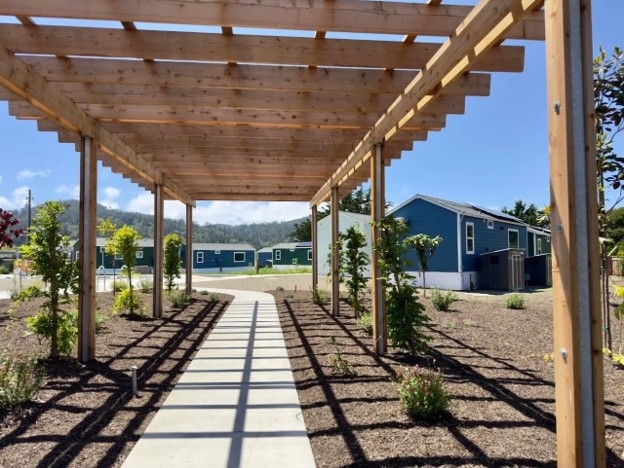
“We’re familiar with the challenges of dealing with a true housing crisis,” says architect Mark Warren, an associate with Bloszies’s firm, in a release. “We immediately set out to design a fast and sustainable way to create effective temporary solutions that could transition to long-term uses on an available one-acre site, including infrastructure such as septic systems, paved walkways and site improvements for future reuse with new permanent housing.” The initial solution supplied temporary prefab cottages and a pergola (see below) pointing toward the small town of Point Reyes Station. “Limited by the site’s infrastructure capacity, the light-footprint site concept with 14 units appeals to the low-key community and its many engaged, activist citizens,” the release explained. “The team was able to acquire, permit and construct their initial solution in less than a year, which local officials hailed as ‘record time.’ ”
The Office of Charles F. Bloszies has recently created the NowHouse Housing System, a low-cost, fast-deploying and reusable “tiny home” concept for solving national and regional issues of affordability and lack of housing. “Inspired by the 1906 San Francisco earthquake cottage, NowHouse can be installed by local contractors using the same kit of parts,” the release explained.
In 2025, Mississippi exported $14.2 billion in goods, a 3.6% increase from the previous year and a nearly 40% increase from $10.2 billion in 2020. The state’s ports and the industrial infrastructure near them are a big reason why.
Mississippi has long offered a range of tools for companies considering new investment or expansion in the state. MFLEX, the Mississippi Flexible Tax Incentive Plan, is designed to make that toolbox easier to use.
Bosch’s $2 billion investment at the company’s site in Roseville, California (part of the Greater Sacramento area), helped by the Section 48D Advanced Manufacturing Investment Credit, is one of dozens of major projects supported by the CHIPS and Science Act.
Photo courtesy of Bosch
In August, SEMI released a statement from its President and CEO Ajit Manocha commending, on behalf of the semiconductor supply chain, reaffirmed support from Senate Finance Committee Chairman Mike Crapo (R-ID) and Ranking Member Ron Wyden (D-OR) for the Section 48D Advanced Manufacturing Investment Credit (AMIC). Enacted under the CHIPS and Science Act, the Section 48D credit provides a refundable 35% tax credit for qualified investment in semiconductor and semiconductor manufacturing equipment facilities and has helped catalyze hundreds of billions of dollars in announced U.S. semiconductor investment across 28 states, says SEMI.
Under current law, facilities must begin construction by December 31, 2026, to qualify, which “is out of step with the multi-year timelines required to site, permit, finance and build a semiconductor facility,” says SEMI, which is pushing for a multi-year extension of Section 48D ahead of the construction deadline and a strengthening of the credit by expanding eligibility to cover more of the full semiconductor supply chain, including materials, specialty chemicals and gases, and design activities.
Photo by D. Gouliermis courtesy of ESA/Hubble & NASA
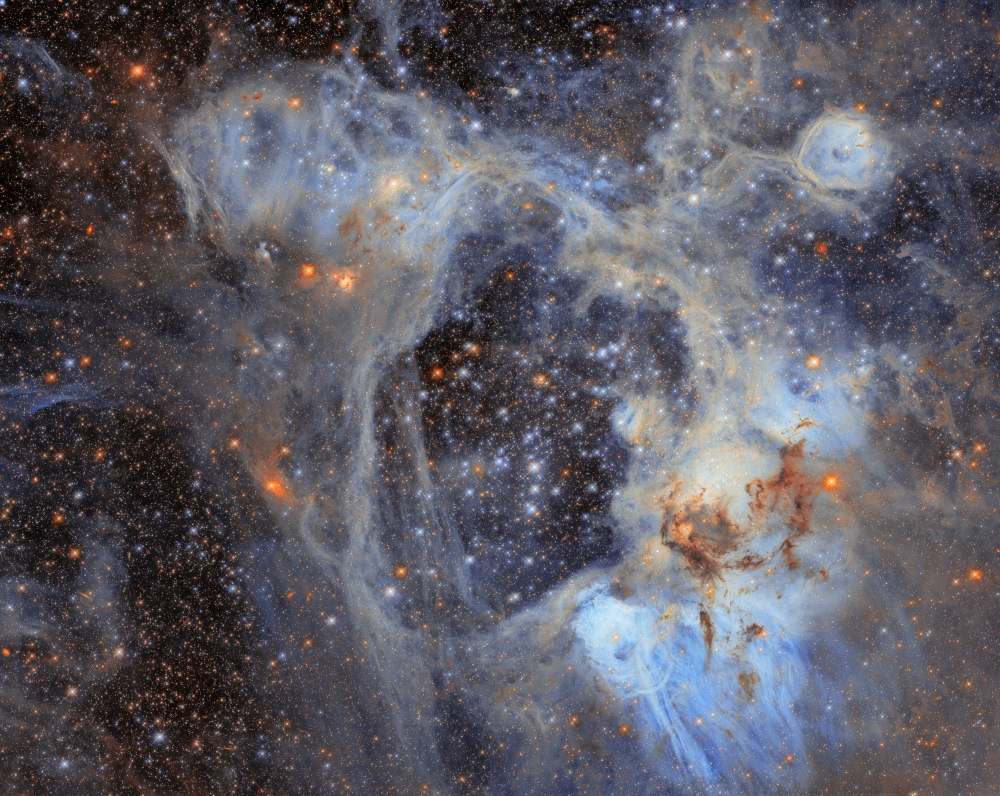
The Large Magellanic Cloud (LMC) is the largest of the small galaxies that orbit our Milky Way galaxy, says the European Space Agency of this recently captured image. “At just 160,000 light-years away, the LMC offers a close look at highly active stellar birth sites like the nebula shown here. This nebula is named LHA 120-N44, or N44 for short, and it’s located in the constellation Dorado.”
The ESA says the central void in the nebula is a “superbubble” spanning roughly 210 by 140 light-years. “Researchers used Hubble to survey N44 and take a census of its stars, cataloguing nearly half a million stars within the cluster as well as interlopers drifting in front of it.”
The gas shell surrounding the superbubble is energized by ultraviolet radiation from massive stars, causing it to glow and highlighting several distinct features, the agency says. “Each feature within the broader N44 star-forming complex was catalogued by astronomer Karl Henize in the 1950s.”