Come hungry for agtech and food manufacturing investment in the Prairie State.
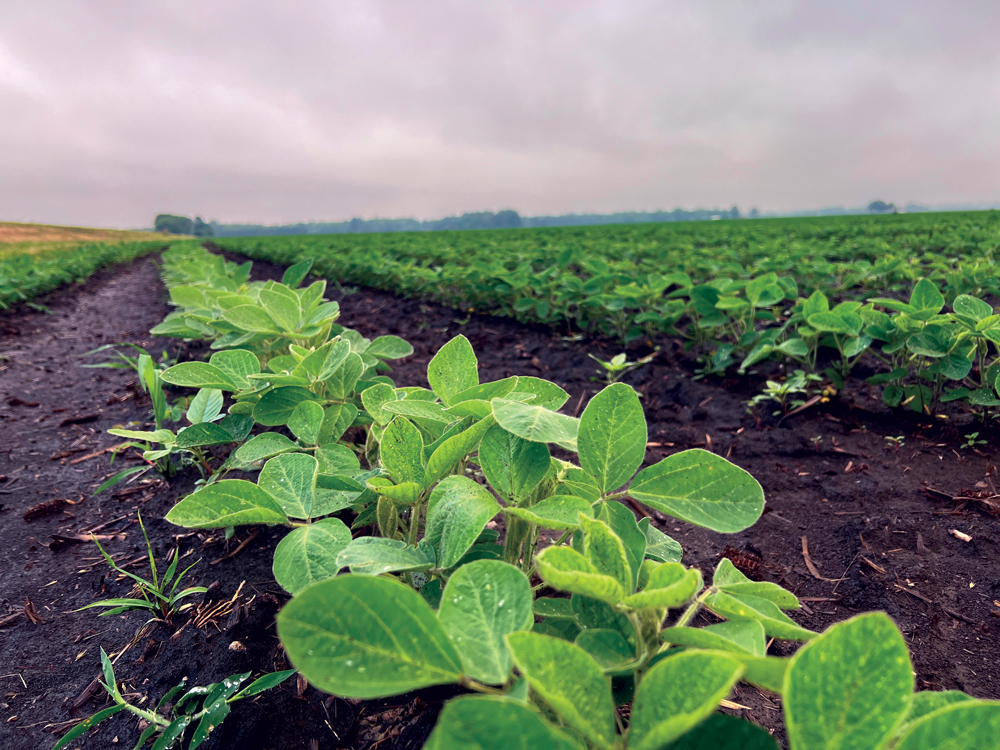
Soybeans, pumpkins and horseradish all have one thing in common and it’s where they take root — in Illinois. The state is the No. 1 producer of this tasty spread of crops. It’s also No. 2 for corn, No. 4 for hogs and No. 10 in wheat. Over 71,000 farms populate the perfectly nicknamed Prairie State, which has an agricultural sector valued at about $26 billion and exports between $11 billion and $14 billion in agricultural products yearly.
The local food supply chain in the state is also receiving investment — the Illinois Department of Agriculture awarded nearly $4 million to support Illinois farms, agrifood businesses and nonprofits for FY2026 under the Local Food Infrastructure (LFI) grant program, which was developed to strengthen local Illinois producers and food businesses.
“The Local Food Infrastructure Grant reflects our commitment to supporting Illinois agriculture,” said Illinois Department of Agriculture Director Jerry Costello II when the funding was announced in late July 2026. “These awards will help farmers, food businesses and community partners expand their capacity and reach new markets. When we invest in local food infrastructure, we are creating economic opportunity for businesses while ensuring Illinois residents have greater access to fresh, locally grown foods.”
The recipient of the largest sum from the LFI program this year was NeighborSpace, a nonprofit urban land trust in Chicago that preserves and sustains gardens for local communities. The organization received $205,000 from the LFI grant. Other FY2026 LFI recipients include the Chicago Chesed Fund, which will use its $127,500 in LFI funding to address local food insecurity; Alto Vineyards in Union County; Arrow Farm Meats in Stephenson County; the Eastern Illinois Foodbank and Dandee Flowers in Mercer County.
Fertile Ground for Business
Among the factors contributing to Illinois’ abundant success in agriculture and food: Over 70% of the state’s total land area is farmland with almost 89% of that considered prime farmland due to its extremely nutrient-rich soil. And a world-class multimodal logistics infrastructure enables the shipping of large quantities of food product.
The Ag Coast of America, for example, spans 15 miles on the Mississippi River, and has 16 high-capacity barge transfer sites. The logistical corridor supports the movement of crops from St. Louis Metro Ports to the southwestern part of Illinois. Suppliers and other agribusiness and food industry stakeholders are also supported by the local transport options: four U.S. interstate highways, all major Class I freight railroads, five airports and a large mesh of river port systems all connecting to the Ag Coast of America corridor. Half of U.S. crops and livestock come from within a 500-mile radius of the St. Louis region, where the corridor converges, according to St. Louis Regional Freightway.
One major development for Illinois’ bioeconomy recently came in the form of a $2 billion fertilizer plant in the central part of the state last year. Cronus Chemicals LLC will create 130 new jobs in Tuscola, a significant investment for the state’s agricultural sector that will also strengthen the domestic supply chain of ammonia for fertilizer markets and farmers throughout the Midwest.
Agtech R&D
Central Illinois has another strength when it comes to agtech — the Illinois Fermentation and Agriculture Biomanufacturing Tech Hub (iFAB), led by the University of Illinois Urbana-Champaign, partners with the University’s Integrated Bioprocessing Research Laboratory (IBRL) and operates in the Champaign-Urbana and Decatur regions of the state.
IBRL received financial backing from iFAB for its upcoming IBRL 2.0 expansion, which includes a new 35,000-sq.-ft. facility that will nearly double the lab’s size and enhance its ability to conduct research and industry training in biomanufacturing. The lab will see an increase of 20 to 50 full-time employees, will grow its student training base from 35 to 100 annually and also up its industry trainees from 80 to 180 per year.
iFAB itself is also seeing growth — the hub announced in November 2025 it would double its management team size to meet the growing needs of industry. Seated at the heart of Illinois’ corn and soybean country, iFAB got its start in October 2023 after it was chosen as a Regional Innovation and Technology Hub by the U.S. Economic Development Administration. iFAB, which received a $51 million grant from the U.S. Department of Commerce in early 2024 and $30 million from Illinois overall, has a consortium of 35 members across the precision fermentation and agricultural biomanufacturing industries. iFAB focuses on the “lab-to-line” scaling of local crops and feedstock into sustainable products with multiple commercial applications (i.e., industrial chemicals, alternative proteins, textiles, functional materials).
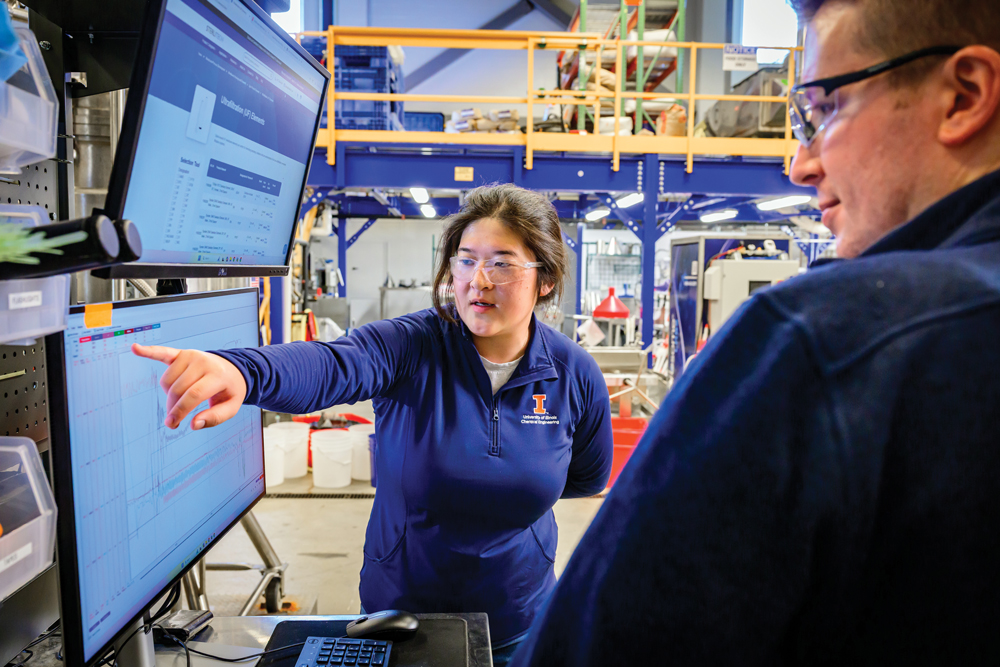
The iFAB Tech Hub, led by the University of Illinois Urbana-Champaign, partners with the University’s Integrated Bioprocessing Research Laboratory (IBRL) and operates in the Champaign-Urbana and Decatur regions of the state.
Image courtesy of iFAB Tech Hub/IBRL
Peoria in Central Illinois is home to the USDA National Center for Agricultural Utilization Research (NCAUR), which focuses on researching new industrial and food uses of agricultural commodities. Sometimes, in the pursuit of science, the scope of discovery goes beyond everyday findings. Dr. Korey Brownstein, a NCAUR chemist and researcher, spent three years with his team of investigators isolating and identifying molecules from a substance found in industrial hemp root. Brownstein’s team partnered with researchers at the Pediatric Oncology Laboratory at the University of Illinois College of Medicine Peoria, who together showed that the isolated hemp root molecules were moderately effective in destroying pediatric cancer cells in a lab.
“We believe this new discovery offers industrial hemp growers a potential new revenue stream from a part of the plant that was previously overlooked,” said Brownstein in January 2026. “Unlike crops such as corn or soybeans, which have multiple uses, hemp has been limited in scope. But if we treat hemp as a multi-use crop, we can expand its applications and market — paper, grain, fiber, and now, potentially, pharmaceutical compounds from the roots. The discovery of these compounds adds value to this commodity.”
Sweetening the Deals
Those with a sweet tooth for corporate expansions would be wise to look at Chicago, which had two developments by major food firms announced in early 2026. Mars Snacking will expand to its global headquarters in the city, which will bring 600 new jobs and add the company’s North America Region, Accelerator Division and Global Functions to the office space.
The North America regional office hub will locate in Chicago’s Fulton Market district, and the Accelerator division’s global office hub will be in downtown Chicago, replacing the former Kellanova global and North America headquarters. Mars Inc. acquired Kellanova, the food and snacking manufacturing multinational corporation formerly part of the Michigan-based Kellogg Company, in a $35.9 billion deal. Kellanova brands now under the Mars Inc. banner include Pringles, Cheez-Its, Pop-Tarts, Eggo and Rice Krispies Treats. The acquisition of Kellanova was announced in August 2024 and completed in December 2025.
“The Chicagoland area offers the best of all worlds for Mars Snacking — a vibrant urban environment, strong communities and access to world-class talent,” said Andrew Clarke, global president, Mars Snacking, when the new hubs were announced. “We are proud to deepen our roots here, advance the Mars Snacking business and continue our long-standing commitment to community engagement and responsible business.”
The Kellogg Co. also saw a split in 2023 with the branch of WK Kellogg Co., which held the company’s iconic cereal brands. In September 2025, chocolate and confectionery company Ferrero SpA acquired WK Kellogg for a little over $3 billion. In April 2026, Ferrero celebrated a new production line at its $75 million Nutella plant in Franklin Park near Chicago.
The brand’s first new flavor, Nutella Peanut, will be made at the site. The product is made with hazelnuts from Oregon and peanuts from Georgia and other Southeastern states, supporting domestic agriculture. “We’re thrilled to see Nutella Peanut roll off the line right here in the U.S.,” said Ferrero North America President and Chief Business Officer Michael Lindsey at the new production line unveiling.
In 1996, Germany-based food company Silesia established the first U.S. sales office in Elk Grove, Illinois. A Silesia production facility in Hoffman Estates was built in 2001, which makes liquid sweet flavors for confectionery, bakery, beverage and dairy products. Silesia Flavors announced last year that it would spend $41 million to open its second U.S. facility in Huntley, Illinois, where it will produce both sweet and savory flavors in both liquid and powder forms. The company broke ground at the new 120,000-sq.-ft. site in June 2025.
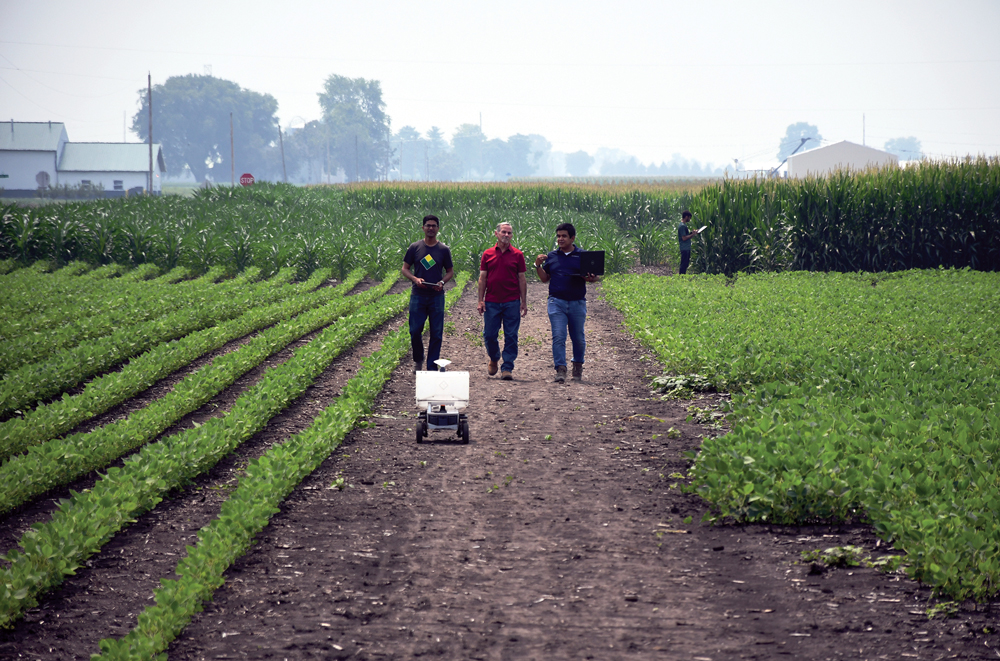
The Illinois Autonomous Farm was launched as a testbed for emerging farming technology.
Photo courtesy of Center For Digital Agriculture/University of Illinois Urbana-Champaign
Growing Autonomously in Illinois
In 2020, The Illinois Autonomous Farm (IAF) was launched at the University of Illinois Urbana-Champaign, run by the Center for Digital Agriculture and the Department of Agricultural and Biological Engineering as a research and innovation testbed for emerging farming technologies. It’s located in Central Illinois, one of the world’s highest producing agricultural regions.
Current IAF work includes autonomous field vehicles, robotics, AI-based perception systems, remote sensing, edge computing, wireless connectivity, digital twins and generative AI for agricultural decision support. Advancements in computer vision, sensor fusion and machine learning allow machines to navigate fields, identify crops and weeds, monitor crop health and perform other agricultural operations with increasing levels of autonomy.
“The implementation of digital agriculture technologies depends on reliable wireless connectivity across production systems,” says Center for Digital Agriculture Executive Director John Reid. “Faculty are advancing this capability by improving wireless communication infrastructure while developing sensors that operate seamlessly within these networks. The farm currently hosts a multi-modal connectivity testbed that integrates CBRS private wireless, LoRa and Starlink satellite networks, providing a platform to evaluate connectivity solutions under real-world agricultural conditions.”
The IAF investigates complete autonomous production systems from sensing and planning through field execution and decision-making. AI-enabled perception, autonomy and generative AI are noted to have particularly strong commercial potential.
One startup company commercialized an under-canopy phenotyping robot developed at UIUC and validated at the IAF testbed, and a student capstone project involving an over-canopy phenotyping robot demonstrated what autonomous systems can do on stand-alone farm production systems.
“Commercially available autonomous machines also inhabit the IAF testbed,” says Reid, noting that researchers are currently testing a fully autonomous, solar-powered spot-spray robot that utilizes RTK GNSS stacked with computer vision and AI to navigate the field and control weeds. The robot is commercially available to Illinois farmers and can currently be used for crop imaging and live demos.
Software company EarthSense has worked with the IAF as testing ground for its field phenotyping platform and precision sustainable farming solutions. The IAF’s proximity to the University of Illinois Research Parks keeps EarthSense’s engineering and field teams tightly connected. The IAF enables EarthSense and other companies like it to design plots exactly as needed to meet testing requirements, and a field-adjacent office with 24/7 access means robots can stay connected, charge and be accessible to research and development teams at any time.
Drone technologies are also being leveraged to validate pest and disease detection models at the IAF as well as attain radar-based soil moisture estimates. Drones are also used to survey horseradish crop (Illinois is the No. 1 producer in the United States) and photograph weeds and crop rows of the root vegetable to see how evenly the plants have grown. This allows horseradish growers to catch unevenly emerging crop before it costs them product and financial losses. This kind of technology exists already for other crops like corn, soybeans and cotton.
“One observation has been that the greatest value of digital agriculture often comes not from automating a single task, but from the data that technologies generate,” says Reid. “Another important finding is that many of the foundational digital technologies for large-scale production agriculture have matured significantly. Capabilities such as automated guidance, machine connectivity, precision sensing and variable-rate applications have already demonstrated substantial improvements in productivity and operational efficiency, and many commercial equipment manufacturers now offer proven solutions that farmers use every day. The next frontier is integrating these technologies into more intelligent, autonomous production systems.”
IAF stakeholders expect agriculture to become increasingly intelligent, connected and autonomous, with autonomous equipment performing repetitive field operations while farmers supervise fleets of machines rather than operating individual tractors. The future means AI systems integrating data from machinery, drones, satellites and field sensors in a continuous stream, finding ways to optimize yield and reduce the use of labor, fuel, fertilizer, crop protectant and water.
There is also potential for smart technologies to protect bystanders and machine operators from farming hazards and improve traceability throughout the food supply chain, helping processors and consumers better understand how their food was made and handled.
— Kelly Barraza