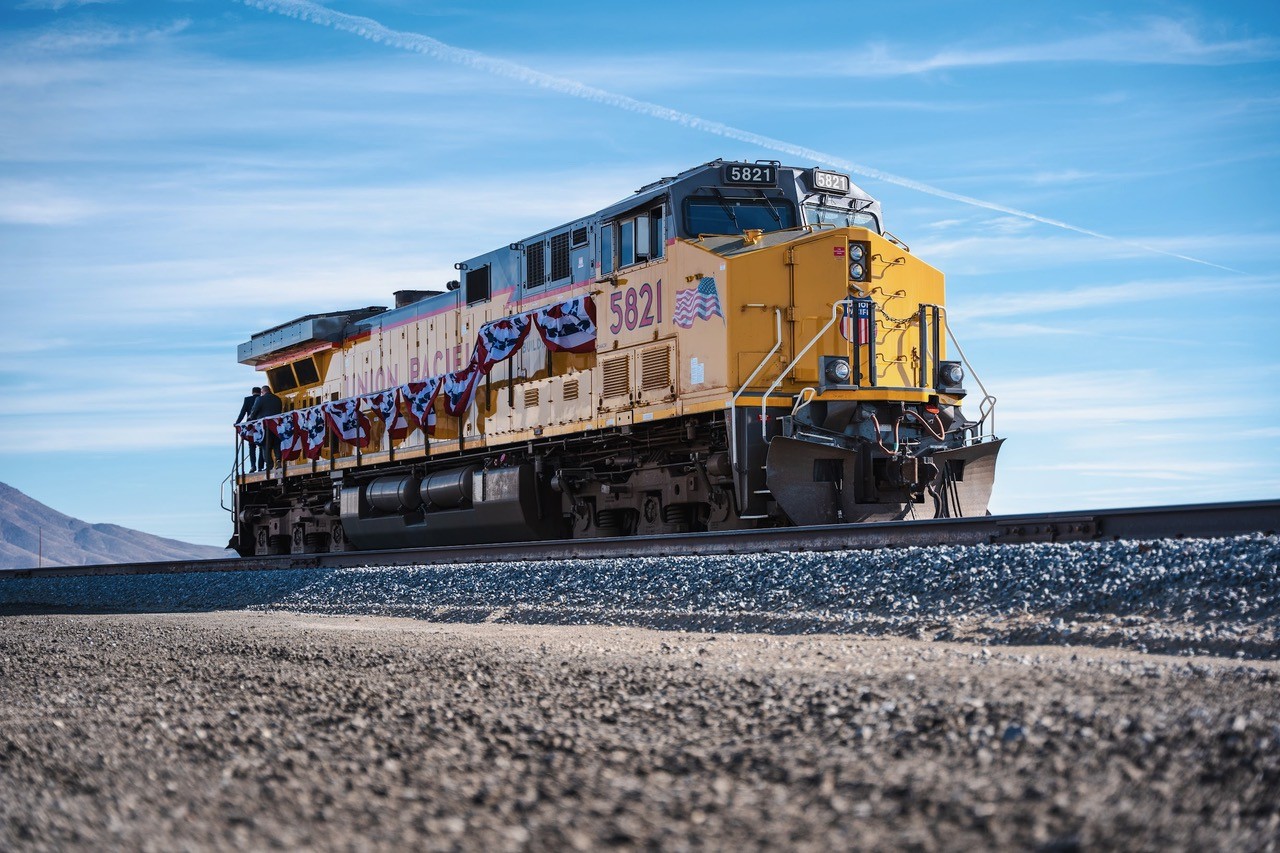
For manufacturers making major location decisions, access to rail is increasingly about more than if the tracks run nearby, but whether the infrastructure is actually ready to use.
In 2025, Norfolk Southern customers advanced more than 60 projects representing $7.7 billion in investment in new or expanded rail-served facilities. BNSF customers invested another $5.3 billion across 117 rail-served projects, the railroad’s highest number of completed projects in six years.
urrently have, and truck driver shortages make trucking options less attractive and competitive.”
For the communities competing for manufacturing investments, the challenge increasingly begins before a prospect arrives. Rail access may matter, but so does whether the infrastructure is already engineered, funded and ready to use. Across Nevada, North Carolina and a number of other states, investment in sites and freight facilities is aimed at taking some of that uncertainty out of the location decision.
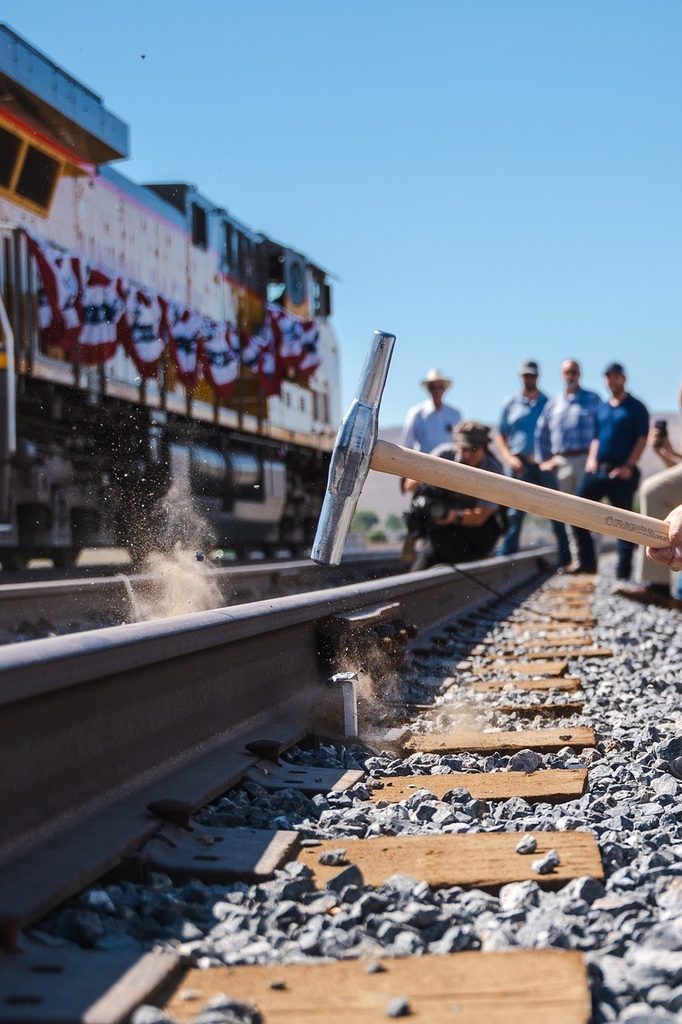
For instance, at Victory Logistics District in Fernley, Nevada, Mark IV Capital completed more than a mile of new Union Pacific track in August, connecting the 4,300-acre industrial development directly to the transcontinental main line. Three run-around tracks now serve approximately 100 acres of rail-ready industrial land.
Rick Nelson, senior vice president for Northern Nevada at Mark IV Capital, says the completed connection opens Victory to users such as steel processors, building materials producers and food manufacturers that move substantial quantities of raw materials and may consider rail a non-negotiable site requirement.
“Today, site selectors want to see the physical connection completed, the spur engineered and permitted, switching capacity confirmed, and the operational logistics of car placement and spotting already worked through, before they will invest significant time evaluating a site,” Nelson says.
They also want confidence in the relationship between the developer and the railroad that will ultimately provide service.
“Rail infrastructure developed after a company commits introduces execution risk, timeline uncertainty and capital questions that tenants and their investors are not willing to absorb. The companies making large location decisions — an endeavor that requires the commitment of hundreds of millions in capital expenditure — must be able to model their logistics costs from day one,” he says. “A speculative future rail connection cannot be underwritten the same way a completed one can. Mark IV Capital made the deliberate decision to absorb the infrastructure investment ahead of tenancy precisely because we understand these key influences on a prospective tenant’s site selection decision-making.”
In Candor, North Carolina, Aberdeen Carolina and Western Railway (ACWR) has taken a different approach. Its new 30-acre Candor Logistics Park combines a transload yard capable of handling more than 100 railcars with two adjoining pad-ready industrial sites. Instead of requiring every manufacturer to build its own siding, the facility gives rail-served and non-rail-served companies a shared place to transfer freight between trains and trucks.
Candor was assembled through railroad and county participation along with support from the North Carolina Railroad Company, regional economic development partners and North Carolina Department of Transportation (NCDOT) grant programs. The project is part of the state’s ongoing investment in short-line freight infrastructure. In January, NCDOT awarded $16.3 million to freight-rail projects statewide, including approximately $4.85 million for improvements along ACWR’s Piedmont Division. Railroad and port matching investments bring the statewide total to $41.5 million.
Those investments are already supporting existing industry elsewhere on ACWR’s network. NCDOT specifically cited track improvements between Charlotte and Oakboro as supporting freight service for Charlotte Pipe & Foundry’s new $460 million manufacturing facility, which opened in 2023. The Candor project is aimed at extending that rail option to companies that may not generate enough freight to justify their own infrastructure.
ACWR Director of Business Development Paul Hoben says the railroad is already seeing interest in transload services from companies moving food products, plastic resins, fuels and construction materials. He also said two recent inquiries were tied directly to rising diesel costs as companies looked for alternatives to long-haul trucking.
“Transload operations, such as Candor Logistics Park, are essential to both rail-served and non-rail-served companies,” Hoben says. “The park provides additional capacity and possibly flexibility for rail-served companies. Business growth can be constrained by insufficient track space or by the addition of new product lines that the current infrastructure cannot support. For companies that are not served by rail, transload yards like Condor Logistics Park provide rail access and transportation flexibility. This is particularly critical when diesel prices rise, as they currently have, and truck driver shortages make trucking options less attractive and competitive.”