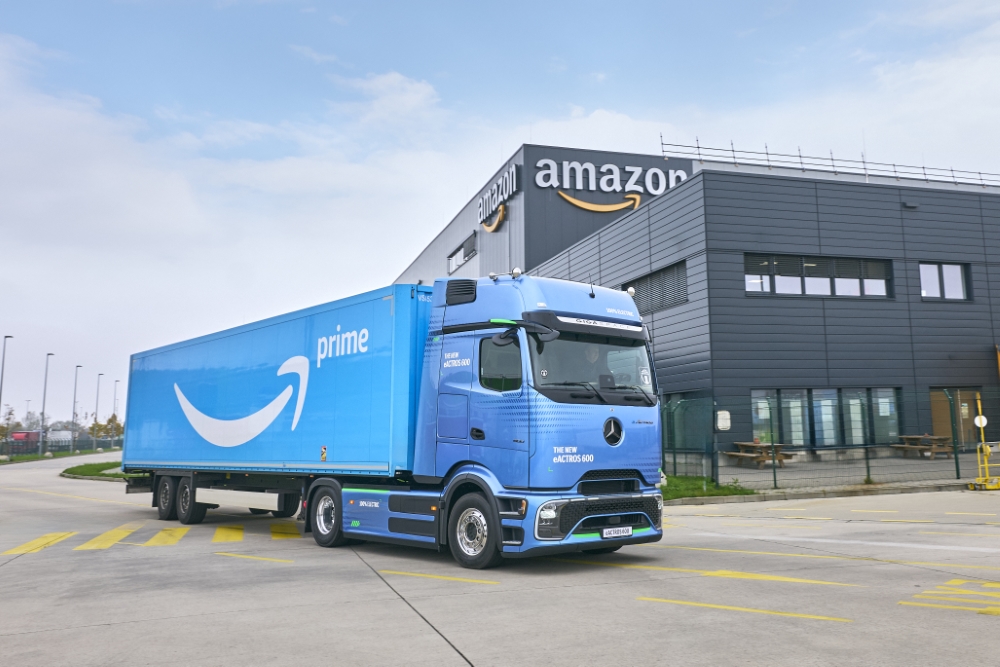
From Amazon to Silverwood, a new kind of lifestyle is being built in the High Desert.
When the world’s fifth-most-valuable company decides to build its second-largest logistics facility in California in your backyard, it sends a strong signal to corporate investors that your county is not just open for business; it’s ready to sign on the dotted line.
That’s what San Bernardino County did when it landed the 2.5 million-sq.-ft. Amazon Middle Mile Facility in Hesperia in the High Desert in the rapidly growing Inland Empire North industrial submarket.
Located at Phelan Road near U.S. Highway 395 and Caliente Road, the massive logistics plant spans nearly 200 acres and totals $162 million in land acquisition and development costs. Designated as the first West Coast middle-mile sorting facility of its kind for Amazon, and just the second for the $2.7 trillion company nationwide, the plant is expected to generate 3,300 permanent, full-time jobs in addition to 1,000 construction jobs.
The project developed by Covington Group Inc. represents a signature win for Hesperia, a city of 101,000 people on heavily traveled Interstate 15 just north of the Cajon Pass. This Victor Valley site represents the frontier of logistics in Southern California, according to commercial real estate experts who have worked here for decades.
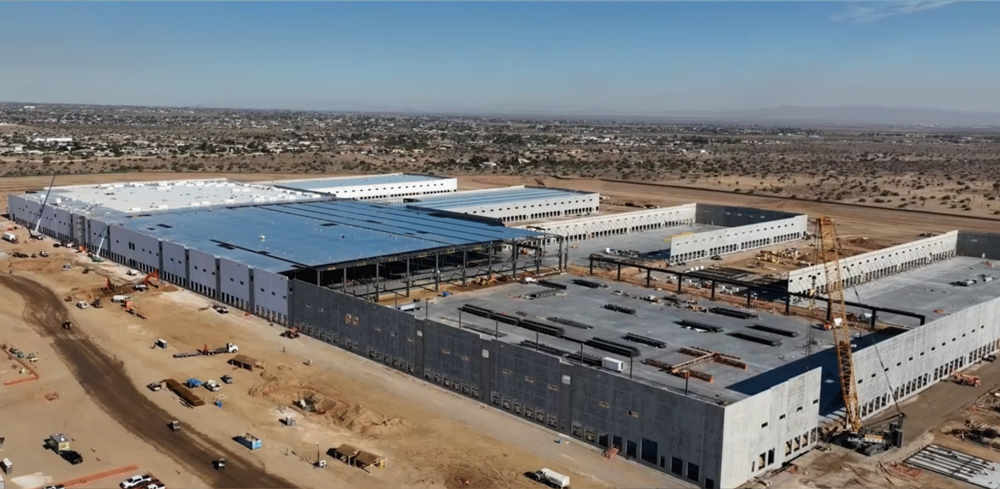
Amazon calls its new plant CAZ5. Locals call it a breakthrough. “This is an exciting milestone for Amazon in the High Desert,” says David Koneck, director of operations for the new plant. “We’re proud to create new job opportunities, build a lasting presence in the community and deliver fast, reliable service to our customers.”
Koneck cited Hesperia’s “central location in the High Desert, strong transportation infrastructure and connectivity, skilled local workforce and supportive community partnership” as critical factors that sealed the deal. He says the new sortation facility will serve as a central hub in Amazon’s California delivery network, which now totals over 32 million sq. ft. of industrial space. San Bernardino County, with 24 Amazon facilities, ranks as one of the firm’s busiest U.S. hubs. Throughout the Inland Empire North, Amazon operates 18 million sq. ft. of logistics sites.
Amazon’s current industrial footprint across the U.S. stands at 445 million sq. ft. That total is expected to increase by 51 million sq. ft. by the end of this year.
Amazon Exec Likes Seamless Process
“At over 2.5 million square feet, CAZ5 is one of the largest physical footprints of any Amazon facility in the world,” says Koneck. “Designed to process more than a million packages per day, the facility sorts and routes shipments to their next destination and on to customers.”
He credits city and county officials with making the project seamless. “The economic development and city hall officials in Hesperia were very helpful and welcoming throughout the process,” he says. “Their engagement and partnerships supported a smooth process. We appreciate how collaborative the entire team was as we worked to bring this facility to Hesperia.”
Orlando Acevedo, director of development services for the city of Hesperia, says everything came together for Amazon to make one of its biggest industrial investments of the year in his swiftly growing city.
“Projects like Amazon are never won overnight,” he says. “They are the result of years of planning, infrastructure investments, entitlement work and collaboration between the city, property owners, developers and regional partners. What helped Hesperia was our ability to offer available land, strong transportation access and a city that understands the importance of being responsive and solution-oriented. Companies want certainty and efficiency. We’ve worked hard to create an environment where quality projects can succeed, including bringing on consultant plan review and inspection staff to be available upon demand.”
Acevedo says he’s seen a huge shift in fortunes in the High Desert, a region of just over 500,000 residents. “This area has experienced a remarkable transformation since the pandemic,” he says. “What was once viewed primarily as a bedroom community is now being recognized as a strategic location for investment, logistics, advanced manufacturing, healthcare and quality residential growth. We’ve seen accelerated population growth and increased interest from businesses seeking more affordable operating environments.”
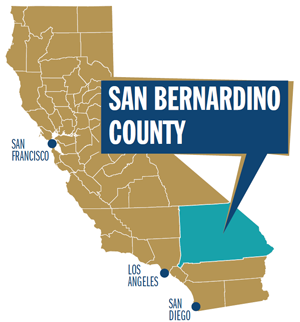
Walt Arrington, executive vice president of CBRE in Ontario in San Bernardino County, says the new Amazon facility represents a significant development for the 20,105-square-mile county of 2.23 million people. “The jobs they are providing are sensational for the area,” he says. “When you look at the benefits of this site, they are right off the I-15, which connects to I-40, which handles more goods movement than any other highway in the country. I-40 cuts across to Barstow, where a large amount of goods movement takes place.”
Arrington says labor is the big component that makes the High Desert region so competitive for jobs and industry. “Some 80,000 people commute out of the High Desert daily to jobs outside the region,” he says. “About 30,000 people live there and work in logistics jobs. The labor pool is strong. Those 2,000 people who work at Amazon facilities outside the region will be able to now work closer to home.”
‘This is a Labor and Transportation Story’
As more companies invest in Victorville, Hesperia, Apple Valley and Adelanto, says Arrington, the High Desert will continue to evolve. “In many ways, the High Desert is like Ontario in the 1980s,” he says. “But now we have the labor here. Automation, economics and labor are driving this trend in the Inland Empire North.”
Arrington adds that he expects more industrial deals to close in the region soon. “We have a couple of big site tours the next couple of weeks,” he notes.
He says, “Five large companies are looking seriously at relocating to the Inland Empire North. These are build-to-suit proposals with requirements. This is a labor and transportation story for large facilities of big companies. Labor makes up 24% of the cost of a warehouse. Transportation is 40% of the cost. When you consider that 50% of the product in the Port of Los Angeles and Port of Long Beach travels through the Inland Empire and then to the rest of the country, that benefits warehousing in the High Desert. Add in the new BNSF intermodal rail facility in Barstow, and that is why we’ve seen 6 million square feet of new product over the last three to five years in Hesperia. The Southern California Logistics Center (SCLC) in Victorville has seen another 3 million square feet. Apple Valley has added another 1 million square feet over the same time period.”
With developers like Prologis, SteelWave, NewCastle Development Group and Covington Group active in the High Desert, says Arrington, “We’re seeing a lot of people entitling land and waiting to sell that land to a developer. With land costs in the High Desert around $18 per square foot, compared to $80 per square foot in Ontario, the analytics favor Inland Empire North.”
Dana Whitmer, partner at Covington Group, concurs. “These are developer-friendly cities in the High Desert,” he says. “A lower cost of land, coupled with access to labor, makes that area very compelling for investors.”

“In many ways, the High Desert is like Ontario in the 1980s, but now we have the labor here. Automation, economics and labor are driving this trend in the Inland Empire North.”
— Walt Arrington, Executive Vice President, CBRE
Covington developed a 3 million-sq.-ft. industrial building known as Hesperia Commerce Center One in 2019. “Then we did the 2.5 million-square-foot project for Amazon in Hesperia,” Whitmer adds. “It will start operating in November of this year. We now have five other properties in Hesperia that are entitled and shovel-ready of 150,000 to 1 million square feet in size. We have another 3 million square feet entitled at SCLC in Victorville and another 4.5 million square feet entitled in Apple Valley.”
Fortune 500 retailers and large 3PL companies drive industrial demand in the High Desert now, says Whitmer. As growth continues eastward in Southern California, he says, “I think you’ll see more manufacturers go to the Inland Empire North where there’s a ready pool of labor. All of the communities there want jobs. That is the bottom line. They know that is the best way to improve quality of life — by bringing jobs closer to home. That is why all the cities in the High Desert are so developer-friendly.”

This Investment Profile was prepared under the auspices of San Bernardino County. For more information, contact the County’s Economic Development Department at 909-387-4460. On the web, go to www.SelectSBCounty.com.
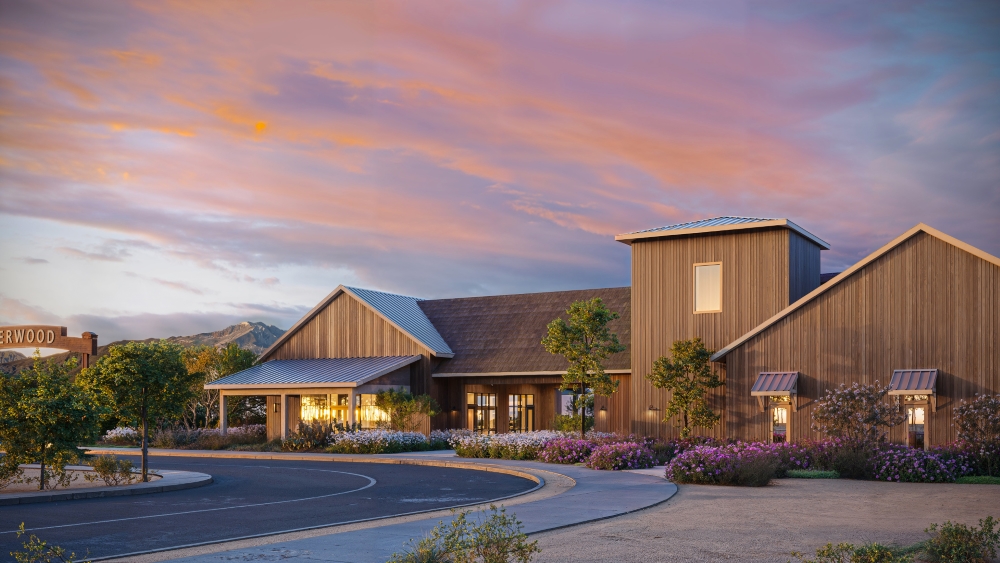
Upon buildout, Silverwood in Hesperia will have over 15,000 homes and be one of the largest master-planned communities in California.
Photos courtesy of Silverwood
Silverwood Strikes Gold with a Community Built on Kindness
As higher-paying jobs proliferate throughout the High Desert of San Bernardino County, developers are building new neighborhoods offering housing at affordable prices at every tier of homebuyer.
Case in point: Silverwood, a new community that is expected to create a multi-billion-dollar economic impact in Hesperia. At more than 9,000 acres in size and entitled for 15,663 new homes, Silverwood is master-planned to become one of the largest new communities developed in Southern California in decades.
“We purchased the site in 2012,” says John Ohanian, general manager of Silverwood. “Some 13 years later, we welcomed our first residents.”
After selling the first 634 lots to merchant builders, 291 homes sold in the first 14 months and 250 families moved in. “We expect to have 300 families moved in by the end of this year,” says Ohanian. “We expect 500 more families to move in next year and then average around 600 per year thereafter.”
Homes in Silverwood start in the $400,000s and go up to the upper $700,000s — price points that compare favorably with many other California housing markets. With 387 acres of parks, 107 miles of paths and paseos, and 59 miles of off-street trails, Silverwood is built to engage its residents in nature.
Located at 3,200 feet of elevation, Silverwood offers towering views of the surrounding mountains in the Angeles and San Bernardino National Forests. Half the land in Silverwood is set aside for natural open space, conservation easements, parks and a nature preserve. Silverwood Lakes lies just beyond the community’s southern boundary.
What sets Silverwood apart, though, is its unique ethos. “Our goal is to create a culture of kindness,” says Ohanian. “We have a Kindness Pledge that we ask our residents and employees to sign. It is aspirational for how we want to live and serve. It is designed to promote resident engagement and encourage our residents to get to know each other.”
Is it working? Yes, and then some, says Ohanian. “It has been very successful so far,” he says. “We are creating a healthier environment and a safer community for kids to grow up in. New residents enjoy watching movies in the park, joining special clubs like mountain biking and running, and creating a really fun place to live.”
He notes that, “This is what happens when you build homes and neighborhoods that are attainable for young families and encourage people to know their neighbors. And when you build it just one mile from the entrance to a state park that has fishing, skiing and swimming, you create a place where every home is within a 5-minute walk of a park or trailhead. We believe that all of this enhances and protects home values.”
While Silverwood hopes to turn a profit over the long haul, the real goal of the project is to “create a sense of community,” says Ohanian. “We want to enhance people’s experience of living in the Mojave River Valley. We are big on community engagement.”
Upon buildout, Silverwood plans to have a thriving town center, about 1 million sq. ft. of commercial space, multiple K-12 schools, a community college campus, churches, medical offices and a full range of customer services.
“We will have grocery-anchored retail centers, restaurants and fuel stations,” says Ohanian. “We are building a city within a city. Everything a family needs will be available in Silverwood.”
The main draw for buying a home, he says, is simple: “People will move here for a better quality of life.”