How the Southwest became a hotbed of skilled craftsmen.
At first glance, you may not think that a family-owned craft artisan and construction materials company in Southern California is a big deal, but when that firm announces it’s expanding across state lines into Tucson by acquiring a 123,000-sq.-ft. facility, a whole host of site selection factors come into play.
After evaluating multiple expansion options, the 60-year-old company known as ARTO Brick picked southern Arizona. In so doing, this second-generation-owned firm shed light on why so many companies engaged in creating the building blocks of industry choose the Desert Southwest.
Dig deeper into the story and you realize that the desert triangle of Arizona, Nevada and New Mexico is where highly skilled artisans meet high-tech.
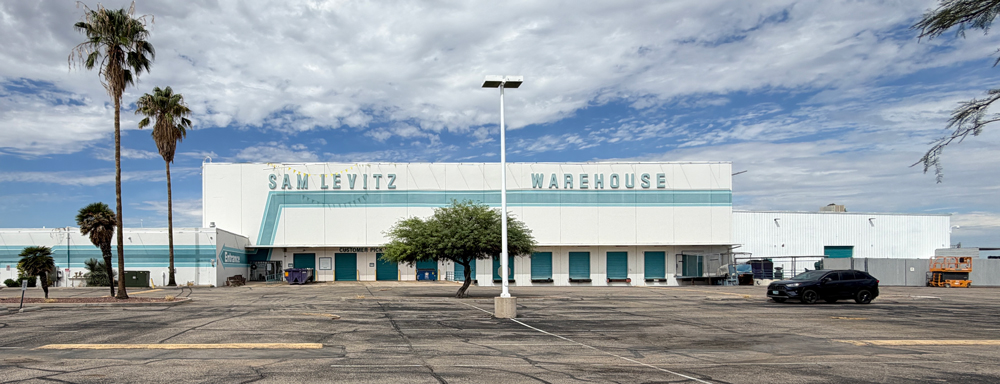
A Los Angeles area-based manufacturer of handmade ceramic, porcelain, concrete tile, pavers, brick veneers and architectural surfaces, ARTO announced a few months ago that it is relocating and expanding part of its California manufacturing operation to Tucson by acquiring the former Sam Levitz warehouse at 3430 East 36th Street. The move is designed to enhance the firm’s production capabilities, say company owners.
According to Cushman & Wakefield, Arto 3430 LLC purchased the 123,394-sq,-ft. facility from 36th & Palo Verde Investors LLC for $8.64 million, or around $70 per square foot.
Founded in 1966 by Arto Alajian, ARTO specializes in producing handcrafted tile, brick and architectural elements. Founder Arto Alajian, a classically trained artist born in Alexandria, Egypt, passed the business down to his sons, Armen and Vod Alajian, who continue the company’s legacy of handmade ceramic and concrete products.
The company evaluated multiple expansion options, including other markets in the Southwest, before selecting Tucson as the location for its next phase of growth. When I caught up with Armen Alajian, he candidly discussed the company’s site search, explained why Tucson stood out, and outlined the factors that drove the final location decision.
“Growth prompted the need for more space,” Alajian says. “We needed to double in size. Currently, our operation is a puzzle of properties that we acquired over many years. Our landlord was developing the property, and we had to move out of this industrial area in West LA. We bought a building in Gardena, and we did not want to move again. We bought that facility in 2007, and then we bought another adjacent building in 2014. But we were capped, we were landlocked and we were still growing.”
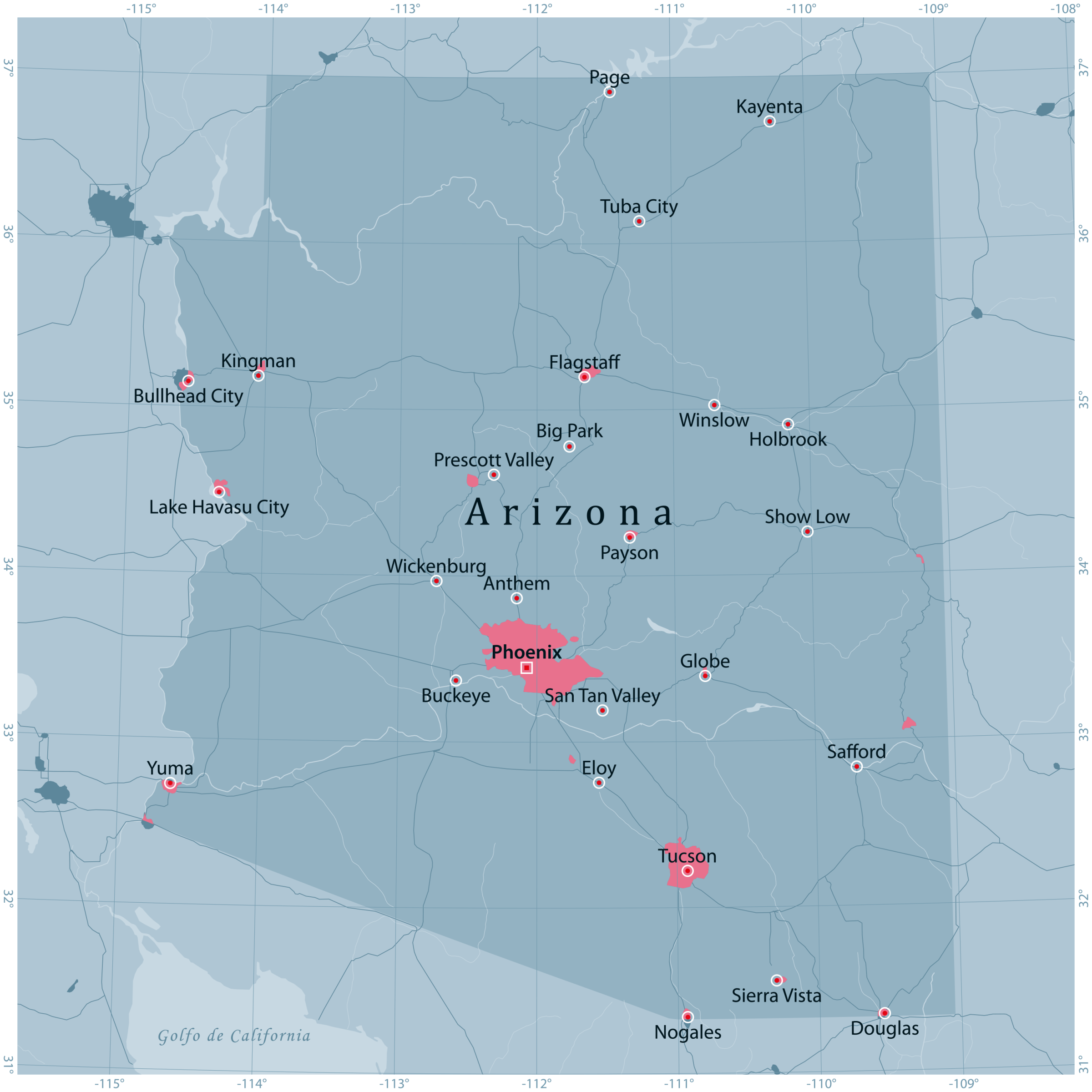
Illustration: Getty Images
SBA Lender Opens Key Doors
Two years ago, Alajian engaged a site selection firm to explore options. That’s when ARTO began looking at potential locations in northern Mexico around Tijuana; southern Nevada around Las Vegas and Henderson; northern Nevada around Reno and Sparks; and a handful of places in Arizona.
Tucson caught his eye. “I saw this property in the summer of 2024. I took pictures. By Christmas of 2024, I walked it as a buyer,” Alajian says. “I was in escrow in 2025. That’s when I met Dean Aloe, a Small Business Administration lender in the Southwest. We got the deal done within a month. BMO Bank walked us through everything and got us through it on time. We acquired an incredible piece of property for below-market price. I could not buy in Bakersfield or anywhere else in California for what I paid here.”
Alajian says he fell in love with Tucson for several reasons. “One, I loved the area. It is like the forgotten child of the Mountain States,” he says. “Property values are great. The weather is perfect, and the city is very business-friendly compared to California.”
Even when things did not work optimally, he never wavered. “We had an issue after we closed on the property,” Alajian says. “We disagreed with the city, but we were able to communicate directly with them about it. They showed they would listen and talk to us.”
Ultimately, says Alajian, three factors sealed the deal: “Personalized style; the competitive cost; and the fact that Tucson is an artsy town. Plus, Tucson is a good name for marketing — and my wife likes it here.”
Alajian says he did look at Greater Phoenix, “but the value is greater in Tucson. A worker making $28 an hour can afford to buy a house or condo in Tucson. You could not do that in Southern California or Greater Phoenix.”
ARTO employs 85 workers in Southern California, and Alajian says the plan is to hire an additional 85 people in Tucson. “I compete against countries like Vietnam, Brazil and Spain where they pay their workers much less. I pay general laborers $18 an hour to start and then much more as they progress.”
Alajian says he’s happy with the location choice for other reasons too. “Tucson is a college town and a military town, and it is only an hour to Mexico. The SBA 504 program helped us buy the building,” he says. “My advice to any small business looking to move is to start with the Dean Aloe in your neighborhood. At the end of the day, he saved our company and this deal. Find a Dean in your area and then work backwards toward the bank.”
Secondary Markets Blossom in the Desert
Much like Tucson, secondary and tertiary markets bloom with new business across the Desert Southwest. Tom Burns, executive director of the Nevada Governor’s Office of Economic Development, says that savvy site selectors and corporate executives know to look at markets like Reno-Sparks, Elko and other hot spots in northern Nevada.
“We’re seeing growth in rural Nevada around energy and critical minerals,” says Burns. “People who live in rural Nevada are there on purpose. They love that lifestyle. They are hesitant to attract a lot of population, but we’re seeing diversification of their local economies, especially in critical minerals and alternative energy like geothermal and solar. Elko has 55,000 people and they’re seeing growth in gold mining.”
The area around Thacker Pass near the Oregon border will take off as mining and processing of lithium gain momentum, says Burns. “We’re the largest mining state,” he says. “Of the 60 critical minerals identified by the federal government, 36 are in Nevada, the most of any state. The two largest deposits of lithium in the U.S. are at Thacker Pass, and we’re getting closer to production. They have the ability to process lithium on site and go into manufacturing without shipping it to China and hoping it comes back.”
The bonus lode, he says, is the largest boron deposit in the U.S. “Boron is what goes into the steel of the U.S. Army tank, the windshield of your car, and the Kevlar vest. It is 10 times stronger than steel,” he says. “Other developments in mining are on the horizon. It is critical that we keep this processing in our supply chain. We’ll be able to attract manufacturing in this sector and bring those jobs to Nevada as we grow.”
“We acquired an incredible piece of property for below-market price. I could not buy in Bakersfield or anywhere else in California for what I paid here.”
– Armen Alajian, Co-owner, ARTO Brick, on his firm’s purchase of a new business location in Tucson
Melinda Allen, president and CEO of the New Mexico Partnership, says that some of the state’s biggest capital investment deals can be found off the beaten path. The best example may be Castelion’s $220 million Hypersonic Manufacturing Campus northwest of Rio Rancho in Sadoval County. This 1,000-acre development known as Project Ranger was just named New Mexico’s Collaborative Impact Project of the Year.
Castelion will manufacture solid rocket motors, conduct static tests and assemble hypersonic strike systems when the plant is finished later this year. The project is expected to create roughly 300 new high-wage jobs.
“It has been an exciting year in New Mexico. It has been one of the busiest in my 18 years at the Partnership,” Allen says. “There has been so much interest in the Southwest and in New Mexico in particular.”
When I asked Allen why she thinks New Mexico has turned the corner, she said, “One big driver is that people are starting to realize what our existing assets mean for industry. Look at the trends in aerospace and defense. Things need to be manufactured. The depth of assets on the ground in New Mexico makes those things very attractive to the people who build satellites, rockets and defense programs. That is a powerful magnet for companies. Castelion is one of them. They’re coming to New Mexico because of our assets, our talent base and our ability to permit large-scale campuses.”
Making the Leap into Fusion Energy
Allen adds that another factor makes a big difference: “New Mexico has long been a leader in traditional energy. We’re now becoming a leader in alternative and advanced energy. We produce a lot of solar power, wind energy, oil and gas. We make the pieces for those industries. We also welcome and encourage fusion technologies. We put together a permitting pathway that uses tritium. For example, we had one such project up and running in six months. That had never been done before in this country. That is very attractive to firms doing a billion-dollar deal. That is our secret sauce; our size enables that.”
Allen is referring to Pacific Fusion, which is building a $1 billion nuclear fusion research and manufacturing campus in Albuquerque. It will use deuterium-tritium fuel to test and scale inertial fusion energy. A manufacturing base is underway at the Los Morros Business Park in Los Lunas, while the main demonstration and research campus is at Mesa del Sol.
Altogether, the deal will create 200 full-time jobs, require hundreds of additional construction jobs and generate an estimated $1.2 billion economic impact over 10 years.
Other hot spots around the state, she says, include multiple stops along the I-25 Corridor from Santa Fe to Albuquerque to Las Cruces. “The industrial supply chain is there,” she notes. “We see more growth from the space vehicles. A lot of testing is happening in New Mexico. We see more work in the low orbit sphere and with space tourism with Virgin Galactic. They have an engineering headquarters office in Las Cruces; and Spaceport America is just 45 minutes north of there.”
Look for additional investment into New Mexico soon in quantum computing, adds Allen. “New Mexico is part of the Western Quantum Hub in the U.S. We are a designated player. We have doubled down on our investment. The Roadrunner Quantum Lab is a collaborative space where the quantum companies can come together and create a testbed. The infrastructure will soon be in place for these companies. That is why we say that New Mexico is the ‘Next Frontier’ of tech and innovation. If you want to develop a new product with speed to market, New Mexico is the place to do that.”
To encourage more investors, New Mexico is setting aside more land for industrial development.
“New Mexico has a wide variety of sites in various stages of development. We have some well-established sites that are ready to build,” she says. “New Mexico is blessed with land. If you need 200 or 500 acres or more, we have it. Some are rail-served sites. It depends on the timeline you need.”