Wyoming sees emerging enterprises add to its business landscape.
On November 3, Wyoming state senator and former state Speaker of the House Eric Barlow clinched the state’s gubernatorial election.
“We have work to do to improve access to healthcare, support our schools and strengthen the industries that sustain our communities,” said Barlow in a statement shortly after his election win. “We must protect our water and respect private property rights while creating opportunities for new businesses and investment.”
Blueprints for educational reform have also started surfacing in Wyoming this past year. In March 2026, state lawmakers approved a $3.9 billion bill aimed at K-12 education funding. The bill became law without Governor Mark Gordon’s signature, with reservations from the Gordon Administration centered around restrictive spending rules for schools, loss of decision-making independence among local school districts and disadvantages to smaller rural districts.
Energized and Ready
Dawson Kluesner, coordinator for the Wyoming Economic Development Association (WEDA) and director of external affairs for the Wyoming Association of Municipalities, spoke with me in September 2026 about some of the changes coming to the state.
“Wyoming is seeing significant opportunities emerge at the intersection of energy, technology and advanced industry. Nuclear energy, advanced and light manufacturing, data centers and other energy-intensive industries are generating considerable interest,” says Kluesner, noting that the state’s existing energy expertise and infrastructure provide a strong foundation for many of these industries.
According to a 2025 analysis from the U.S. Energy Information Administration, Wyoming produces approximately 12 times more energy than it consumes. It’s the fourth-largest net energy supplier in the country, a major producer of coal, crude oil and natural gas. The state has led coal production in the U.S. since the late 1980s, and the Powder River Basin in the northeastern part of the state sees the most mining activity. Wyoming also ranks in the top 10 states for natural gas reserves and production.
There are moves to shake things up in the state’s energy sector. A nuclear power plant is being built in Kemmerer in the southwestern part of Wyoming. In Carbon County, a massive utility-scale wind farm known as the Chokecherry-Sierra Madre Wind Energy Project is being built to bring at least 3,000 megawatts (MW) of renewable energy online. Developed by the Power Company of Wyoming, the wind project is expected to generate enough electricity to power approximately one million households when completed in 2029.
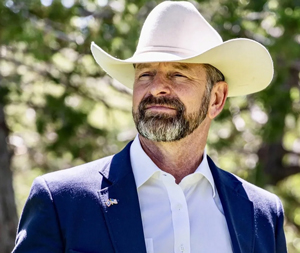
“We have work to do to improve access to healthcare, support our schools and strengthen the industries that sustain our communities. We must protect our water and respect private property rights while creating opportunities for new businesses and investment.”
— Eric Barlow, Wyoming Governor-Elect
One Business Council Battle After Another
The past year has not all been smooth sailing in Wyoming’s business landscape. One may look at the Wyoming Business Council (WBC) for signs of friction. The state’s publicly funded economic development agency encountered several hurdles this year following budget cuts and a passionate state legislative push to reform or otherwise dismantle the entity altogether.
The WBC’s budget was slashed from Gordon’s recommended budget of $54.6 million to $15 million for the next two years. There are still plans to reform WBC ahead of the next state lawmaking session in January 2027.
In August 2026, two state legislative committees came together to review two similar bills intended at reforming the WBC. Five lawmakers walked out of the joint hearing, citing poor handling of committee assignments along with headache-making efforts to reconcile the two legislative proposals.
On October 14, 2026, WBC CEO Josh Dorrell resigned his post, saying “I’m incredibly proud of what we’ve built over these past few years, and proud that Wyoming has a solid foundation to build on.”
The WBC is currently conducting a search for an interim CEO, with plans to install its permanent CEO by summer 2027.
WEDA, a nonprofit statewide professional association operating since 1985, is a separate entity from the WBC, which was created in 1998.
“There is certainly an opportunity to evaluate and improve how statewide economic development is structured in Wyoming,” says Kluesner when I asked him in mid-September 2026 about WBC’s ongoing troubles. “WEDA believes that conversation should focus less on whether individual programs or organizations simply continue to exist and more on building an economic development system that produces measurable results for Wyoming communities, businesses and taxpayers.”
Kluesner adds that “Wyoming’s statewide economic development strategy should be informed from the bottom up, beginning with communities and regions identifying their assets, needs and priorities and connecting those priorities to a coordinated statewide strategy. The Wyoming Business Council can play an important role within that structure by providing statewide coordination, expertise and resources that individual communities cannot efficiently provide on their own.”
Diversifying An Economy
Though large data center projects have started making their home in Wyoming, thanks in part to its robust energy supply and plentiful land, other kinds of business have also seen growth.
“Opportunities are also presenting themselves in sectors such as defense and aerospace, value-added agriculture, and outdoor recreation and tourism,” Kluesner notes. “What is exciting is that economic diversification in Wyoming does not necessarily mean moving away from our traditional industries. It often means leveraging the infrastructure, workforce and expertise those industries have developed to create the next generation of economic activity.”
Notably, outdoor recreation contributed $2.3 billion to the state’s GDP in 2024 (4.5% of Wyoming’s total GDP). In June 2026, the University of Wyoming (UW) and its Jay Kemmerer Wyoming Outdoor Recreation, Tourism and Hospitality (WORTH) Institute published their first assessment of outdoor business needs and opportunities.
Of the 111 outdoor businesses surveyed in the report, 22 were in Teton County, 20 in Park County and 16 in Fremont County. Yellowstone and Grand Teton National Parks are the top attractions located in Teton and Park Counties. Guides (61), retailers (37) and lodging (27) comprise the top three types of business surveyed in the UW and WORTH Institute report.
Evanston, located in Uinta County in the southwest corner of Wyoming and a less than two hour’s drive from Salt Lake City, has also moved toward becoming a tourism destination. Bear River State Park, Evanston Roundhouse and Railyards Complex and other attractions draw visitors to this town, which sits on I-80.