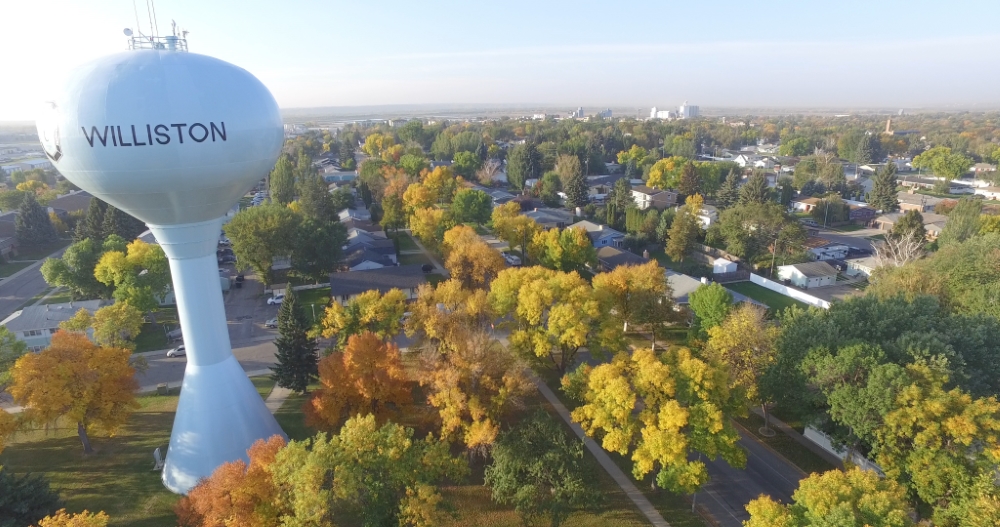
How a western North Dakota oil boomtown became America’s top micro.
Drive through the Mon-Dak badlands of rugged northwest North Dakota and you’ll see wide open prairies dotted by farms and oil wells. Know what else you’ll find? The plucky town of Williston, home to the No. 1 micropolitan area in the U.S. for 2025.
Based upon its performance in landing corporate real estate projects, this micro of 40,763 people in Williams County produced 21 facility deals last year, unseating 11-time incumbent champion Findlay, Ohio, to lay claim to America’s top-performing small town.
Williston’s performance is even more remarkable when you consider that in 2024, this oil-rich town didn’t even crack the list of the top 100.
According to the U.S. Census Bureau, the country is home to 542 micropolitan statistical areas. For an unprecedented stretch that ran from 2014 through 2024, Findlay in Northwest Ohio ranked as the Top Micropolitan in America based upon its corporate facility tallies.
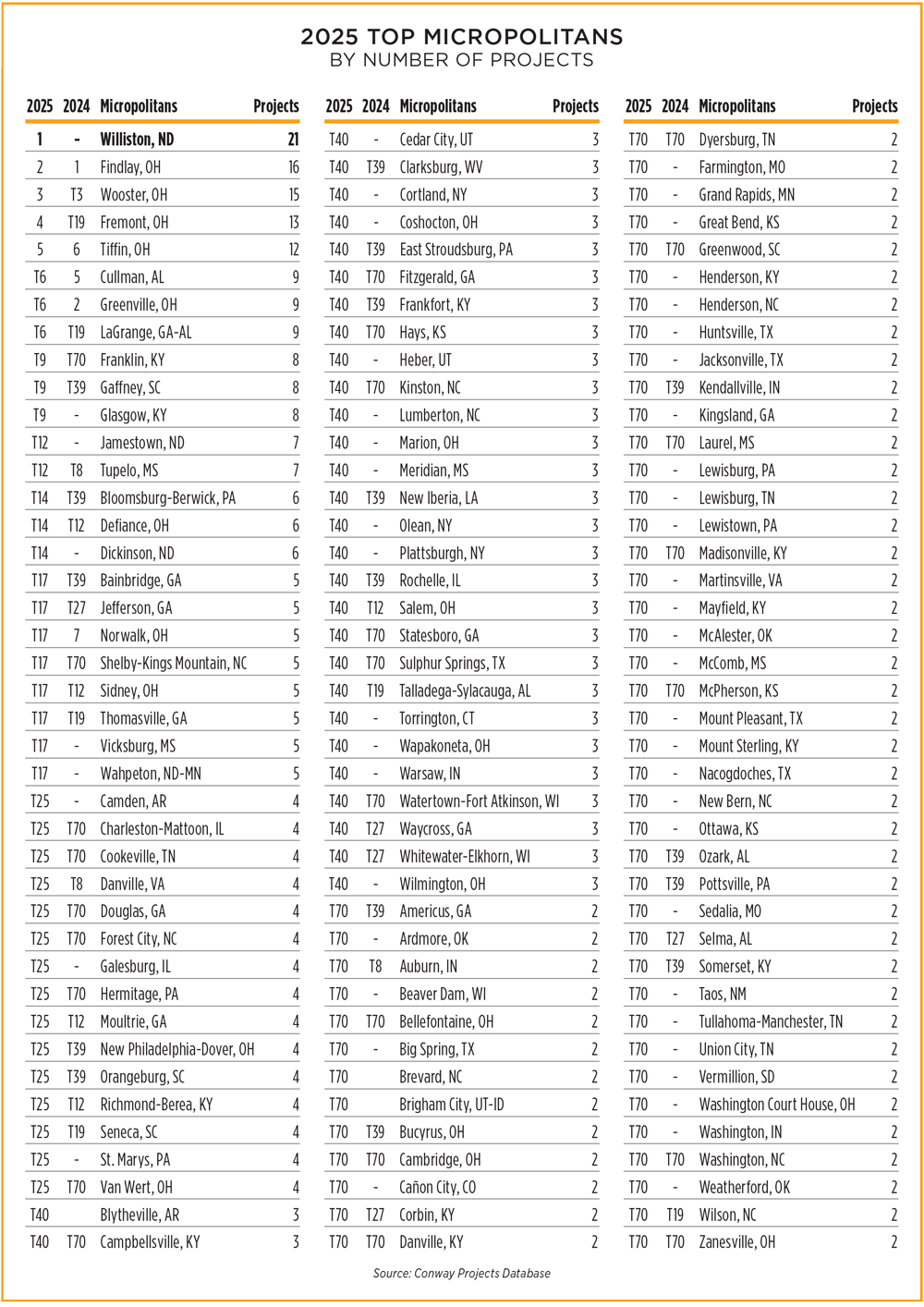
The ranking is based upon numbers in the Conway Projects Database, the official storehouse of new and expanded corporate plants — a record that has been kept by Conway Data Inc. and Site Selection magazine for four decades. To be counted, a corporate real estate project must represent at least $1 million in investment, create at least 20 new jobs or result in 20,000 sq. ft. or more of new or expanded facility space.
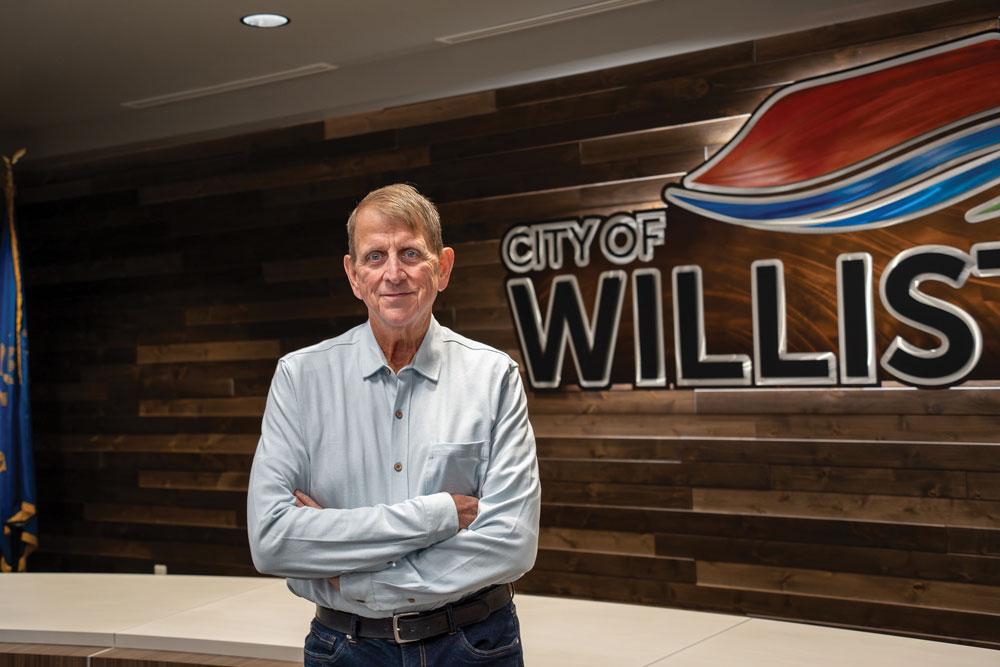
Stability is Williston’s calling card. Howard Klug, shown here, has served as mayor of Williston since 2014 and is only the town’s second mayor in 32 years.
In 2025, perennial titlist Findlay landed 16 projects, good for second place on the Top Micros scorecard. The next three finishers were also in Ohio: Wooster with 15, Fremont (13) and Tiffin (12). In 2024, Findlay led all U.S. small towns with 24 projects. Like Williston in North Dakota, all four Ohio towns are in the northwestern region of their state.
To understand how the 122-year-old Williston pulled off the upset of an 11-time defending champion one year later, you have to understand how local economies work and how federal agencies measure them.
As defined by the White House Office of Management and Budget, a Micropolitan Statistical Area consists of a core urban area with a population of 10,000 to 49,999, along with adjacent communities that have a high degree of economic and social integration with the core, primarily measured through commuting patterns. Typically, micro areas are small towns located in largely rural counties well outside the boundaries of metropolitan areas.
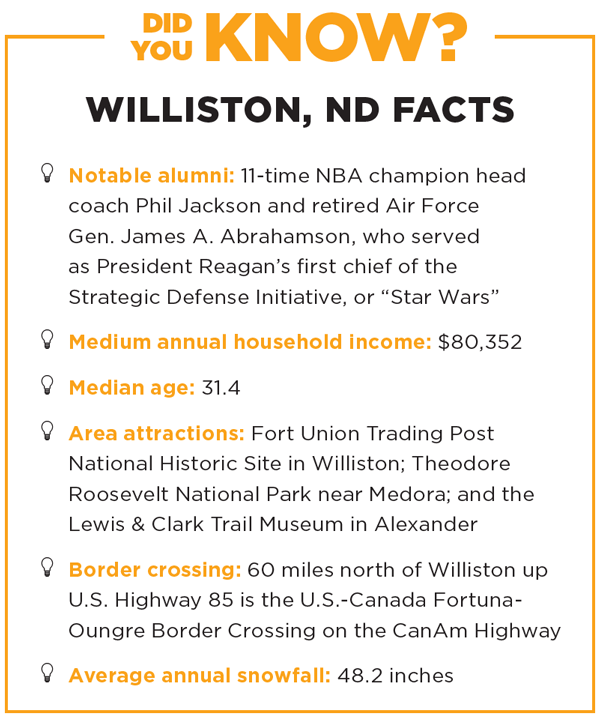
In other words, micros usually are remote. Williston lives up to that definition and more. Located near the confluence of the Yellowstone and Missouri rivers in the upper northwest corner of North Dakota, a state of just 811,610 people, Williston is the most populous city in the region and sixth-most-populous in the state with 28,572 residents. It also serves as the county seat of 40,763-resident, 2,148-square-mile Williams County. Hugging the Montana state line just 60 miles south of Canada, this micro area is a long trek from big-city life. The nearest “large city” is Minot, North Dakota, population 47,440, and it’s 120 miles east.
“Our Small Business Development Center does more business out of this office than larger cities like Fargo, Grand Forks and Bismarck.”
— Howard Klug, Mayor of Williston
Want to reach bigger cities? Bismarck, the state capital, is 220 miles away. Regina, Saskatchewan, is 220 miles north across the Canadian border. Fargo, North Dakota’s largest city with 136,285 residents, is 380 miles to the southeast, while Billings, Montana, lies 310 miles southwest.
Bakken Boom Reverberates
That remoteness isn’t standing in the way of progress in Williston, where vast oil reserves in the underground Bakken Formation are driving unprecedented economic growth. In 2010, just 14,716 people lived in Williston. Thanks to the oil boom and the jobs that came with it, the city’s population has since doubled.
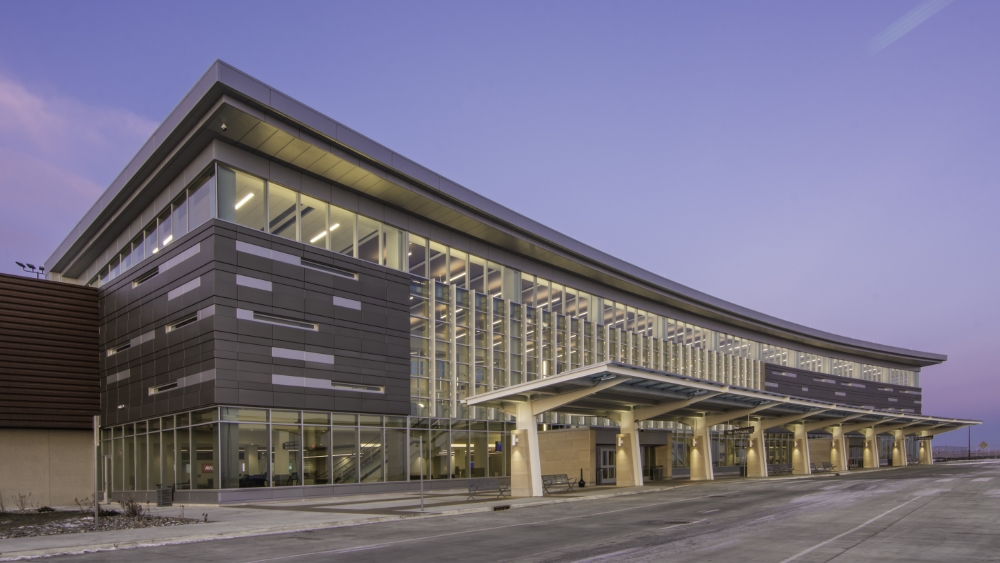
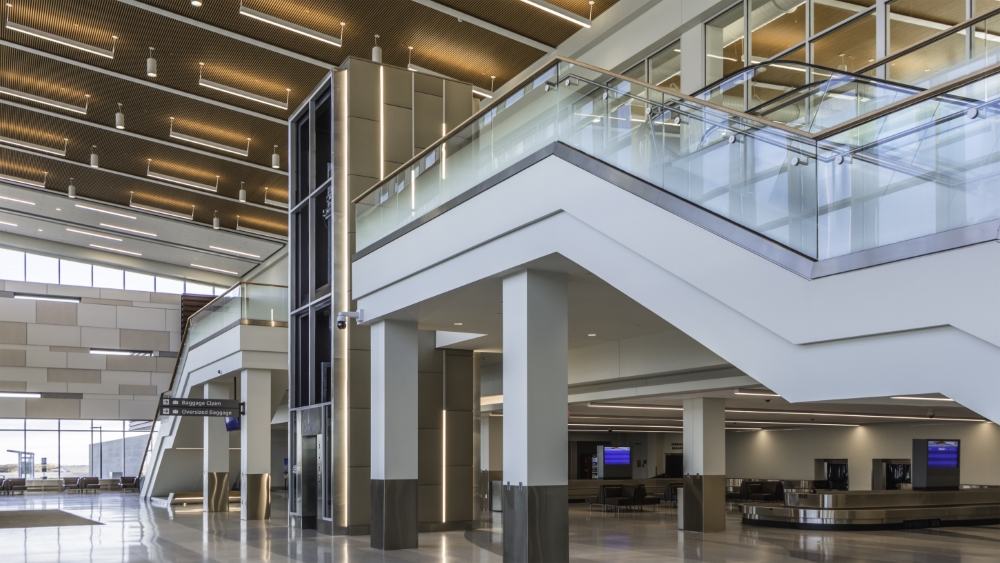
Williston Basin International Airport serves 200,000 passengers annually via 1,153 scheduled flights, including direct service to Denver, Minneapolis-St. Paul and Las Vegas.
Those energy reserves were directly or indirectly responsible for 15 of the town’s 21 qualifying investment deals in 2025. Ten deals came from energy companies, while five came from data center developers who consume large power loads. The other six were logistics projects, fueled by the exploding demand caused by the energy rush.
Williston’s biggest investment last year came from Los Angeles-based Critical Data House LLC (CDH), which is investing a minimum of $10 billion into establishing a seven-building data center campus on 300 acres. Known as Project Fighting Pike, the project’s master plan received approval from the City of Williston on March 17, 2025.
Each of the seven CDH structures will be 275,000 sq. ft. to 500,000 sq. ft. and use a closed-loop cooling system with direct-to-chip cooling. Construction on phase one, consisting of the first two buildings, is expected to run through the fourth quarter of 2027. The full three-phase buildout is slated to take 10 years. The company plans to spend $5 billion on construction and another $5 billion on IT hardware before it even gets to payroll.
The deal-closing factors, according to documents and city officials, were a prime parcel of available land, a city administration eager to do business with the company, and three fiber carriers that provide dark and lit fiber from Williston to Denver, Chicago, Minneapolis-St. Paul, Seattle and two markets in Nebraska: Lincoln and Omaha.
The 455-MW campus is being built at the intersection of U.S. Highway 2 and 56th Street N.W., a tract that previously had been targeted for a 2,000-home development known as Northstar Center. Instead, the parcel is going to be home to one of the largest data center complexes in North America.
CDH is one of the 21 qualifying projects that, if completed, will represent north of $30 billion in capital investment in the city known as the “Western Star” of North Dakota. Other Williston mega-projects announced last year included a Cerilon GTL gas-to-liquid complex, capable of producing 24,000 barrels of high-grade fuel products per day, at $3.2 billion; a $1.2 billion data center campus from Atlas Data Systems; and an $805 million energy investment by Basin Electric Power.
Calgary, Alberta-based Cerilon executives said they chose Trenton in Williams County “because of the abundant natural gas supply, suitable geology for carbon sequestration, and transportation access to markets.” Project startup is slated for 2030, when the firm plans to employ 100 people.
A Mayor on a Mission
Williston Mayor Howard Klug says that energy drives the economy of Williston and northwestern North Dakota. “The Bakken oil field in western North Dakota produces over a million barrels of oil per day,” says the three-term incumbent who’s been in office since 2014. “Each oil well is a small factory. It takes people to work them. They need service companies, and those companies are in Williston.”
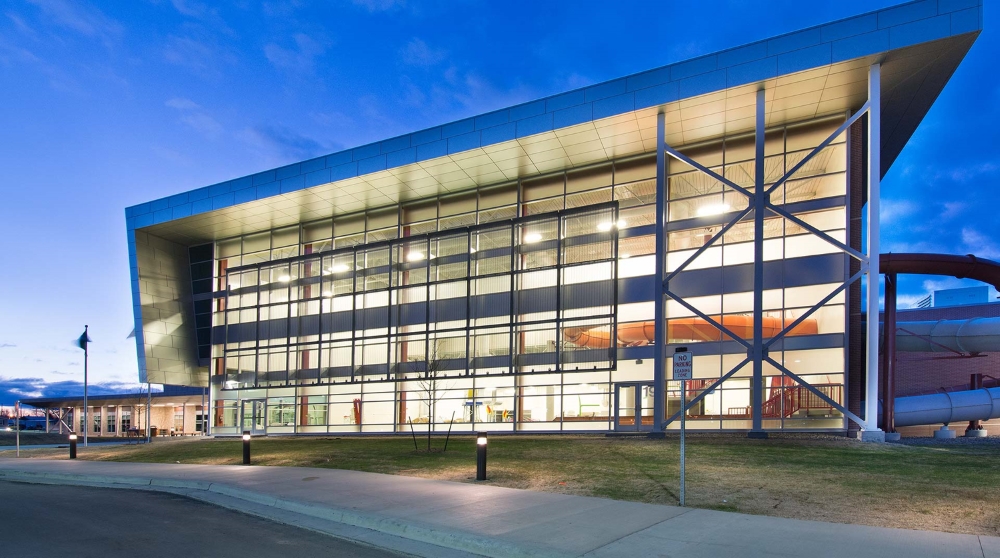
The Williston Area Recreation Center is an indoor 250,000-sq.-ft., multi-purpose venue that opened in 2014. ARC caters to swimmers, athletic trainers, track runners, fitness gurus, indoor golf enthusiasts and family-fun seekers. Locals call it “the cornerstone of the community.”
Keeping up with growth has been a full-time job for the city, says the mayor. “We built a new airport — Williston Basin International — to accommodate the need to get workers here,” he says. “They can now get back to their home base no matter where that is. Haliburton and other large firms have operations here. To accommodate them, we built a new airport on 600 acres from the ground up seven years ago. That was the first new international airport to be built in the U.S. in over 20 years.”
Opened in 2019, WBI serves 200,000 passengers via 1,153 scheduled flights annually. Delta Connection provides regional service to Minneapolis-St. Paul; Sun Country Airlines operates flights to Las Vegas; and United Express has service to Denver.
“We wanted to be the hub of Western North Dakota for oil. We knew this could have an immediate impact on us.”
— Howard Klug, Mayor of Williston
As thousands of new residents poured into town, the town got a lot younger — the average age dropped from over 50 to just 31.4 — and housing development took off. “We saw $900 million in building permits in one year,” Klug says. “A lot of new restaurants are coming to town, and we just signed an agreement to bring in a new Target.”
The city invested $120 million to expand its wastewater treatment plant, originally built to meet the needs of 16,000 residents, so that it could serve up to 40,000 people. Municipal government, likewise, saw its payroll grow from 175 to 400 employees.
“We’re a young and growing community,” Klug says. “The new residents wanted services and amenities that Williston didn’t have, and we are responding. Our Small Business Development Center does more business out of this office than larger cities like Fargo, Grand Forks and Bismarck.”
The expansion wave has done more than prompt city infrastructure spending. It’s put Williston on the map. “We wanted to be the hub of Western North Dakota for oil,” says Klug. “We knew this could have an immediate impact on us.”
Williston Economic Development Executive Director Anna Nelson says that new technologies are propelling industrial growth.
“My husband works in the energy fields,” she says. “He works for one of the service companies that started eight years ago with less than 100 employees. They’re now in five states and employ over 400. There’s a very symbiotic relationship here. As we’ve seen these companies grow, new technologies and techniques were developed to make extraction more efficient and make waste products like carbon dioxide reusable. Many of these advancements have come in the last five years.”
Local employers such as Cerilon GTL, Wellspring Hydro and ThermaCor Manufacturing are innovating with technology to make energy cleaner and more efficient. Data center operators are doing that too, says Nelson, noting that CDH “is interested in the natural gas byproduct of the oil and gas to power their large-scale AI computing center.”
Bison Electric Power Cooperative is building a large natural gas plant 20 miles from town that represents $4 billion in capital investment. “This new Bison Generating Station will supply the data centers in the area and ship it to the grid that serves our area all the way to Texas,” Klug says. “With enhanced oil recovery, we will see what happens in the future.”
Fourteen years ago, few could have predicted this future for Willison, but the advent of fracking changed all that. By 2012, the Bakken Formation was producing more oil than any other site in the U.S., including Alaska’s famed Prudhoe Bay. By some estimates, the Bakken Formation — a prime source of petroleum, coal and potash — could have up to 500 billion barrels of recoverable oil left in it.
“There is a lot of oil left beneath the ground here in North Dakota,” says Klug. “We have captured only 7% of it.”
Four States Dominate Rankings
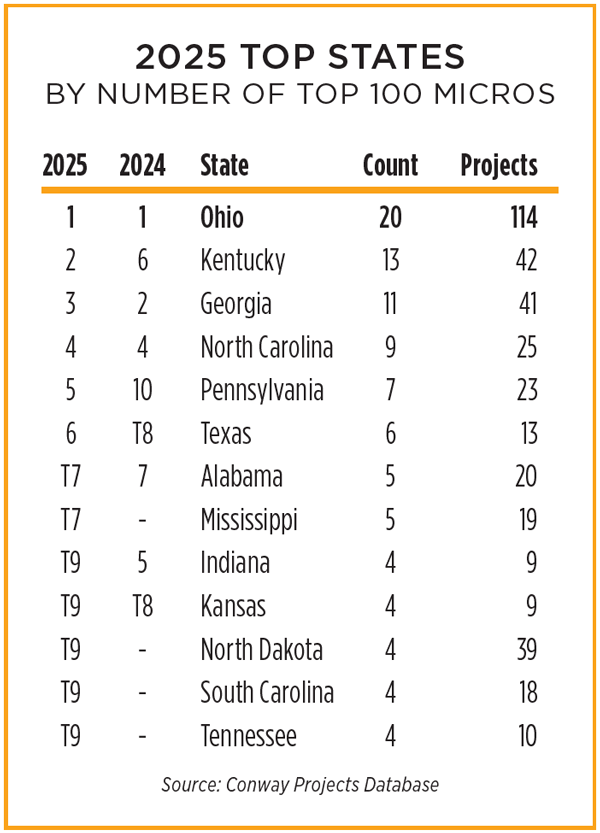
Digging deeper into the data, it’s evident that certain parts of the Midwest and the South produce more Top Micros than others. According to the Conway Projects Database, five Upper Midwest States and eight Sunbelt states accounted for the top 13 states producing the most Top 100 Micros, led by Ohio’s nation-leading 20 Top Micros.
Kentucky finished second in the nation with 13 Top Micros, while Georgia tallied 11 and North Carolina had nine. North Dakota, with four Top Micros, still managed to find its way into the top 13 states. Those four micros produced 39 qualifying investment deals.
Count every project that landed in a Top 100 Micro and you end up with 458 facility deals — about 6.1% of the U.S. total of 7,509 corporate facility projects in 2025. That means that one in every 16 corporate facility investments went to a Top 100 small town last year. The top 11 small towns in America accounted for 128 projects, or 28% of the Top 100.
Ohio’s 20 towns in the Top 100 accounted for 114 total projects, or 25% of the 458 projects tallied by Top 100 Micros nationwide. Moreover, 53 of the Top 100 Micros are in just four states: Ohio, Kentucky, Georgia and North Carolina.
Ascertaining why some small towns fare better than others at economic development requires a deeper level of analysis. For that, we turned to three experts: Maggie Switek of the Milken Institute; Lorie Vincent of Acceleration by Design; and Dr. Sean Walker, University of Tennessee Martin Faculty Senate president-elect.
Small-Town Success Predictors
Switek, an economist and senior director of research at the Milken Institute, which recently published its own ranking of the Best-Performing Small Towns in America, says that while her organization measures small town performance differently, the factors that produce growing economies are the same — whether you’re measuring job growth, income growth, GDP or new plant performance.
“First and foremost,” she says, “the top-performing small cities all share very good labor market conditions. In terms of job growth from July 2024 to July 2025, the best small cities in the Milken ranking grew at a faster pace last year than did cities in the large metro areas of the country. Wages have been increasing at the same time. It is about the type of job creation. It centers around higher-paying occupations.”
The small cities that Milken measures are much larger than micro areas and can have up to 275,000 residents. St. George, Utah; Idaho Falls, Idaho; and Kenosha, Wisconsin, ranked as the top three small cities per Milken for 2025. The next five were all in the Mountain West. (Milken’s No. 10 small city — Auburn-Opelika, Alabama — is the only city among the top 10 to also appear in Site Selection’s rankings in this issue: With 13 projects last year, it is No. 2 among Tier-2 metros in projects per capita. See Top Metros beginning on p. 116 for further analysis.)
Switek says the common denominator for Milken’s Best-Performing Small Cities and Site Selection’s Top Micropolitans is that “they all have the conditions for growth. Look at St. George in Utah and Idaho Falls in Idaho. They consistently rank in the top tier of small cities. Business costs in those two places are below the national average. That enables them to attract new businesses. Secondly, they have high levels of entrepreneurship.”
Asked why small towns in the Upper Central Plains region and the Mountain West significantly outperform the rest of the nation, Switek says it is the result of changing conditions. “Small metros and micro areas in the past struggled with connectivity,” she says. “Spread of broadband internet helps them. Idaho, Utah and Montana are growing very fast now. Their percentage of households with broadband internet is quite high. They all rank among the top 50 cities in America in connectivity. This is creating the conditions that promote growth. That factor, coupled with relatively low costs, enables them to attract businesses and people.”
When I asked Switek why it is so hard for most small towns in the Midwest to compete for jobs and industry, she said that several factors limit their growth. “It is the flip side of the coin,” she says. “Small Midwestern cities in tiers four and five — the lower performers in our ranking — typically have conditions that are not conducive to attracting residents or businesses. One is their lack of broadband connectivity. Second is their higher cost of housing; and third is their lack of equitable distribution of income.”
Switek advises small town leaders to “not focus on growth. Rather, focus on the conditions that promote growth. Many places try to attract businesses to the area but do not look at the conditions necessary to make those businesses feel welcome. Look at the cost of doing business; the education of the local labor force; and other business factors. Focus on livability and the conditions of the place rather than on growth. Once those conditions are met, growth will follow.”
Switek says that top-performing small towns typically focus on investing into quality infrastructure, upskilling the local workforce and investing generously into area community colleges and worker training programs.
“Non-degree training programs can go a long way,” she adds. “Having a degree is a necessary condition to get a lot of jobs in the U.S., but even practical training programs can have a good impact on the labor market. You need the skills to perform a job. My advice to employers is this: Focus on your workforce and invest in training programs. Educate them. Turnover is costly. Improve the working conditions of your company. Be patient and establish the conditions that you know will increase productivity.”

Set to open this May, Williston Water World is a new outdoor water park.
What the Best Micros Do Well
Lorie Vincent, founder of Acceleration by Design and Stand Up Rural America, is a leading advocate for small-town economic development. Having served as a longtime economic developer herself in rural and remote parts of the country, she’s seen firsthand what separates top-performing places from the also-rans.
“One challenge for places in the Midwest is that a lot of these communities are farther from the metro areas than their small-town counterparts are on the East Coast and West Coast. There are fewer cities and fewer urban areas in the Midwest,” says Vincent. “Early in my career, I set out to find 10 aspirational cities and learn everything I could about them. I identified 10 communities. I went out and met with them. That was the premise of what became a 35-year research project. Then I added 10 more cities every year. My database now exceeds 300 cities,” she says. “I’ve been following them ever since. We’re taking all of that data and putting it into a more scientific format. That’s how I’ve been able to see trends rise to the top. Our rural communities in the U.S. share many of the same challenges. They also share the same opportunities. The disparity between the growing places and the ones that aren’t growing is increasing.”

“For me, it is all about the amount of opportunity here. I’ve lived in Los Angeles and Oklahoma City, and I have been given opportunities here that I never would have received in those other cities.”
— Anna Nelson, Executive Director, Williston Economic Development
Vincent says Rule No. 1 is that “you cannot make big strides without working with your neighbors. Even if it’s just with two counties or two cities, you have to embrace regional cooperation.” Site selection is so advanced now that “information is shared before you even meet with a prospect. You’re either on the list or off the list before you even know it,” she says. “My advice to small towns is to focus on being ready. Pay more attention to your infrastructure and your quality of life. Many places have just coasted, but you can’t afford to do that anymore if you want to compete for jobs and industry.”
Vincent says that standout performers in rural areas regularly invest in housing, education, health care and connectivity. “Those are the four basic needs of any town. I came up with that list of must-haves from my years of talking with places that were either increasing or decreasing in population. When you don’t build any houses for 20 years, that greatly impacts your community. Health care is one of the biggest challenges in rural America, but we now have tools to address that. Some places lost their hospitals. It greatly impacts your population. And almost all businesses will tell you that they cannot locate anywhere where there is not consistent and reliable connectivity.”
Vincent also stresses the critical importance of investing in infrastructure and downtown revitalization. “It is a matter of thinking bigger than what you are,” she says. “City limits only matter to the taxing jurisdiction. They don’t matter to prospects.”
Finally, Vincent counsels that any place in America can turn around its local economy if it pursues the right strategies and applies proven tactics that work. “Rural America is 80% of our country,” she notes. “I have hard lessons that have been learned. It is hard to turn around a failing town, but it is not rocket science.”
One expert who’s bullish on small towns is Dr. Sean Walker, management professor and Faculty Senate president-elect at University of Tennessee Martin. In a recent study by Coworking Café about the best small towns for building a career, he noted: “Each generation is moving to smaller cities in significant numbers, but for different reasons. Organizations tend to focus more on groups with longer potential tenure, so Gen Z is increasingly in the spotlight. Gen Z is motivated by wellness, positive relationships, social impact, meaningful work, work-life balance and financial stability. Smaller cities, with their slower pace, make these easier to achieve — supporting balance, wellness and the ability to find work that feels meaningful.”
Nelson says they’ve created just that environment in Williston, part of a state that now ranks as the third-best place in the nation for families, per WalletHub. “It starts with creating a place where people can raise their family,” she says. “This means making sure they have nice houses to live in; schools and day care centers that can accommodate growing families; and an attractive quality of life.”
Nelson says the kicker is Williston’s welcoming environment. “For me, it is all about the amount of opportunity here. I’ve lived in Los Angeles and Oklahoma City, and I have been given opportunities here that I never would have received in those other cities,” she says. “That makes you want to invest your time, energy and talents in this community. We have a small-town mentality. Even though we are growing rapidly, we will take the time to help our neighbors. We are a close-knit group, but we still welcome newcomers.”