Learning and working go hand-in-hand at these two universities.
University systems are still commonly thought of as the natural incubator for young adults seeking professional work, even as pathways to education and jobs continue to diversify and debates endure on whether a college degree still holds the same weight in the present-day workforce as it did decades ago.
Still, the job numbers for college grads hold strong. In the United States, about 56.1 million (79% of the U.S.’s college graduates) were employed, with 47.4 million (84.5%) of that group working full-time, according to a 2025 InfoBrief from the National Center for Science and Engineering Statistics. In the United Kingdon, college graduates also continued to outpace non-graduates in average earnings, with wages increasing by 72% for grads compares to 31% for non-grads, according to a recent Universities UK analysis. Workforce opportunities for rising graduates are certainly at the forefront of educators’ and business stakeholders’ minds, and universities have taken different routes in achieving a skilled, employable graduating class year after year.
Workforce Takes Charge in The Natural State
In Central Arkansas, education and workforce will be boosted by the new Workforce Development Center launched in September 2025 at the University of Arkansas at Little Rock. The center combines four existing university programs/departments (Concurrent Enrollment, Corporate and Community Education, Study Abroad, and University Career Services) into one hub. Dr. Aaron Duvall, workforce development executive director at UA Little Rock since last April, walked me through the reasons behind the center’s creation and what the university is doing to ready its students for all types of vocations.
“The idea of a four-year university moving into a workforce space is kind of interesting, right?” he says. “And people typically think of workforce as this community college, two-year type of space. But you know there’s a lot that happens with four-year universities and getting students into the workforce, getting them trained, getting the workforce upskilled. And so, it’s not just the blue-collar entry-level positions. It’s also the accountant. It’s also the big advancements in computer science and AI and how every industry needs those. There’s a lot of things that are happening workforce-wise at a four-year university. A lot of the first few months was really just defining what workforce is and how our university is already doing that.”
On AI, Duvall explains how collaboratively UA Little Rock works to find practitioners in different departments. “There are AI experts across this campus in our sciences, chemistry, psychology, education and business [fields]. We have a lot of expertise in that area and that’s an area we want to capitalize on.” The university is looking into developing 14 different courses incorporating AI, including classes where AI can be used in sales, marketing and streamlining workflow processes.
The Arkansas Small Business and Technology Development Center (ASBTDC) also sits on the campus within UA Little Rock’s business school and works with small businesses and entrepreneurs. And right near the Workforce Development Center is the Economic Development Institute. Combined, these institutions and programs aim to be a force multiplier in central Arkansas and support not only students but the region in entrepreneurship, economic development and workforce development.
One program folded into the new center includes the Corporate Partnership program, which is especially helpful for the “some college, no degree” crowd. Businesses can partner with the university to provide internships, promote university programs and provide leadership training opportunities to students. Enrollees in the program also receive a 10% discount on tuition, books and related school fees. Lexicon (a metal fabrication company in Little Rock) and Arkansas Blue Cross Blue Shield have been partners in the program. Further, the Arkansas Department of Transportation works closely with the Leadership Academy and leadership training, and the electric utility Southwest Power Pool has also been named as a UA Little Rock partner. In corporate community education, the university has worked with over 15 businesses in the past year and has had over 130 corporate partners. Companies also work with the university to develop programming for students.
In January 2026, UA Little Rock debuted its external development workforce advisory board, which includes industry experts, individuals from the Little Rock Regional Chamber, the Arkansas State Chamber of Commerce/Associated Industries of Arkansas and government officials who will advise on workforce trends outside of the university and what would best benefit students.
“I always say workforce can’t happen in silos, so I have to go around and make sure that I’m aware of everything that’s going on across campus because everything is workforce development, Duvall says. “There has to be a lot of support across campus. We are very fortunate that our chancellor and provost are very, very supportive of all these initiatives, and we’re just looking to grow. And we’re looking to do it strategically. … We want to make sure that we’re responsive to what the business and industry in Central Arkansas needs.”
Life Sciences and Tech in the UK
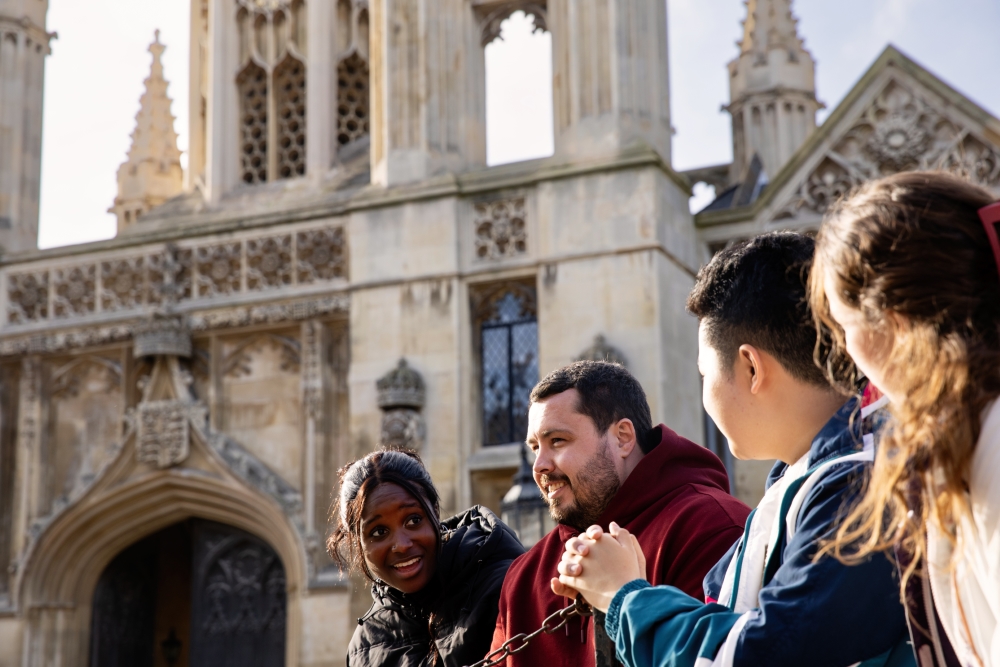
Across the pond in the United Kingdom and part of the “Golden Triangle” that includes Oxford and London, Cambridge is often considered the largest biotechnology cluster in Europe with over 30 science and technology parks, a significant number of leading research universities and major pharmaceutical and biomedical players. The University of Cambridge, the third oldest continuously operating university in the world, was founded in 1209 by University of Oxford separatists, with the two schools often collectively dubbed as “Oxbridge.” The University of Cambridge has at its feet over 4,700 knowledge-intensive firms, including 560 life sciences companies, 2,700 in IT and telecom and 610 in high-tech manufacturing, making the area fertile ground for science and business alike.
“Cambridge has a mature ecosystem and has had an incredible explosion of technology, life science and service companies in the city since 1960, the so-called Cambridge Phenomenon,” writes Kathryn Chapman, executive director of Innovate Cambridge, launched in September 2022 under a 10-year plan to name the city as the most impactful and important innovation ecosystem in the world. “We have very good relationships across the Golden Triangle, recognizing strengths, complementarity and healthy competition. We all strive to be the best we can as research and innovation hubs, and we collaborate where we can to ensure that together we are globally competitive and can deliver on economic growth for the UK. Many multinational corporations have partnerships with academic institutions in all three cities.”
Professional services companies as well as angel and VC investors supporting startups and scaleups also makeup the professional scene in Cambridge. Local startups and scale-ups raised £1.71 billion in 2024, the second-best year on record and almost doubling the £0.89 billion collected in 2023.
“This unique combination of excellence, density and experience, particularly of serial entrepreneurs, is vital to Cambridge’s success,” says Chapman. When asked what distinguishes the university and city from other biomedical and science hubs, Chapman notes that “Cambridge is home to a number of world-class clusters in strategically valuable emerging sectors including AI, genomics, life sciences, cybersecurity, advanced therapies and semiconductor design.”