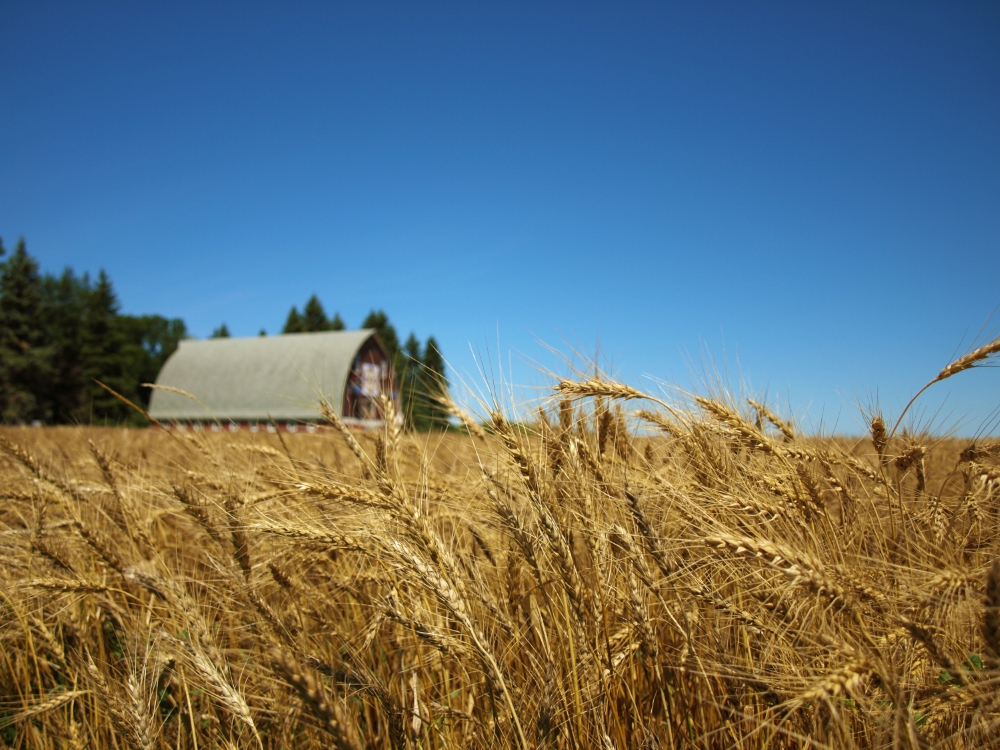
Manage and mitigate. Adapt and overcome.
It’s the name of the agriculture game in North Dakota. An industry at the whim of Mother Nature encounters different levels of unpredictability each year. Fortunately, there aren’t many obstacles North Dakota farmers haven’t navigated through before.
Despite more than 2 million prevented planting acres due to excessive rain or moisture seen throughout the state, farmers planted 24.2 million acres in 2025. The nearly 1 million acre increase over the year prior was primarily driven by market indicators, as a global taste for North Dakota’s harvests found its stride.
In the past several years, the state has grown active trade with 171 different countries who are tapping into an array of 54 commodities. When it comes to top crops, North Dakota leads the nation in 13 commodities — including spring wheat, durum wheat, sunflowers, flaxseed, canola and pinto beans — continues to be the undisputed national leader in honey production and is responsible for producing 47% of all the nation’s dry beans.
“We’re diverse and very unique,” says North Dakota Agriculture Commissioner Doug Goehring. “We have 13 different microclimates in the state, across different regions, elevations and topographies. Most of our land is owned, operated or managed by farmers who have the potential to produce on 27.5 million acres of cultivated land. On top of that, we have some of the most fertile land in the world — ranked in the top five — in the Red River Valley.”
The perks of a robust agricultural supply chain enable a wide range of industry-related operations to plant firm roots throughout the North Dakota Badlands. Food and beverage processors — such as J.R. Simplot, Cargill and American Crystal Sugar Company — depend on the upwards of 25,000 farms and ranches operating across 90% of North Dakota’s land, often championing a production’s complete life cycle. Generations of farming expertise also translate to a growing number of homegrown businesses that value simple, fresh ingredients for consumers.
Grand Forks-based 3 Farm Daughters — a prebiotic pasta company launched in 2020 by Sproule sisters Annie, Mollie and Grace — chose to capitalize on a crop the state knows well, durum wheat. The two-ingredient fiber-rich pasta has worked its way onto grocery shelves around the nation, while the team is exploring ways to expand its international reach online.
Meanwhile, on a family-owned dairy farm in Carrington, Maartje Murphy sharpened her entrepreneurial skills by looking to add value to the farm’s raw milk production by making various flavors of gelato.
Interest in farm diversification enabled Murphy to receive funding through the state’s Agricultural Products Utilization Commission (APUC) to take Cows & Co Creamery from concept to reality. Presence at local farmers markets and festivals drew demand and ultimately the need to expand her farm’s production capabilities, making Cows & Co a perfect fit for the Agriculture Diversification and Development (ADD) Fund. By utilizing the farm’s fresh milk, the creamery has grown its portfolio beyond gelato to include production of aged gouda cheeses, yogurt and bottled milk.
Placing Value on North Dakota’s Future
Necessity is the mother of innovation, which led to the cultivation of the APUC in the late 1970s, as the state recognized that a majority of commodities leaving the state had no value added to them. APUC is a program designed to support R&D for new or expanded uses of North Dakota’s agriculture products that return a direct impact to the state’s rural communities and agricultural operations.
“When you’re land locked, smack dab in the center of the North American continent and the furthest away from any ocean of any U.S. state, you start to look at innovative and creative ways to be competitive and reach the global market,” says Goehring.
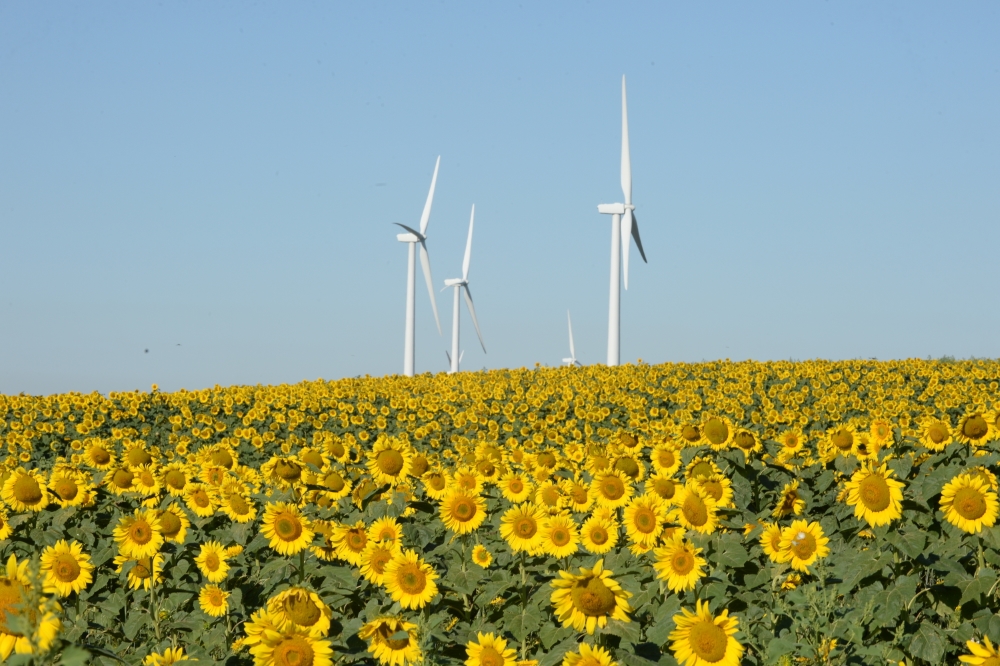
Agriculture and energy are North Dakota’s top industries and farmers own, operate or manage 90% of the state’s land that support these operations.
Photo courtesy of North Dakota Tourism
He says APUC has evolved to focus on several categories: farm diversification; basic and applied research; marketing and utilization; technical assistance; nature-based tourism; and prototype development and technology. In November 2025, Goehring announced eight projects selected among the latest batch of APUC awards, totaling $926,800 in funding. This round included a $250,000 award to Belgium-based manufacturer Agristo, to aid engineering plan development for the company’s first U.S. potato processing plant in Grand Forks.
“We do a fantastic job picking projects and helping support our rural communities, but it also has a direct impact on our more urban communities too,” says Goehring, “especially when you start manufacturing.”
APUC funding was, “one of the important elements of the incentive package,” according to Agristo Corporate Affairs Director Ward Claerbout. But overall, “It was the total package of incentives that convinced Agristo to commit to this project,” he says.
The company only had Grand Forks in mind when visiting North Dakota during its U.S. site selection search, ultimately selecting the region over competing state Wisconsin. Upon securing a 340-acre industrial plot in the city, Agristo began initial foundation and ground work in September 2025. A minimum $450 million investment will introduce production facilities totaling 851,833 sq. ft. of the site. Agristo plans to locally source potatoes from over 20,000 acres of farmland in the Red River Valley, which Claerbout notes ensures freshness while embedding Agristo within the U.S. potato belt.
“We are already present in the U.S. market through imports and aim to increase our market share through establishing a production site closer to the potatoes and customers in the U.S.,” he says.
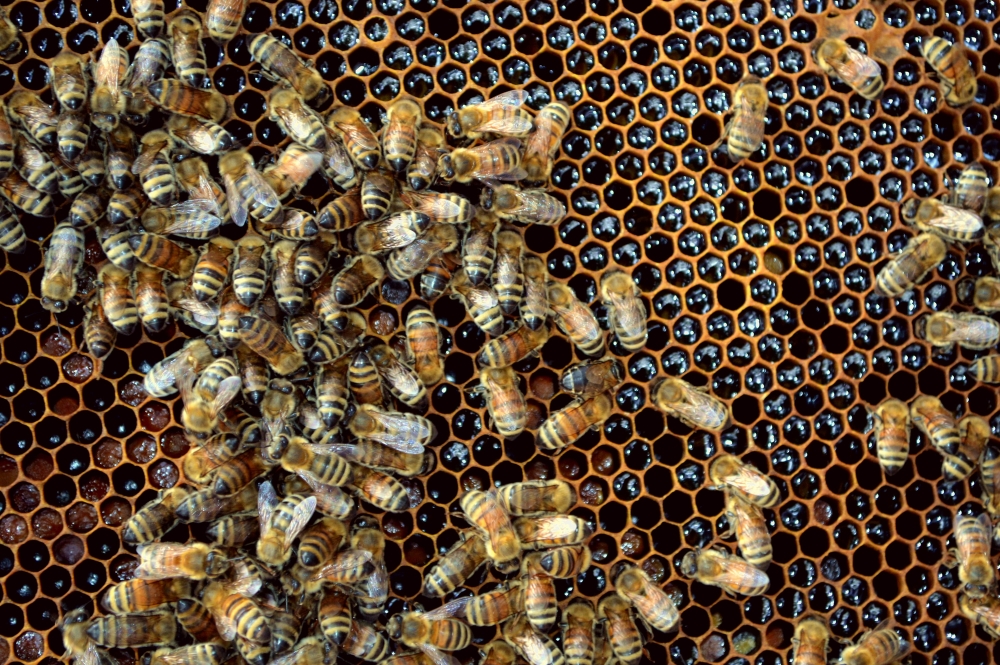
Photo courtesy of North Dakota Tourism
Operations at the facility are anticipated to launch in 2028, carrying an initial annual production capacity of 250,000 tons of finished potato products, such as French fries and hashbrowns. Agristo will create more than 200 jobs by launch, scaling to over 300 direct roles once full production is achieved.
“We experienced a lot of support on all government levels,” says Claerbout. “Mainly the Economic Development Corporation who helped us establish our first contacts. We appreciate the expertise, openness and welcomeness of the local farmers and were impressed with the quality of crop and skills of these farmers.”
How the ADD Program Adds Up
Similar to APUC — although different in that it very specifically targets food production; feed or pet food processing facilities; commodity processing; agriculture product manufacturing; and animal production facilities — the ADD program provides grants to new or expanding value-added agricultural businesses to enhance profitability for farmers and ranchers. Four companies awarded a combined $1 million in the latest funding round showcase a few ways ADD can be applied.
Anchor Ingredients’ $300,000 will be used to upgrade three facilities in Hillsboro with value-added equipment for processing flour and oat hulls. Cavendish Farms plans to apply its $500,000 toward the expansion of its frozen potato production plant in Jamestown, making room for new equipment and increased capacity. Tracey Hauck, of Hauck Ranch in Richardton, North Dakota, received $150,000 for the construction of a new cattle confinement barn and working facility to raise cattle efficiently. Weinlaeder Seed Company rounded out the ADD awards with $50,000 to purchase lab equipment in the expansion of its food-grade processing facility.
“The first year the program launched people were trying to find out how they fit,” says Goehring. “Since then, it’s really taken off. It’s started to bolster value-added agriculture in North Dakota, and I’d say it’s just getting its legs under it as momentum keeps building.”
The duality of North Dakota’s agriculture industry stretches beyond satisfied taste buds and into the role top crops play in providing alternative energy resources. Corn will become a key component for Colorado-based Gevo, who plans to produce sustainable aviation fuel (SAF) at the soon-to-be expanded Red Trail Energy ethanol facility in Richardton, which was acquired by the company in early 2025. Carbon capture is a vital to producing SAF and this site housed the country’s first ethanol plant to capture and store carbon dioxide.
The state’s first dedicated soybean crushing facility was delivered by Green Bison — a joint venture between Marathon Petroleum and Archer-Daniels-Midland — in 2023, processing 150,000 bushels of soybeans per day to produce renewable diesel fuel. Since Green Bison’s launch, North Dakota has attracted nine new or expanded soybean crush plants, according to the American Soybean Association.
The latest arrival was the North Dakota Soybean Processors facility in Casselton, which is capable of processing 42.5 million bushels of soybeans each year. The JV between CBG Enterprises and the Minnesota Soybean Processors offers refined soybean oil, soybean meal and soybean hull pellets — products that can serve a variety of purposes from high-protein feed to industrial uses at renewable diesel and SAF refineries.
Goehring says this activity led to the implementation of a new Low Carbon Fuels Program last year to support ethanol production facilities with funding for the construction or replacement of existing infrastructure; beneficial use of carbon dioxide; energy efficiency enhancements; or ethanol yield improvements.
“These are the types of programs that help augment and enhance a company’s ability to move forward, create efficiencies and explore different technologies,” he continued. “It marries up well with a lot of what we have here with APUC and ADD.”