
How has Portugal become the gateway for strategic investment in data and AI infrastructure in Europe?
Several competitive advantages have propelled Portugal to the front of the pack for data center projects and artificial intelligence (AI) infrastructure in Europe. A high level of renewable generation in the energy supply (more than 80% in January 2026), competitively priced electricity, a strategic oceanside vantage point and a highly qualified talent pool are some of the leading reasons why the country is becoming the premier destination for these industry sectors.
Portugal approved its National Data Center Plan in March 2026, designating the Portuguese Trade and Investment Agency, known as AICEP Portugal Global, as the government’s single point of contact for data center investors. The national strategy also outlines priority initiatives through 2027 in energy, infrastructure, project financing and land use activity. The strategy is geared toward maintaining Portugal’s momentum as the premier destination for next-generation technology and advanced computing projects.
Sustaining Progress
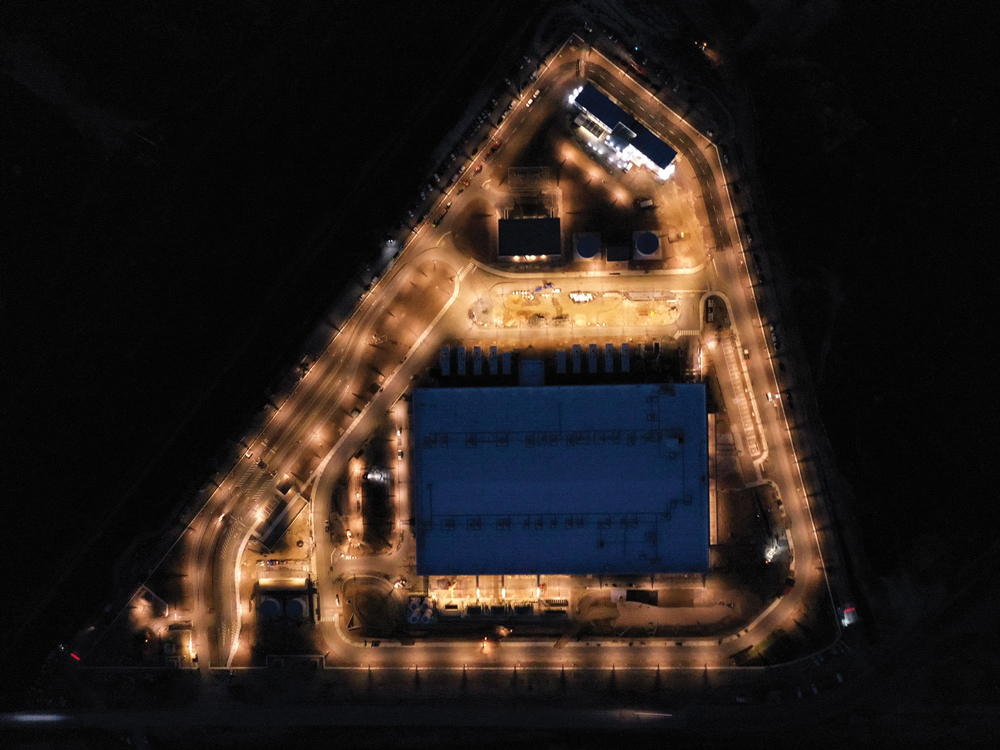
In 2024, Portugal’s colocation data center capacity soared with the opening of the SINES Data Campus in the coastal location of Sines, developed by Start Campus. Supported by 100% renewable energy, the 1.2-gigawatt (GW) data center began construction in 2022, began operations in late 2024 and is designed to be the largest colocation site in Europe at full completion in 2030. The facility uses an innovative seawater cooling system to support high-density AI, cloud and high-performance computing (HPC) workloads.
In November 2025, Microsoft made one of its largest investments in Europe by committing $10 billion toward the SINES Data Campus, which will enable large-scale AI and cloud infrastructure capabilities in Europe. In May 2026, NVIDIA-backed AI cloud provider and data center builder Nscale expanded its collaboration with Microsoft and Start Campus by announcing it would deploy more than 66,000 NVIDIA Rubin GPUs at SINES starting in late 2027. Nscale also announced additional investments of €230 million in shared infrastructure and €465 million in a second 200-megawatt (MW) building at the SINES Data Campus.
“This partnership enables the deployment of next-generation AI compute at the scale and efficiency required for frontier workloads,” said Josh Payne, CEO and founder of Nscale, about the collaboration on the SINES Data Campus. “Building on a proven foundation, the expanded deployment in Sines, Portugal, creates one of the most advanced environments in Europe for high-density AI infrastructure.”
The SINES Data Campus is emblematic of Portugal’s push to lead digital and data center growth across Europe. In 2024, €164 million was invested in the construction of new data centers in Portugal. This number grew to €1.5 billion in 2025 and is projected to rise by more than €11 billion between 2026 and 2031. Most data center capital will be spent on scale colocation projects, which offer large, scalable facilities to large-load customers and hyperscale cloud providers.
The 2026 Data Centers Market Outlook, to be published by Portugal DC, shows that in a consensus scenario, IT power capacity is expected to grow 11-fold between 2026 and 2032, approaching 2.0 GW and requiring an estimated €27 billion in construction and fit-out investment. The report also projects that the market’s contribution to GDP will grow to €6 billion in 2032.
Highly Connected
Portugal also serves as a door to Europe, the Americas and Africa thanks to extensive fiber-optic infrastructure. A 2024 report from the EuroDefense-Portugal Association found that around 25% of sea cables crossing Portugal’s Exclusive Economic Zone and around 75% of cables crossing the North Atlantic pass through Portuguese waters. Major connecting hubs are located in Lisbon, Sines and the Azores.
“Being in the digital industry in Portugal, the connectivity infrastructure has improved a lot and there have been huge investments in fiber networks and undersea cable connections,” says Margarida Marques, VP, Portugal country lead and head of continental Europe at Hitachi Digital Services in Lisbon. “Portugal has made huge investments in connectivity and infrastructure, and we are very well-positioned. We are as good as other developed European countries.”

“Portugal has made huge investments in connectivity and infrastructure, and we are very well-positioned.”
— Alex Esposito, president and COO, Special-Lite, Inc.
Hitachi Digital Services’ Portugal operation serves as delivery center for other locations, including the company’s delivery center locations in India and Vietnam. The company serves cloud development and systems integration as well as data and AI managed services in Europe and abroad, with several projects in Africa, U.S. and Asia. Hitachi’s other subsidiary, Hitachi Vantara, provides enterprise-class data storage, hybrid cloud infrastructure and data management solutions and has an office in Lisbon.
Google brought its new Nuvem subsea cable system ashore in Sines in July 2026, with cable landing stations in Sines connecting to Myrtle Beach, South Carolina; Lagoa in the Azores and Annie’s Bay in Bermuda. Giorgia Abeltino, head of government affairs and public policy for Google Cloud Europe, Middle East & Africa, said in July 2026 that “subsea cables carry the overwhelming majority of the world’s data traffic — they are the invisible backbone of everything from AI to digital public services.”
Other optical submarine cable systems with landing points in Portugal include the EllaLink (Sines, connecting directly to Brazil with ground-based links to Madrid, Lisbon and Marseille); Equiano (Sesimbra, connecting Europe to southern Africa); 2Africa (Carcavelos near Lisbon, connecting to Africa, Asia and Europe); Medusa (Carcavelos, connecting to the Mediterranean, North Africa and the Middle East) and PISCES (Carcavelos to Ireland, with stops in France and Spain; expected 2028).
A World-Class Workforce
“Portugal is considered one of the strategic development locations for Hitachi Digital Services,” says Marques. “There is a good availability of resources for cloud data and AI and high fluency in at least Portuguese and English. It is easy to find resources that would cover certain languages like French, German, Italian or Spanish. Within the Hitachi ecosystem, Portugal is considered a niche, specific part of innovation and development.”
A high English and multilingual proficiency rate in Portugal also means workers are prepared to work across an international scope. In the 2025 Education First English Proficiency Index, Portugal ranked sixth globally, and Spanish is widely adopted as a secondary learned language. Pairing this with a desirable quality of life that includes a temperate Mediterranean climate and high safety rates, Portugal maintains its positioning as a top destination for international workers.
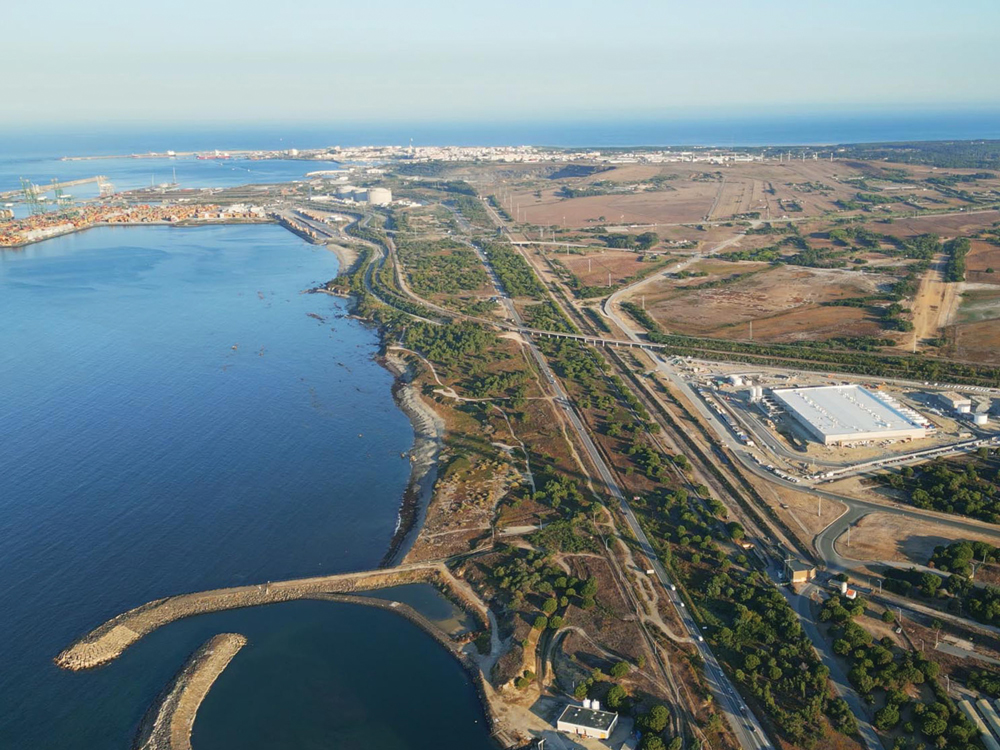
Completely supported by 100% renewable energy, the SINES Data Campus began construction in 2022, began operations in late 2024 and is designed to be the largest colocation site in Europe at full completion in 2030.
Photo courtesy of Start Campus
Portugal also satisfies workforce needs in the digital and AI business landscape. The country has the second-highest rate of engineering graduates in the European Union, with about 30% of its 100,000 university graduates earning a STEM degree each year. Higher education options include the University of Lisbon and the University of Porto, both of which rank globally in the top 200 engineering & technology schools; the University of Aveiro, the University of Coimbra, NOVA University Lisbon and the University of Minho.
Innovation at the university level also builds Portugal’s data center ecosystem. As part of the European Processor Initiative (EPI) project that shepherded research on new processors and technologies for large-scale computing and high-performance computing (HPC) across the continent, a Portuguese team led by Dr. Leonel Sousa at INESC-ID at the Instituto Superior Técnico carried out significant research focused on developing equipment capable of monitoring system operations and assessing performance quality in HPC centers.
Notably, the Instituto Superior Técnico at University of Lisbon is set to host a new data center on its Oeiras Campus, which is part of an investment of more than €20 million by the University of Lisbon to create one of the “largest digital infrastructures in Portuguese Higher Education.”
EPI and DARE (Digital Autonomy with RISC-V in Europe) are both initiatives of the European Union aiming to secure Europe’s digital sovereignty and develop its supercomputing and AI power. EPI concluded at the end of 2025, and DARE launched in March 2025, coordinated by the Barcelona Supercomputing Center and supported by the European High-Performance Computing Joint Undertaking (EuroHPC JU). DARE involves 38 organizations across 13 European countries aiming to develop hardware and software for HPC and AI applications over the next several years, and leading researchers at the University of Porto are currently at work under the umbrella of DARE.
Preparing for Growth
In the Lisbon metro area, projects of significance come from Merlin Properties and Edged Energy, Equinix, AtlasEdge, Voltekko and Quetta. Porto is also becoming a popular destination for data center infrastructure in Portugal. According to Data Center Map, 11 data centers are located in Porto, while the Lisbon region is host to 25 projects.
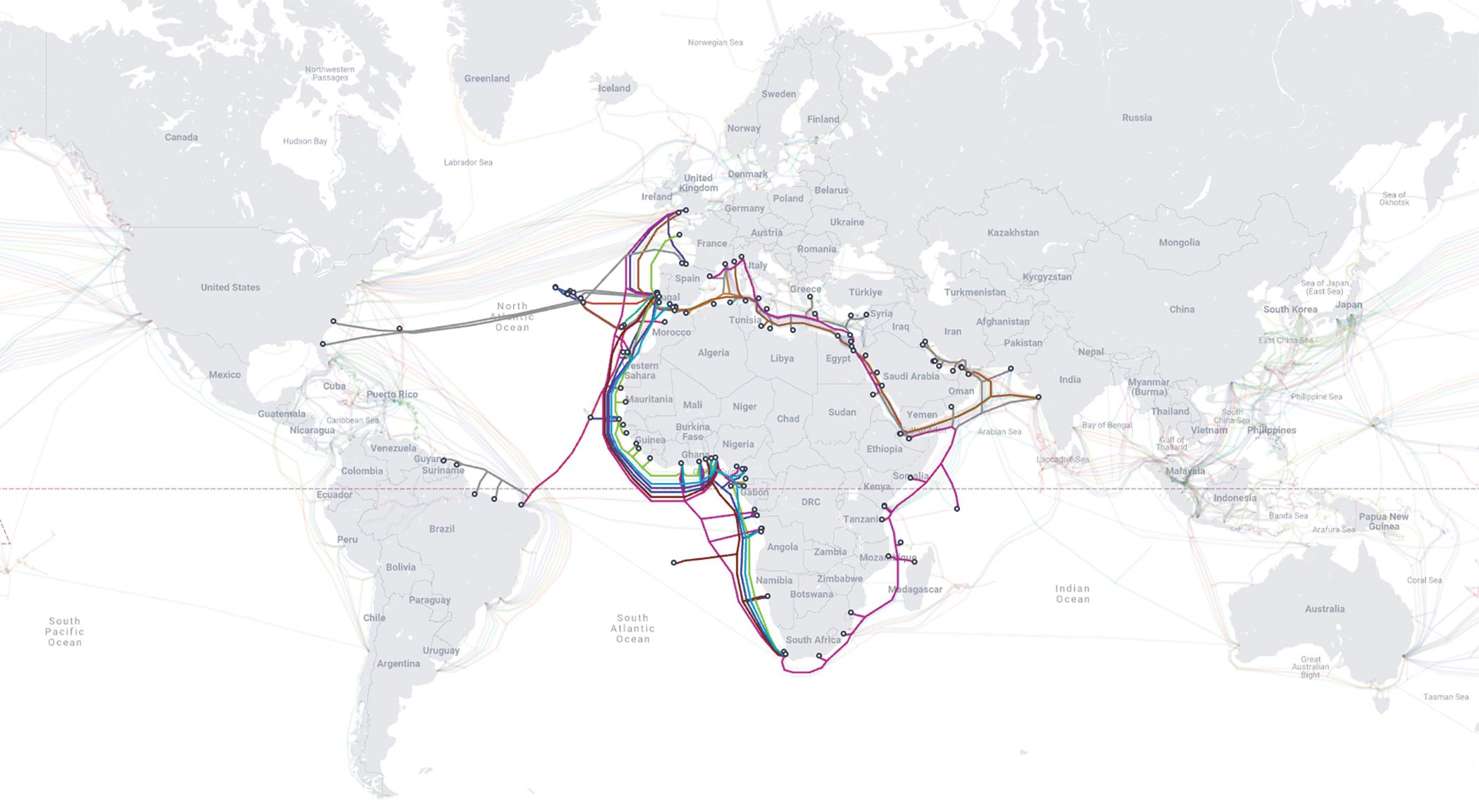
Portugal serves as a door to the continents of Europe, the Americas and Africa thanks to its extensive domestic fiber-optic infrastructure and undersea cable connectivity.
Map courtesy of TeleGeography
Merlin Properties and Edged Energy broke ground on a 180-MW carbon-neutral AI data center campus in Vila Franca de Xira and will open the first of five facilities in 2027, with planned full capacity reaching 300 MW. Net-zero digital infrastructure provider NxN Datacenters, which has data centers in development or operation across Southern Europe, announced in late September 2026 that it had acquired an operational 1-MW data center in Évora, located in south-central Portugal. NxN plans to invest €100 million in Portugal over the next three years, aiming to progressively expand its platform through new digital infrastructure.
Equinix expanded its global digital infrastructure and data center footprint with the launch of its second International Business Exchange (IBX) data center in Lisbon in June 2025 and is also planning to build a third data center in the region by 2027. FuriosaAI, a South Korean AI chip developer, is working with Equinix to expand the company’s digital and AI ecosystem. FuriosaAI deployed servers at Equinix’s site in Lisbon in summer 2026 and has begun onboarding new customers.
“Portugal has a world-renowned community in compilers, a consolidated ecosystem in chip design, data centers powered by clean energy and a growing group of AI startups and solution integrators,” said Nuno Lopes, director of FuriosaAI Europe, in April 2026. “It was the obvious location for FuriosaAI’s flagship office in Europe. We are very proud to bring to Portugal a company that operates in such a critical area; worldwide, there are only half a dozen companies capable of developing this kind of technology.”
Located in Aveiro, Altice Labs contributes to Portugal’s AI capabilities in telecommunications by bringing together decades of expertise with advanced research and engineering in AI, data science and network automation.
“Our contribution is to the intelligence layer of telecommunications infrastructure: developing the software, AI models, automation capabilities and engineering expertise that enable networks to become more predictive, adaptive and autonomous,” says Paulo Firmeza, Altice Labs’ General Manager.
A 2025 Cushman & Wakefield report on data center expansion in Portugal noted that in Lisbon, indicators show the “data center market is still in an early stage in terms of real capacity. However, pipeline capacity is expanding rapidly.”
This Investment Profile has been prepared under the auspices of AICEP Portugal Global. For more information, contact dinv.apoio@portugalglobal.pt or visit https://www.portugalglobal.pt/en/investment/why-portugal/