Mass timber thrives in Atlantic Canada.
The timber industry in Atlantic Canada is as vast, diverse and as ripe for growth as the Wabanaki-Acadian forests that span its territories. One company leading the industry in this region is Halifax-based Mass Timber Company (MTC), which will break ground on a new large-scale mass timber industrial facility in Nova Scotia this summer — the first of its kind for Atlantic Canada.
MTC CEO Patrick Crabbe explains why his company chose to build a cutting-edge facility in East Hants not far from Halifax, saying that “the vision is to turn East Hants into the Forest Center of Excellence in Canada. That means not just increasing capacity of mass timber. It includes investing in further downstream products for prefabrication — developing building envelopes and mass-timber products that can work in high-rise buildings or various classifications of buildings.”
Nova Scotia and Beyond
In late April of this year, Crabbe said MTC was in the final stage of proprietary code approvals by the Canadian Construction Materials Centre and the International Code Council after initiating this project in 2024, with the expectation to break ground this summer and start producing Nova Scotian mass timber for the lumber market within 24 months. The 170,000-sq.-ft. facility will be located on 60 acres in Elmsdale Business Park and will process eastern spruce.
The lumber products to be manufactured at the East Hants facility undergo rigorous assessment, Crabbe explains. Test beams are destructively tested to show that the product exceeds the performance requirements set by Canadian national codes. MTC, which incorporated in 2020, spent nearly C$3.5 million to complete business validation and product testing and start the code approval process.
Timber production will be split into 40% glue-laminated timber and 60% cross-laminated timber, with the facility set to produce 50,000 cubic meters of mass timber each year, translating to about 2.5 million sq. ft. of construction material. The demand in Nova Scotia and globally is strong for mass timber, including in the emerging markets of Bhutan and South America and established markets in the northeastern United States, Ontario and Atlantic Canada.
“Having a prefabricated product that can be using Nova Scotia wood manufactured in a facility in Nova Scotia that is 80% owned by Nova Scotians, including majority First Nations, to then produce the code-approved, high-performing, low-carbon infrastructure needed to build the city and rural communities and the necessary infrastructure for schools, hospitals and high-density urban housing — that’s really what makes this so magical,” says Crabbe. “It’s a true circular economic solution that benefits many industries.”
East Hants was chosen due to several sawmills located in the municipality. Crabbe himself worked with Bird Construction on the East Hants Aquatic Centre in 2019, demonstrating what mass timber products could do for community infrastructure.
“Nova Scotia has Atlantic Canada’s most dense population,” says Crabbe. “There is a large backlog of infrastructure and a huge government will to be open for business and do things in a different way.”
The project has received C$23 million total in government support, including funding from the Nova Scotia Forestry Innovation Transition Trust and the Canadian government’s Investments in Forest Industry Transformation (IFIT) program. MTC is also pursuing a First Nation Coalition investment, a federal loan guarantee that could cover up to 75% of the project costs, due to the fact the project and assets are majority First Nation-owned.
“We have been working closely with Mi’kmaq First Nations since summer of 2023 and currently the project is being led by Wagmatcook First Nation out of Cape Breton as well as Glooscap First Nation out of Annapolis Valley,” says Crabbe. “They are the majority owner and the majority investor in the project. They are very interested in this project because often they have been involved in the marine industry with fisheries, and this is their opportunity to get back to being stewards of the land. They have a lot of forest resources.”
Crabbe says that MTC is working with First Nations stakeholders to manage their forests, supply a business infrastructure for the related products and build homes in First Nations communities while also diversifying the local supply chain and business and employment base.

“It’s a true circular economic solution that benefits many industries.”
— Patrick Crabbe, CEO, Mass Timber Company, on the company’s new operation in Nova Scotia
Creativity Meets Precision
The MTC facility will also be emblematic of innovative technology in lumber processing and the wider application of mass timber in sustainable construction projects.
“Our team has also embraced AI with an open mind,” says Crabbe. “We are looking to revolutionize the workstream flow from our enterprise resource planning. We plan on incubating a lot of the AI innovation in-house as well. The other part, too, is that we have a fully automated grading system on the front-end of our project. We’re able to actually determine the exact strength and quality characteristics of every single piece that enters our facility one by one — and we are doing that with top-of-the-line technology that does the full scanning, barcoding and non-destructive testing to truly add the value to every stick of precious lumber.”
The processes and technology MTC plans to leverage at the new site means the ability to deliver columns and beams that are less labor-intensive to make and designed for larger buildings, up to 30 stories high.
“The whole objective behind this creative manufacturing is that we want to minimize the amount of wood that is used in a mass timber project,” says Crabbe. “Because the less wood that you use, the more cost-effective that is to the end-user and the client.”
The innovative approach to optimizing lumber production while adhering to sustainability and community infrastructure principles aligns with principles espoused by the Canadian government.
Natural Resources Canada spokesperson Maria Ladouceur writes that the new MTC facility “will also expand Canada’s domestic manufacturing capacity, helping to meet the country’s growing demand for sustainable low-carbon building materials.”
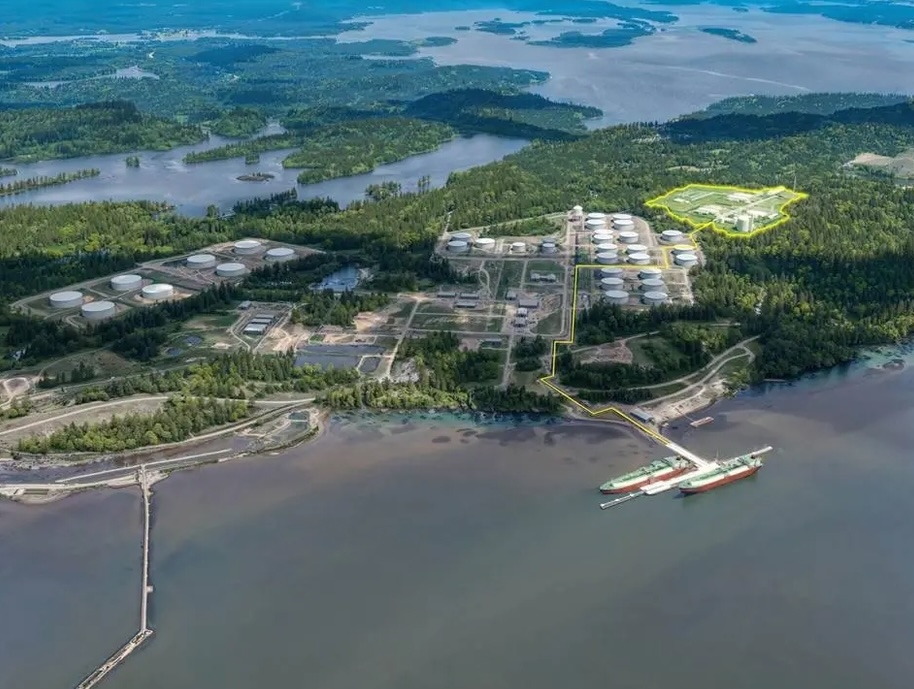
Funding from Nuveen will support EverWind’s 650-megawatt onshore wind portfolio across several Nova Scotia sites and their connection to the company’s green hydrogen and ammonia facility in Point Tupper.
Photo courtesy of EverWind Fuels
Canadian Energy Portfolio Expands
Energy diversification in northeastern Canada is deepening, with global deals made to solidify the supply chain of Canadian power. In February 2026, the executive branch of the European Union committed €200 million (US$232.2 million) to support the renewable hydrogen sector in Canada, matching financing from the Canadian government for fuels exported to Germany. In 2022, the government heads of Germany and Canada at the time (Canadian Prime Minister Justin Trudeau and German Chancellor Olaf Scholz) signed an agreement in Newfoundland agreeing to partner on building a mutual clean hydrogen supply chain, a direct response to Germany moving away from Russian energy sources in the wake of Russia invading Ukraine. An auction process will start in 2027 for Canadian companies looking to supply Germany with hydrogen and for the sale of the hydrogen produced to German entities.
On the heels of this news, Canadian company EverWind Fuels secured US$175 million (CAD$240 million) for wind generation and green hydrogen projects in Nova Scotia in March 2026 thanks to an investment from American global asset manager and financial services company Nuveen. The funding will support EverWind’s 650-megawatt onshore wind portfolio across several Nova Scotia sites (enough to power about 200,000 homes each year) and an integrated clean energy platform connecting wind generation via the power grid to Nova Scotia Power’s transmission system to EverWind’s Point Tupper green hydrogen and ammonia facility.
Also in March, renewable energy company Stardust Solar Energy announced it would start serving Greater Halifax and the Dartmouth area of Nova Scotia as a new franchise territory. Stardust Solar Energy Founder and CEO Mark Tadros said of the business move that “Atlantic Canada offers a strong opportunity for solar adoption, supported by rising electricity costs, favorable net-metering frameworks and growing demand for energy independence.”
— Kelly Barraza