Does the sun ever set on data center demand?
Despite record construction activity, North American data center demand continues to outpace supply. According to CBRE’s latest data center trends report for the continent, new construction rose 24.8% across eight primary North American data center markets in the first half of 2026.
“Developers are bringing more projects to market, but occupiers are absorbing new capacity almost as quickly as it can be delivered,” said Pat Lynch, executive managing director, CBRE Data Center Solutions, in August 2026. “The challenge is no longer whether developers want to build. It’s whether power, infrastructure and approvals can keep pace with the scale of demand. Markets that can alleviate those bottlenecks will be best positioned to capture the next wave of investment.”
Across the globe, the trend holds for a continued data center boom, though concerns about the industry’s impact on the environment and natural resources may stymie the road ahead.
A Data Dynasty in Finland?
In September 2026, Google announced it would spend $15 billion to expand data center operations in Hamina, Finland, and build new sites in the Finnish cities of Kajaani, Muhos and Vaala.
Whether all these projects will take place as planned remains to be seen. In early October, Finland’s Licensing and Supervision Agency (LVV) ordered work to be stopped at two of Google’s new data center sites in Muhos and Kajaani due to environmental impact concerns.
“As KIO Data Centers continues to expand its infrastructure platform, energy efficiency, responsible resource management and high international operating standards will remain important considerations in supporting the region’s growing demand for digital infrastructure.”
— Octavio Camarena, CEO, KIO Data Centers
The stop order indicated that 815 acres at the Muhos site and just under 500 acres of forest at the Kajaani site had already been cleared or altered without required environmental reviews.
Other construction activity that had already taken place at Kajaani and Muhos included removal of topsoil, excavation and construction of roads. A Google spokesperson told CNBC that the company “acted in good faith under the Forestry Act, and ran nature surveys and put in place measures to protect high-value areas.”
Google was ordered to stop working on the Muhos and Kajaani sites by October 23. A month earlier, I spoke with Business Finland Director General Lassi Noponen about why Finland is a top destination for data center and AI infrastructure and about what has become “the largest single foreign direct investment in Finland ever,” meaning Google’s $15 billion investment in the country.
“We have to see these data centers as the infrastructure of the digital economy and be creative and build together with Google,” said Noponen on September 23. “Our objective is not to attract data centers. We want to be the digital infrastructure that creates value for the surrounding economy and energy system.”
The multinational technology corporation has a 15-year presence in Finland, starting with the conversion of a former paper mill in Hamina to a data center in 2009. The investment planned in Finland by Google is expected to span the next two years and support 7,000 jobs annually once new facilities are operational.
The Hamina data center, in partnership with the city’s energy provider Haminan Energia, started operations at its first offsite heat recovery project in 2025 to reduce Google’s environmental footprint and provide heating to local commercial and residential properties. Waste heat recovered at the existing Hamina site is 97% carbon-free and supplies 80% of the annual district heating demand for the port city.
Approximately 96% of Finland’s energy production is carbon-free, and grid reliability is nearly 100%. The country offers renewable generation on a large scale, especially in the less populated northern and western regions. Grid capacity, power generation and available land and infrastructure are key criteria for siting data centers.
Noponen points to Finland’s highly collaborative training and educational model as a strength of its workforce. According to Technology Industries of Finland, the country’s technology sector will require 140,000 new professionals over the next decade, especially those with higher-education-level skills. Government initiatives like Work in Finland have been geared toward recruiting international talent working in the engineering, AI and quantum fields.
Microsoft Azure, Nebius and TikTok all have data center campuses or planned projects in Finland.
Made in Mexico
When it comes to the data center market in Latin America, Mexico is second only to Brazil. Querétaro leads the industry in Mexico, with nearly 80% of the nation’s installed data center capacity. Concerns from local Mexican communities around regulatory transparency, water resources and power grid stability persist while data center projects continue to be announced and built.
KIO Data Centers has a strong operational footprint in Mexico with 13 data centers overall peppering Mexico City, Querétaro, Monterrey, Hermosillo and Mérida. In August, KIO Data Centers announced it would invest $1.3 billion in its QRO3 data center in Querétaro’s El Marqués Industrial Park. The project is currently being evaluated at approximately 100 megawatts (MW) of capacity and is designed to support the company’s long-term growth through 2030.
KIO Data Centers takes sustainability seriously with its approach to developing and operating digital infrastructure, says KIO Data Centers’ CEO Octavio Camarena. The company incorporates technologies designed to improve the efficiency of its facilities, including closed-loop water systems that reduce water consumption.
“Across its operations, more than 78% of the energy used by KIO Data Centers comes from renewable sources,” Camarena writes. “As KIO Data Centers continues to expand its infrastructure platform, energy efficiency, responsible resource management and high international operating standards will remain important considerations in supporting the region’s growing demand for digital infrastructure.”
QRO3 will expand the company’s ability to meet “increasing demand for cloud computing, AI and other mission-critical digital applications” and “reinforces the company’s commitment to Mexico and its potential to become one of Latin America’s leading digital infrastructure hubs,” says Camarena.
KIO Data Centers is also planning another $200 million for separate investments in Mexico City, Monterrey and Querétaro and $170 million for its QRO2 facility in El Marqués Industrial Park.
“Mexico has firmly established itself as one of the most attractive markets for digital infrastructure development in Latin America,” writes Juan Carlos Mondragón, president of the Mexican Association of Data Centers (MEXDC). “Its strategic location, integration with North America, growing demand for cloud services and artificial intelligence, and the ongoing nearshoring trend create exceptional conditions for data center investment.”
MEXDC stated in June 2026 that data center development in Mexico could generate more than $82.5 billion in direct and indirect investment between 2026 and 2031. The Mexican states of Nuevo León, Jalisco, Guanajuato, Hidalgo and the State of Mexico have also been highlighted as areas with significant opportunities for data center projects.
“Our conviction is that data centers are no longer simply technology infrastructure. They are strategic infrastructure that underpins Mexico’s competitiveness, innovation and economic growth,” adds Mondragón.
Moratoriums and Massive Projects
Resistance to data centers continues to mount in the U.S. over sprawling AI infrastructure projects. Several states — including New York, Georgia and Virginia — have proposed pauses on large-scale data center development in recent years. No state has issued a permanent ban on the industry, though New York Governor Kathy Hochul signed an executive order on July 14, 2026, declaring a one-year temporary moratorium on new hyperscale data centers.
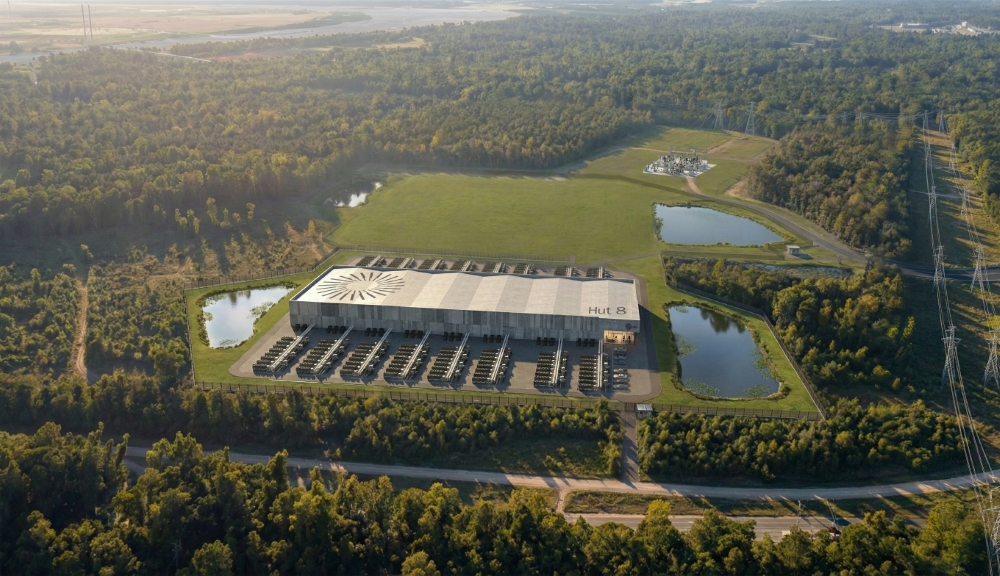
In December 2025, energy and digital infrastructure company Hut 8 announced it would build a new AI data center campus in River Bend in West Feliciana Parish in southeastern Louisiana. Phase I of the project will represent $10 billion in investment and at least 75 direct new jobs. Fluidstack will be the site’s tenant and will be supported by a financial backstop from Google covering all lease and related pass-through obligations, according to a Louisiana Economic Development press release.
Speaking to Site Selection about the company’s new project, Hut 8 Vice President of Data Centers Shafayet Patwari says that “the starting point is always power because it is a scarce resource, and we underwrite it first before we commit to a site. That includes assessing available energy capacity, the strength of the interconnect and transmission access, the regulatory environment and the ability to scale over time.”
Patwari adds that “West Feliciana Parish met our power-first criteria, and what set it apart was the partnership we found there. From the outset, parish leaders worked with us to understand the project, identify community priorities and build a structure that delivers value well beyond the site itself.”
Major investment in parish water infrastructure and direct support for institutions serving the community (what Patwari calls “host-community alignment”) made West Feliciana Parish the prime location for the new project.
“We want to develop infrastructure a community is proud to have,” he says about the River Bend project, which is Hut 8’s first greenfield AI data center development. The site is designed for phased expansion, launching with an initial 330 MW of utility capacity and the potential to scale up to 1,000 MW.
The campus is designed to use a closed-loop cooling system, leveraging a water-glycol solution that is premixed offsite, trucked in and circulated through sealed piping rather than drawn from any local water source. The solution is filled once at commissioning and recirculated continuously, with expected usage lasting four to seven years.
Read more here about data center development in Mexico in a Q&A with Juan Carlos Mondragón, president of the Mexican Association of Data Centers.