Texas sees hearty gains in its local food supply chain.
In Texas, the food industry is ripe for development, home to many “food parks” or food processing clusters that facilitate the safe and rapid production of their products. The state is also home to more beef cows than anywhere else in the country (about 4 million) and overall cattle count is north of 12 million, a 14% cut of the entire U.S. beef cow supply. According to Texas Economic Development Corporation data updated daily, in early 2026 the state had an estimated $41.3 billion in annual revenue from food and livestock products, with 9,569 business and 111,400 employees supported by the industry. The impact and breadth of these industries cascades beyond steer and land, with companies making Texas their corporate home as well as the location of their high-tech food manufacturing facilities.
A Cornucopia of Projects
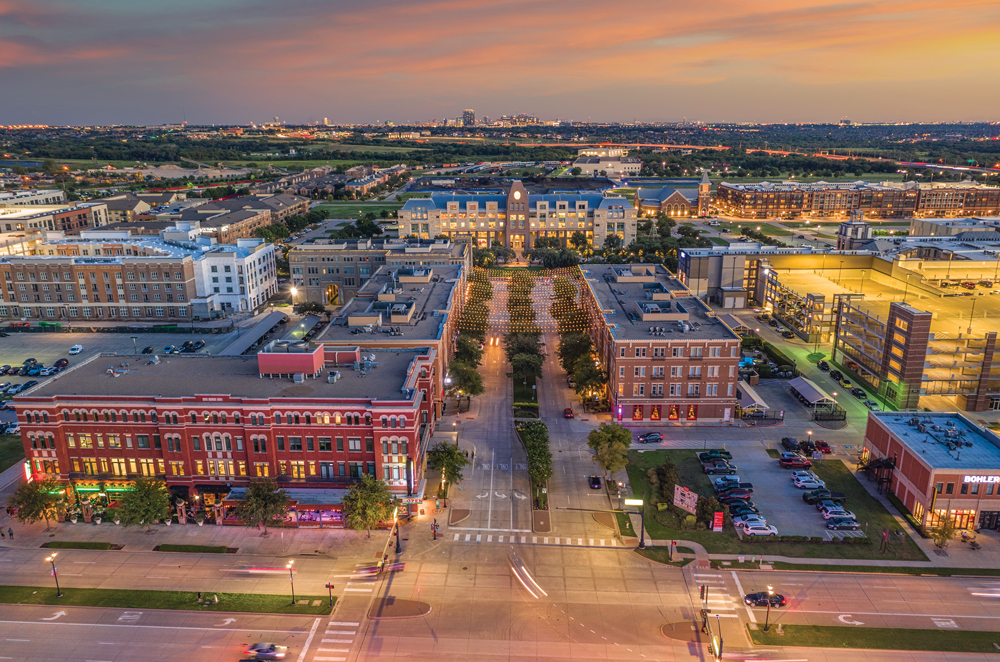
One such case of a Texan city taking on large food and beverage projects is Frisco. Keurig Dr Pepper, Ruiz Foods, the Hershey Company and Chobani have established or are in the process of establishing headquarters and food processing hubs in Frisco, located about 30 miles north of Dallas.
When asked why these companies are choosing Frisco to locate their business, Gloria Salinas, senior vice president and chief growth officer of the Frisco Economic Development Corporation, cites many reasons.
“Frisco has a very strong infrastructure and supports a lot of growth in logistics,” she says. “We’re big in the areas of supply chain, logistics and food and beverage, and so companies want access to that talent and that infrastructure, and I believe that’s the number one reason they’re locating here. We also have our pro-business regulatory climate and a very predictable permitting process. We are one of the best in the state, and the fastest at getting buildings up and buildings permitted. It’s anywhere from a six- to nine-month permitting process, and we do permits congruently. The speed to market is really critical for companies. Being able to open and operate as efficiently and as fast as possible is critical.”
She adds that Frisco is a strong location for R&D, which has become part and parcel of the food and beverage industries. A skilled workforce, access to university partnerships and production innovation in consumer goods are also all factors for the city’s project wins. Frisco Independent School District’s culinary and hospitality program, Collin College and the University of North Texas at Frisco are all partners to the city and its economic and workforce development arms, ensuring talent exposure to many industries from an early age to college and beyond. Sports are also a driver of the city’s economic ecosystem.
“There are several food brands that are the brand of the Dallas Cowboys,” Salinas says. “Dr Pepper is one of the official soft drinks of the Dallas Cowboys, and you see them also want to cluster around their brand partners.”
Keurig Dr Pepper has had its Texas headquarters in Frisco for about five years, with prior roots in Plano. In late 2025, the publicly traded beverage and coffeemaker conglomerate announced in its $17 billion corporate restructuring deal that it will divide its portfolio into two company arms, with soft drink brands Dr Pepper, Canada Dry, A&W and Snapple folding into Beverage Co., to be headquartered in Frisco. Keurig, Jacobs, L’OR and Peet’s brands will be held by the conglomerate’s coffee arm, Global Coffee Co., with offices in Massachusetts and Amsterdam.
“Knowing that our foundation has really been built for economic development around talent is really critical,” Salinas says. “Companies look to Frisco because they understand that not only has education been at its core, but we’ve been a rapidly growing community. A lot of that has been from in-migration, so people moving to Frisco for the education and for the job opportunities. We attract companies of all sizes, we incubate and scale startups, and we recruit Fortune 500s and 1000s. So you have companies that have the full pipeline of development.”
Another Fortune 500 company choosing Frisco for corporate expansion is The Hershey Company, which announced in March that it would start occupying space in the city at $7 billion business park development HALL Park in central Frisco, which also won Greek yogurt company Chobani’s corporate relocation in 2025. The $2.85 million Hershey project is scheduled to be complete by fall 2026 and will comprise 16,000 sq. ft. of office space.
Burleson and Lancaster Take the Cake
A 20-minute drive south of Fort Worth will land you in the scenic suburban town of Burleson, which has a population of about 60,000. The city will soon become home to the first North American manufacturing plant by South Korean bakery chain Paris Baguette, famous for its suite of French-inspired fresh pastries, sandwiches and cakes. The chain is owned by South Korean food company SPC Group, based in Seoul.
With design and engineering partners JE Dunn Construction and CRB, Paris Baguette broke ground at the over $200 million facility in Burleson in September 2025. The project will span 267,000 sq. ft. and will sit on 37 acres, enabling the company to localize food production, avoid importing frozen dough product from Korea or China and lay the foundation for a South American expansion of its cafés.
“Partnering with Paris Baguette and JE Dunn on this facility is a tremendous opportunity to bring CRB’s food and beverage design expertise to an important project that will localize production and improve speed to market,” said Tom Rychlewski, CRB’s vice president of food & beverage, at the September groundbreaking. “By integrating efficient process flows, advanced food safety design and scalable infrastructure, JE Dunn and CRB are designing and building a plant that will support Paris Baguette’s operational goals from day one and adapt to future demand with speed and certainty.”
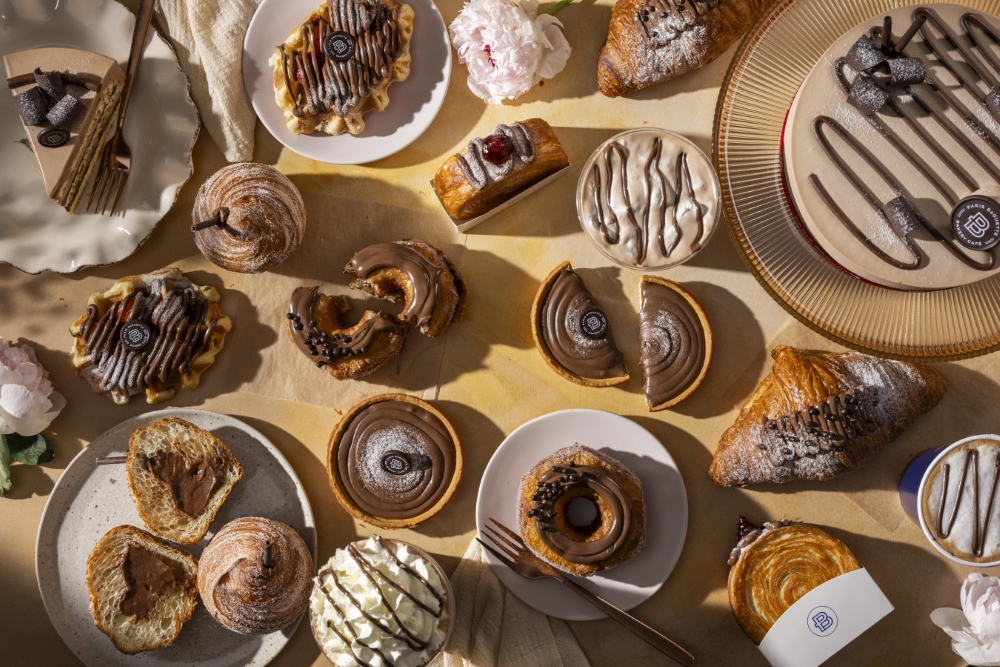
South Korean bakery franchise chain Paris Baguette, famous for its delicious lineup of pastries, cakes and beverages, will site its first North American manufacturing facility in Burleson, Texas.
Photo courtesy of PR Newswire/Paris Baguette
Paris Baguette’s network spans 4,000 locations worldwide and saw a record-breaking 77 cafés open in 2025. The Burleson location will help support scale and growth of the global bakery café franchise in North America, supporting the company’s goal of operating 1,000 locations on the continent by 2030.
Paris Baguette is set to open its 400th bakery in North America this year, over a decade after the company first began its franchise in the U.S. market in 2015.
“Reflecting on the past year, it’s clear that, while we’re opening doors, we’re also building the heart of the community,” said Paris Baguette North America CEO Darren Tipton in early 2026. “Reaching nearly 80 new café openings and celebrating our 250th location were two major wins for us, but I’m especially proud of our people. All of our successes are a result of the people behind Paris Baguette, and they prove that we’re operating with more heart and focus than ever before.”
The new facility will create 450 jobs and will begin producing pastries and bread products in 2027. The Paris Baguette project received $10 million in incentives from the City of Burleson and Johnson County.
Large baking operations are also going on elsewhere in the Lone Star State. French-Canadian baked goods company Bridor USA announced it would open a state-of-the-art industrial bakery in Lancaster, about an hour west of Burleson and 20 minutes south of Dallas.
The company, which produces premium bakery products and Viennese pastries for a global market comprising over 100 countries, will spend $410 million over a decade on its first Texas-based manufacturing facility, generating 171 jobs.
“Bridor’s investment in Lancaster is a strong validation of the city’s position as a premier location for food manufacturing in Texas,” says Lancaster Director of Economic Development Shane Shepard. “This facility will bring high-quality jobs, strengthen our local tax base and further diversify our economy in a way that benefits our residents long-term. Lancaster offers the infrastructure, workforce access and regional connectivity that companies like Bridor need to succeed, and we’re excited to support their continued growth here.”
The Bridor site will sit on 49 acres off East Belt Line Road, with phase one including the buildout of a 150,000-sq.-ft. facility, phase two increasing that to 300,000 sq. ft. and phase three increasing that further to 450,000 sq. ft.