
What’s driving a surge of people and businesses to the 33-county spread that makes up Middle Tennessee?
According to Nashville Chamber Chief Economic Development Officer Jeff Hite, it comes down to “confidence and stability.”
Last year, Davidson County led the state in fresh population growth from July 2024 to July 2025, followed by nearby Rutherford and Wilson counties. While Knox County claimed the No. 3 rank, Middle Tennessee counties Maury, Montgomery and Williamson weren’t far behind. Based on these U.S. Census Bureau estimates, the entire Middle Tennessee region saw an influx of about 44,763 residents in the course of a year.
The rapid growth of this region can be traced back to robust manufacturing roots spanning industries from food & beverage, automotive and aerospace & defense, to biotechnology, chemicals, electronics and healthcare.
It’s led to a concentration of top industry leaders—including Nissan, Bridgestone, Frito-Lay, ThermoFisher Scientific, Barrett Firearms and LG Electronics—who have found Middle Tennessee’s quality of life, talent, low taxes and friendly business climate as an ideal launchpad to enhance their global portfolios, not to mention the region’s robust transportation infrastructure with access to Interstates 24, 40 and 65, Nashville International Airport and rail freight options such as CSX’s Radnor Intermodal Yard.
Since 2020, more than 370 capital project investments have filtered through Middle Tennessee, ushering in expansions of existing operations while making room for new facility investments and corporate operations.
More Than Music
Davidson County lays claim to capital city Nashville, well known for its live entertainment and Music City status. But the Nashville metro region’s recent population boom can be credited to more than its quality of life as new corporate opportunities continue to file in. Here, companies are finding an established ecosystem of skilled talent, strong educational institutions and local leadership with a keen focus on driving innovation.
In March 2026, Oracle announced that the software company had secured a new 116,000-square-foot lease in the city’s Neuhoff District. Not only will the new office help Oracle scale its local workforce to about 8,500 employees across three regional locations, but it will also position Nashville to serve as the epicenter of the company’s future cloud and AI growth. The new space is located within view of Oracle’s upcoming headquarters campus, which is currently under construction on the Cumberland River’s East Bank.
A month later, Starbucks officially selected Nashville as the location of its Southeast Corporate Office. The $100 million investment was made to support future storefront expansions and to meet rising consumer demands, creating 2,000 new jobs in the region.
“Job creators are chasing talent. Of course a company has to check all the boxes—business-friendly, tax-friendly, cool, hip, safe, affordable, collaborative and all of the quality of life benefits,” Hite said. “But ultimately, the human capital piece is driving these decisions.”
Companies are additionally finding that Nashville’s culture directly aligns with their values. France-based L-Acoustics recently opened its $2.5 million Americas Regional Headquarters within Nashville Yards, a 19-acre mixed-use development that serves as a business park featuring retail and office spaces, an indoor music venue, two hotels, a children’s education center and more. In addition to housing HQ operations and a spatial audio lab, the 11,000-square-foot facility also houses a Hyperreal Immersive Sound Space showroom featuring L-Acoustics’ audio technology to create various sound environments.
“As we all know, a diverse economy creates a more resilient regional economy over the long term.”
— Jeff Hite, Chief Economic Development Officer, Nashville Chamber
“We felt because this is going to be our headquarters, we needed to have our own space, and we wanted to be closer to the creatives and closer to downtown,” said L-Acoustics CEO Laurent Vaissié. “The dynamic is there between what’s happening here in Nashville Yards and what’s happening in Rock Nashville. This is all part of the same ecosystem. That dynamic trend in Nashville, you can feel it. There’s this momentum here.”
Germany-based audio manufacturer Sennheiser Group was the first to partner with the Tennessee Department of Economic and Community Development to locate within Rock Nashville. The 55-acre dynamic production campus was designed to support entertainment industry professionals with purpose-built studio space, opportunities for collaboration and workforce development resources. In March 2026, Sennheiser Group announced plans to establish a $2.5 million Americas Regional Hub at Rock Nashville, moving current operations out of Connecticut. The move will create up to 25 new jobs.
“Nashville’s cultural brand and quality of life help companies recruit talent nationally and internationally,” Hite said. “And yes, the Middle Tennessee region is maturing as it relates to the economic landscape. Healthcare, manufacturing and of course music are the anchor sectors, and we’re seeing continued growth in financial services, logistics and technology. As we all know, a diverse economy creates a more resilient regional economy over the long term.”
Beginning in July, Nashville leaders will launch a new five-year regional economic development strategy through Partnership 2030, a public-private initiative supported by over 250 Middle Tennessee investors across 10 counties. The new strategy takes focus to three key drivers: community vitality, community mobility and community character.
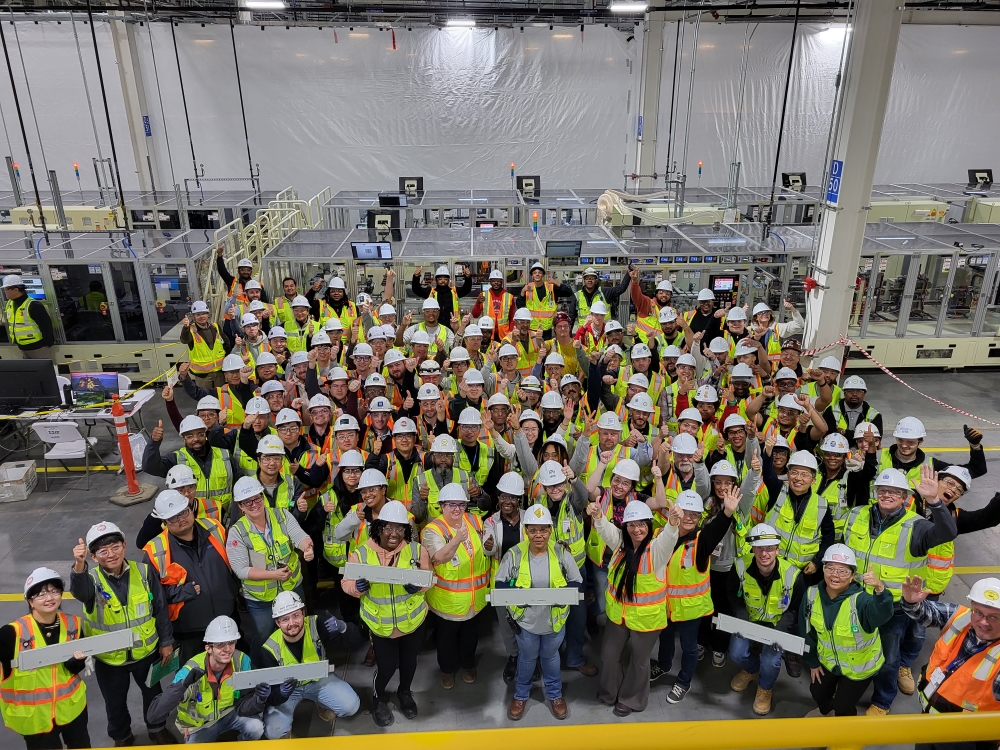
In March 2026, Ultium Cells announced a $70 million investment to diversify its battery production to include lithium iron phosphate batteries designed for energy storage systems.
Photo courtesy of Ultium Cells
Through each of these pillars, the Partnership will work to embrace the region’s future as a leading technology hub by creating better opportunities for residents in the community. In doing so, the goal is to ensure availability of attainable housing, create new educational and workforce development solutions and advance the growth of the region’s creative class. Hite shares that rapid growth creates real challenges. Housing affordability, transportation infrastructure and access to opportunities are among the biggest issues regional leaders are focused on today.
“The biggest risk for fast-growing regions is pricing out the workforce that helped create the growth in the first place,” he said. “That is why there is increasing focus on attainable housing, mobility, childcare access and long-term workforce development across the region.”
The Innovative Companies Middle Tennessee Keeps
While much of the state’s energy-focused projects—particularly centered around nuclear energy—are heading to East Tennessee, homegrown manufacturers like Create Energy remain committed to the production strengths found in Middle Tennessee.
The renewable energy technology company announced a $78 million investment to expand its current production facility in Sumner County, while opening a new 338,000-square-foot manufacturing facility in Robertson County.
“I’ve been in Tennessee for over 30 years, and this place isn’t just where I work and build businesses, it’s home,” said Create Energy Founder and CEO Dean Solon. “I’m proud of what we’re cranking out here at Create Energy: real growth, real jobs and the newest, coolest energy products the world wants. We have a wave of major initiatives underway, and with our active presence in the mergers and acquisitions market, there’s much more on the horizon.”
In Sumner County, Create Energy is contributing $2 million of the investment to its Portland facility, which will become a welcome center, dedicated R&D hub and production site for global partnership products. The newly acquired $76 million facility in the city of Orlinda will become its primary production hub, designed to significantly scale capacity for renewable energy technologies utilized by the solar, battery storage, wind and electric vehicle (EV) industries. In total, over 1,000 new jobs will be created through this investment.
I asked Hite if the region’s energy sector will be one to watch. “Yes, we are still in the early stages of the energy sector but have a few energy-related projects in our pipeline. As we continue to grow our technology and manufacturing sectors, the need for reliable and affordable power is critical for all Middle Tennessee residents,” Hite said. “One of our greatest economic assets is the Tennessee Valley Authority. They have built one of the strongest energy infrastructure systems in the nation and that will only strengthen our strategy to attract jobs and capital investment.”
Accelerating demand for grid-scale energy storage is what led General Motors and LG Energy Solution’s joint venture, Ultium Cells, to invest $70 million toward retooling production lines at its battery manufacturing plant in Spring Hill. The move will enable Ultium Cells to manufacture lithium iron phosphate (LFP) batteries designed for energy storage systems, pivoting from the operation’s initial EV focus due to changing market dynamics.
By late 2026, the facility will begin production of LFP batteries, which will be distributed to LG Energy Solution Vertech, the company’s energy storage division. This network will move batteries to be packaged into large-scale energy storage system enclosures to support grid-scale and data center projects across the nation.
“Spring Hill is becoming a key hub in our North American manufacturing footprint, which has helped offset slower than expected EV demand,” said LG Energy Solution North America President Bob Lee. “The explosive growth in energy storage diversifies our customer base and product portfolio and provides tangible benefits to American competitiveness in this decade and beyond.”
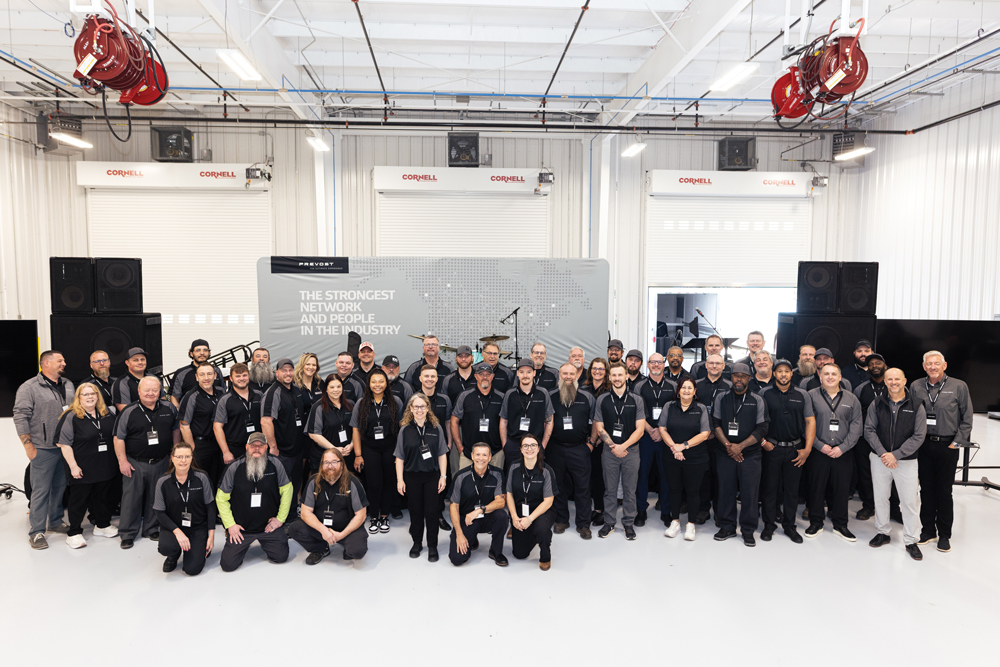
Prevost, a producer of premium intercity touring coaches and high-end motorhome and specialty conversion coaches, has invested in an expansion in Goodlettsville, Tennessee, that makes the site the company’s center of expertise for collision management.
Photo courtesy of Prevost
On the Road Again
Goodlettsville, located just north of Nashville on I-65, welcomed a major investment from a Canadian company in April whose grounds will soon be home to more quality parking.
Quebec-based Prevost, a member of the Volvo Group and North America’s leading motorcoach manufacturer, is known for supplying buses to transit systems and tour operators as well as touring musicians’ custom coaches whose price tags can approach $2 million. The company celebrated its 100th anniversary in 2024. An expansion of its service center in Goodlettsville will add 32 additional parking spaces and bring its total service bay capacity to 19 bays from 13, “enabling faster turnaround times for coach and entertainer fleets,” the company stated.
Yes, that’s right: All those bands and musicians based in the Nashville area like to tour America in style. Go to the website of the award-winning gospel bluegrass band, The Isaacs, and the first thing you see is their motorcoach rolling across the screen. No wonder they played at the Goodlettsville grand opening.
It doesn’t take a mid-air scare like the members of the fictional rock band Stillwater experienced in the film “Almost Famous” to realize that touring in a nice coach bus is, well, very nice.
“A lot of the bands in North America now are touring on buses,” explained François Tremblay, president of Prevost and Volvo Group Canada, when I spoke with him the day after the Goodlettsville ribbon-cutting. “It’s more efficient, they bring all their stuff with them and can come back to the bus. It’s a much more relaxing way to do a tour, and from a security standpoint and privacy standpoint too.”
Tremblay says Goodlettsville is the company’s largest service center because of both touring buses and music industry coaches, which drive business in such areas as customized interiors. And it’s repeat business at that. A tour manager may call with a need for several buses for a tour, and Prevost provides turnkey service. While in the Nashville area, he was able to meet with four of his customers in the region. “I was in Usher’s bus last night,” he said, on the eve of the star’s tour with Chris Brown. Tremblay described the typical music industry bus as “highly luxurious, like a high-end hotel room traveling at all times. Some even have recording studios. One customer yesterday has a studio on the bus so they can record while on the road.”
The location’s proximity to the Eastern Seaboard was important, Tremblay said, as was the competency of the technicians. The investment is part of a broader growth strategy for the company that is seeing a Chicagoland relocation to Franklin Park, Illinois; the addition of a mobile service unit in Las Vegas; and a spring 2026 groundbreaking for a new facility in Randleman, North Carolina, expected to open in early 2027.
The Goodlettsville expansion will mean adding half a dozen technicians to a staff of 72. “It will be our center of expertise for collision management,” Tremblay said. “We had to expand a lot of our parking lot—customers when not touring leave their buses for weeks at our facility. We needed more space—and for trailers, connections for electrical power—so we can cater to having more units on the ground for long-term leases for the entertainment industry. We have about 5 or 6 acres of land for that. Buses take up a lot of space. We need a lot of paved parking. And it’s all utilized. We’re maximizing every square foot.” — Adam Bruns