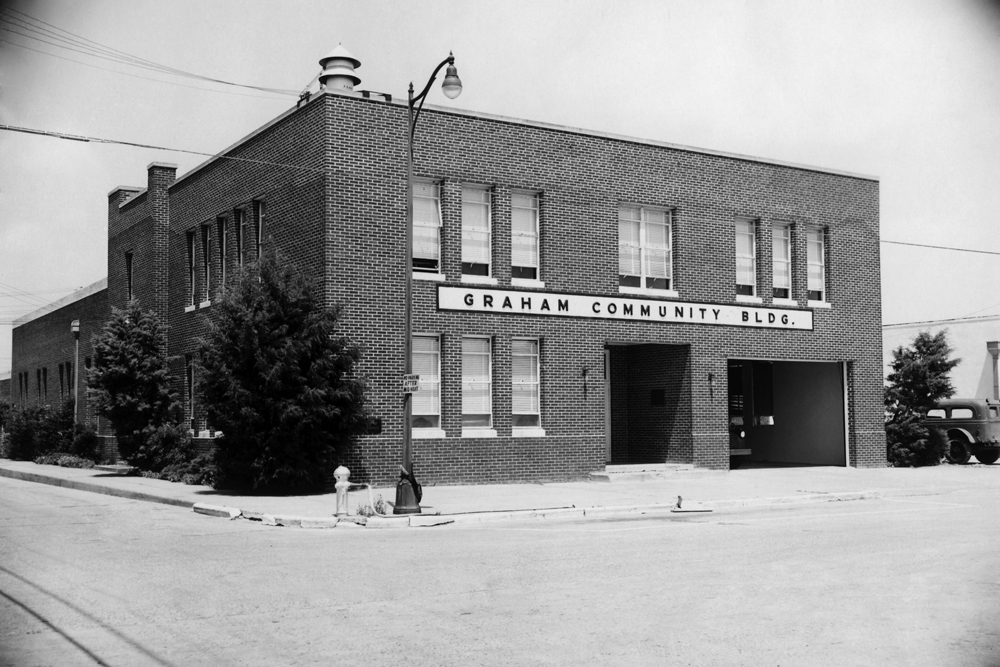
In college, on a day too perfect to spend in class, Bridgette Nichols would head to downtown Pryor to shop for antiques and explore.
She moved to the city full time in her 20s, got married and had children before leaving for Oklahoma City in her early 30s for a new job. When Bridgette and her husband discussed where they’d eventually plant long-term roots, they sought a destination that felt like home.
For both of them, Pryor was always home.
Bridgette saw a friend post about an executive director role at Pryor Main Street at the time she was working for RSU Television. She had been following Pryor Main Street’s activity on social media for some time, unaware the Main Street Program was a massive state and national initiative designed to strengthen historic downtowns. Adoration for the city’s downtown and its charming old buildings made the role one she notes was right up her alley, or in this case, street.
“I thought it was just Pryor doing the cool things that they do,” she says. “It wasn’t until the interview and being hired that I realized this was a part of a much bigger machine.”
While the Oklahoma Main Street program has been around for over 40 years, the Oklahoma Certified Main Street Incentive Program is rather fresh. In January 2025, Oklahoma Department of Commerce (ODC) distributed $830,644 in awarded funding to nine Main Street communities for the first time. Eligible participants must be a part of the Main Street Program a minimum of one year and are required to provide matching funds. The funding can then be applied to projects that drive community impact and create vibrant downtown districts across the state.
Pryor Main Street did not participate in the incentive program’s first cycle but did tackle all moving parts in order to apply for the second round in the fall of 2025. Come January 2026, the ODC returned to announce an increased $1.3 million in awards to 12 Main Street communities. Pryor Main Street learned they had received $150,000, which would directly support the first phase of renovations planned at the city’s Graham Community Building.
“It’s going to have a huge impact,” says Nichols. “We currently don’t have a space downtown where people can gather other than that building, but it was falling in such disrepair. Something needed to happen to make it come alive again and be economically feasible for the city to want to continue to have this space.”
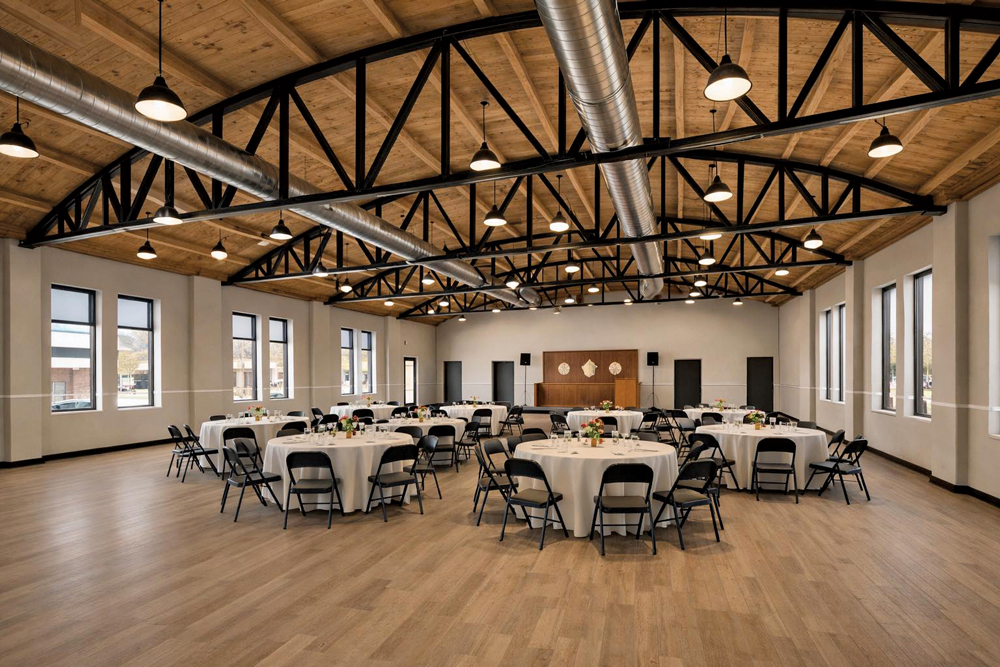
Renovations to the Graham Community Building include removing a drop ceiling to uncover its barrel ceiling, highlighting the facility’s original architecture.
Rendering courtesy of Scissor-Tail Construction
In order to get the funding match, Nichols says a public-private partnership formed once local private entities stepped in to puttheir employment tax withholding toward the initiative. The tax would be paid to the state regardless. But in this way the City of Pryor, the Bank of Commerce, Nest Flower Company and Etch & Burn Laser are able to keep the funds local, since the building is municipal property. The city has the additional advantage of its own bond tax for downtown improvement projects called Fund 68.
Through Oklahoma Main Street’s resource center, Pryor Main Street was connected to Tulsa-based Method Group Co-founder Josh Kunkel, who helped pull together a preliminary architectural plan. Kunkel brought in a structural engineer who surprised the team by confirming the bones of Graham Community Building were in good shape, removing prior doubt.
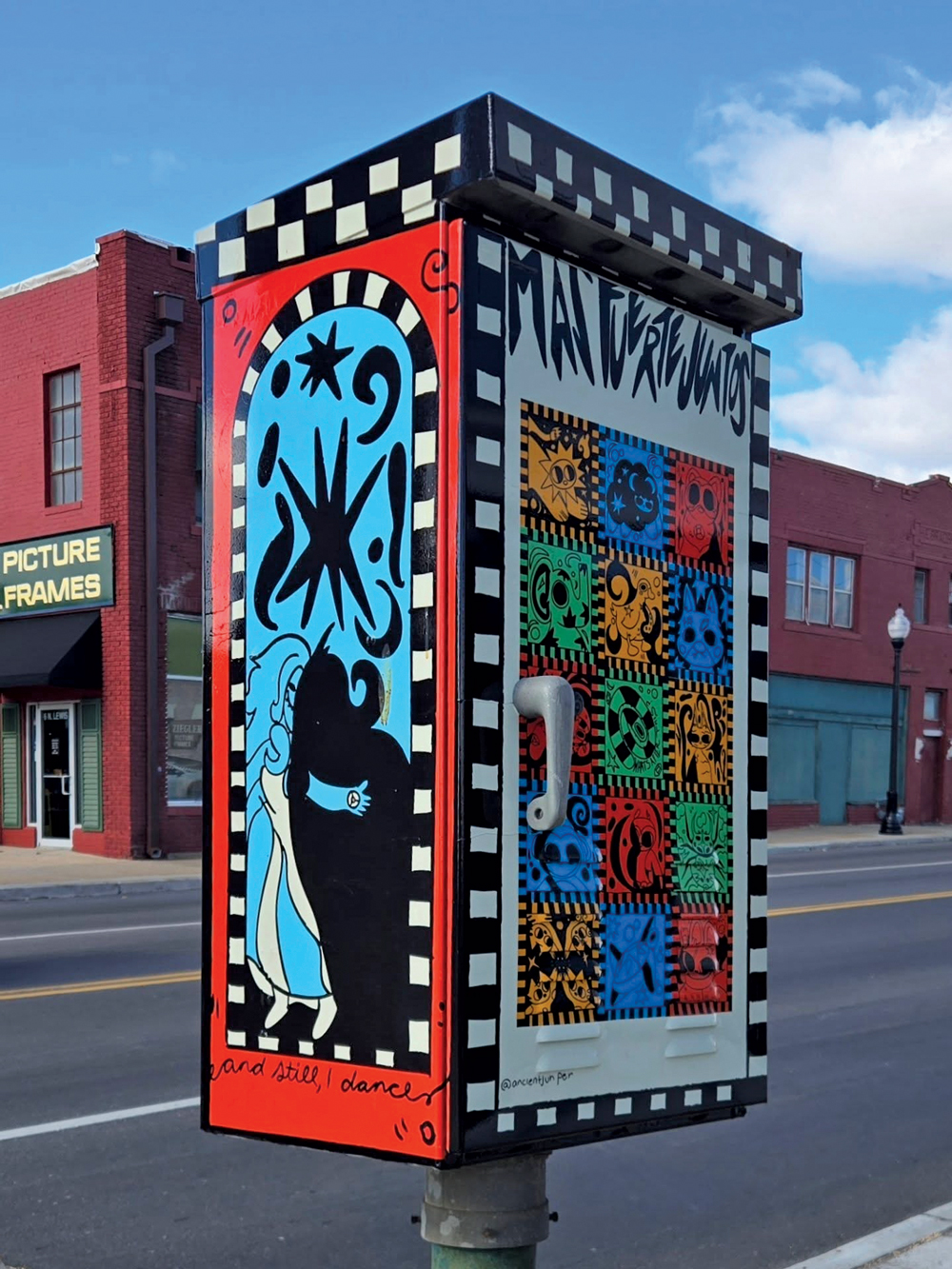
Just outside of She Brews Coffee Roasters in Tulsa, Juni Peraza was among the artists working with Scrap Designs to deliver wrapped utility boxes throughout Kendall Whittier.
Photo courtesy of Scrap Designs/ Juni Peraza
Central to Pryor’s downtown district, the site has been a hotspot for parties, seasonal markets and various local events. The building now is preparing for phase one of the project, which includes Scissor-Tail Construction’s demolition of the facility. During this phase the goal is to introduce a revived venue space and a catering kitchen before the end of 2027, which through future phases would become a shared kitchen to support incubator activity.
“In phase two, the focus will be on the part of the building that has office spaces from where City Hall used to be. Arts and Humanities currently has part of that,” says Nichols. “We’d like to make that a non-profit center and introduce true incubator spaces, where we can host mini shops for entrepreneurs who might not be ready for a brick and mortar.”
When asked if Pryor Main Street plans to continue with the incentive program, she states, “We plan to apply every single year, as long as we’re eligible and the funds are available.”
If awarded during the next round the funding would likely go on to support completion of phase two — although Nichols has plenty of ideas brewing about potential downtown projects that could come to scale. Off the top of her head, allocated awards could help fund future phases of a streetscape project Pryor Main Street is in the midst of or support the development of “pocket parks” on vacant sites, such as the site of the former Boomerang Diner, which the city lost to a fire.
Cash Moves Down Oklahoma Main Streets
The City of Pryor was among seven community organizations — including Kendall Whittier Main Street, Main Street Perry, Ponca City Main Street, Route 66 Main Street, Sapulpa Main Street and Stockyards City Main Street — that garnered $150,000 in the recent Oklahoma Certified Main Street Incentive Program round.
For Kendall Whittier Main Street, Sapulpa Main Street and Ponca City Main Street the 2026 awards marked the second time these communities scooped up a hefty sum to support downtown projects. Upon receiving $130,000 in the incentive program’s inaugural year, Kendall Whitter Main Street leveraged its award to support direct investments into its downtown district, including integration of a new art sculpture, art-wrapped utility boxes, gateway markers and district signage.
News of the fresh $150,000 was bolstered by the team’s announcement that it had secured a matching $150,000 from local partners such as American Heritage Bank, the Lesher Family Foundation and Up with Trees, for a total of $300,000 that will head directly into community-focused initiatives.
In downtown Ponca, the initial $150,000 went to enhance navigation through what the Main Street team called a “road diet,” to improve convenience and accessibility for residents, visitors and businesses in the area. This project reduced Grand Avenue to one lane of traffic in each direction with a center lane dedicated to turning. In doing so, this work modified on-street parking from 25 degrees to 45 degrees, producing 13 additional parking spaces per block, resulting in a total of 98 once completed.
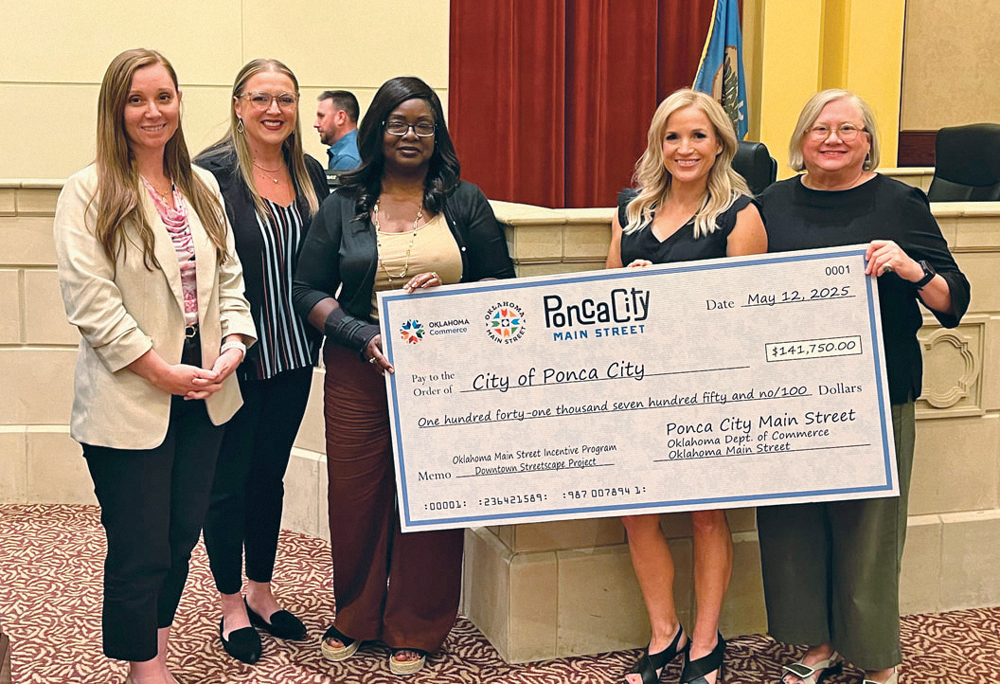
Ponca City Main Street has been awarded a total of $300,000 through the Oklahoma Certified Main Street Incentive Program since its inception.
Photo courtesy of Ponca City Main Street
“We are incredibly excited and grateful that Ponca City Main Street was selected for the Oklahoma Main Street Incentive Program for the second year in a row,” said Ponca Main Street Executive Director Maci Graves. “These funds allow our program to take impactful steps toward revitalizing our downtown through important projects that simply would not be possible without this support. This incentive helps us strengthen and improve our downtown for the entire community.”
As the Oklahoma Certified Main Street Incentive Program gears up to accept applications for 2027 this fall, expect to find a renewed vibe throughout Oklahoma’s communities. From streetlight restorations for Vinita Main Street, to Perry Main Street installing a district-wide PA speaker system or placing new funding behind Main Street Altus’ planned $19 million outdoor venue at Medicine Park, initiatives that target an enhanced quality of life are en route.
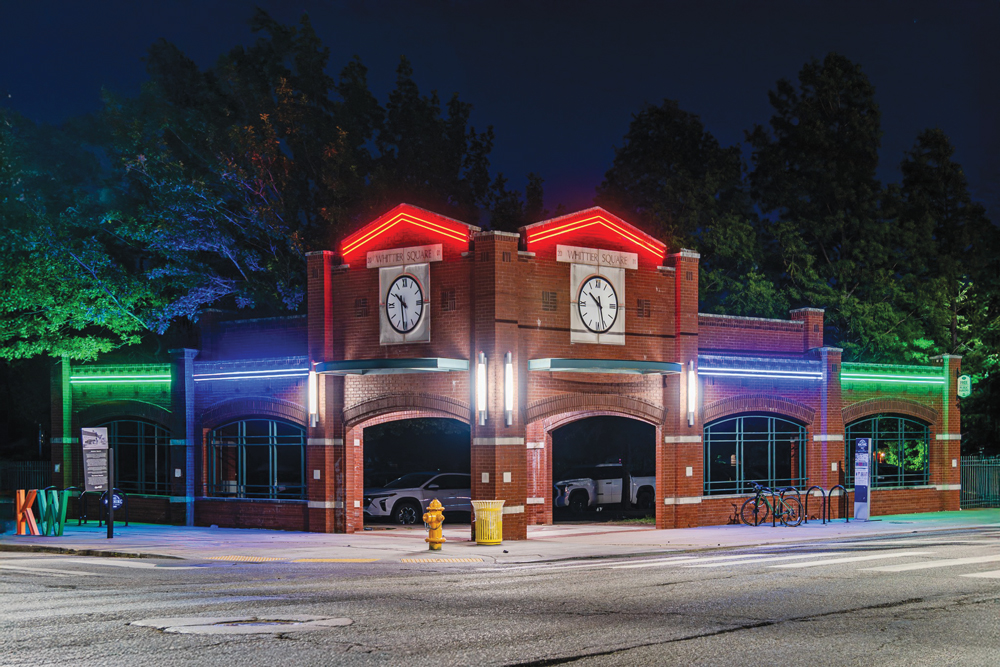
Whittier Square at Admiral Place and Lewis Avenue in Tulsa was established in 1928 as the city’s first suburban retail plaza during the heyday of Route 66. It’s now serves as a revitalized arts and cultural corridor and is listed on the National Register of Historic Places.
Photo courtesy of Oklahoma Tourism & Recreation