
In addition to stories about Suntrax in Florida by Savannah Yawn and Virginia Transformer in Alabama by Ron Starner that were published in the November 2026 print issue, the Site Selection team here delivers more insights into projects across the southeastern United States.
Georgia Welcomes Belgian Invasion
On October 9, Georgia welcomed the biologics manufacturing site dedication of Belgium pharmaceutical company UCB’s $1 billion complex at the Rowen development in Gwinnett County, expected to generate $5 billion in economic impact and create more than 330 permanent jobs on the opposite side of the Greater Atlanta metro area where UCB has had its U.S. HQ for more than 30 years. (For more on UCB’s location decision, read our interview with UCB UCB Head of Engineering, Sites & Facilities Philippe Mantelet from Site Selection’s May 2026 issue in “Thinking Long Term.”)
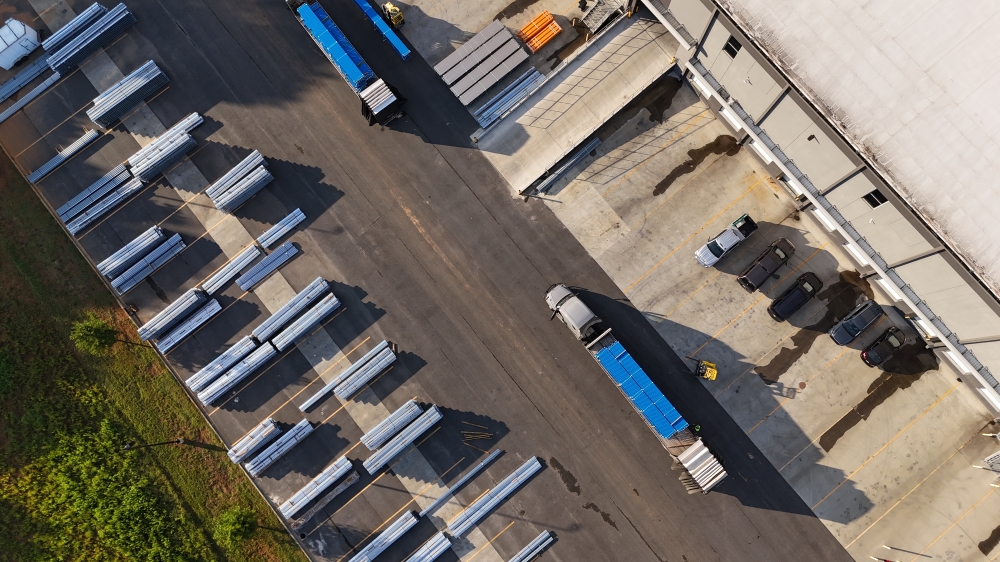
Six days later and 100 miles to the northwest, Belgium’s stow Group inaugurated its first U.S. manufacturing facility for racking systems in Calhoun, Georgia, in Gordon County, where the company said the total investment “excluding buildings” is estimated at between $40 million and $50 million. It’s the company’s eighth manufacturing facility worldwide and first outside Europe. Overall, stow Group employs more than 2,000 people. Its expansion is backed in part by major shareholder Blackstone, which since 2018 has backed stow Group’s expansion “from a European racking manufacturer into an international storage and warehouse automation business.”
“This plant is not just a manufacturing facility — it is a statement of intent,” said Jos De Vuyst,
CEO of stow Group, at the inauguration. “We are committed to the North American market for the long term. Calhoun is our first U.S. plant, but it will not be our last. We intend to capture significant market share in this market, and we will invest accordingly to make that happen.”
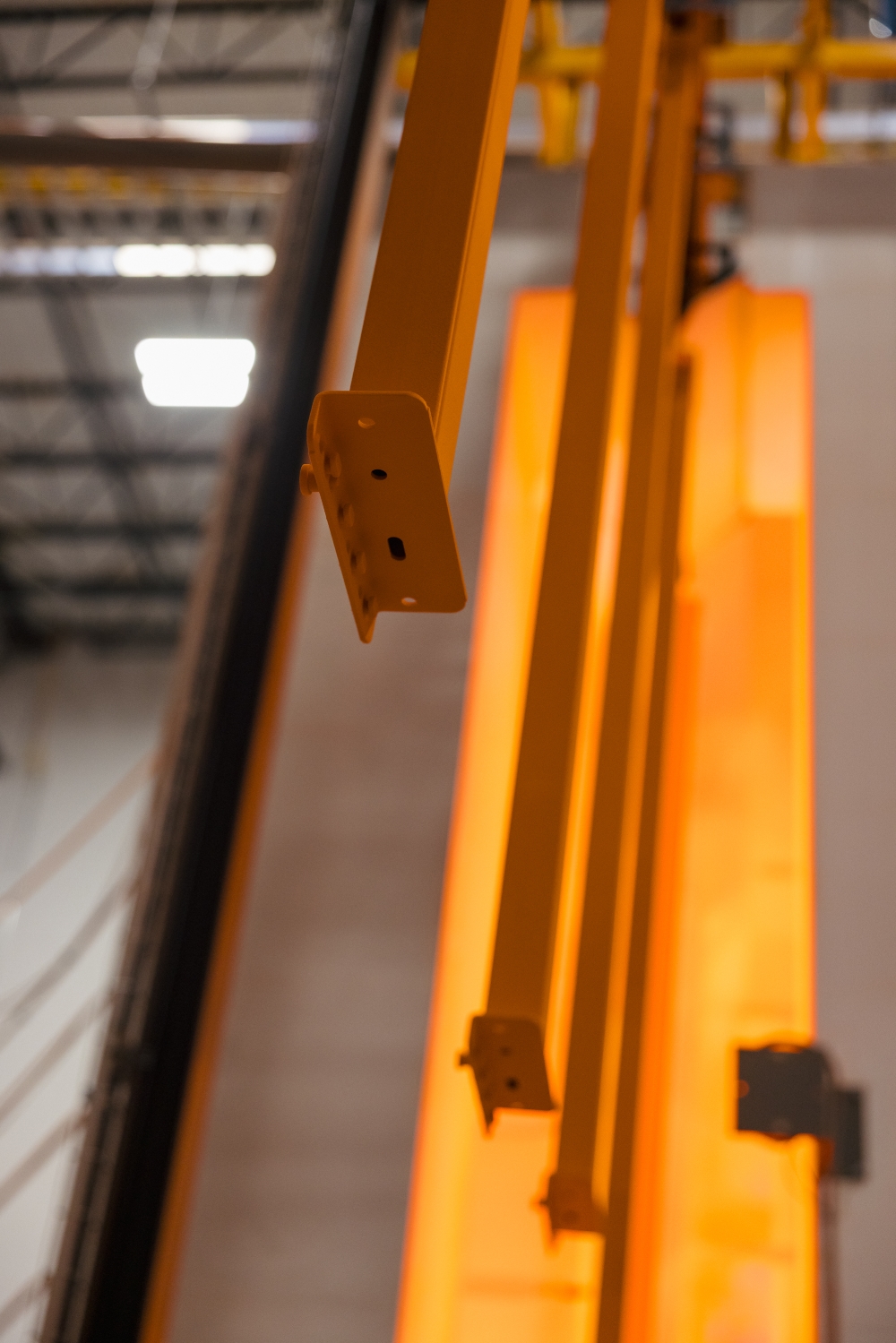
The Calhoun plant was first announced in August 2025 with an expected investment amount of $36 million. It started operations in May 2026, producing “both stow punch and roll-formed teardrop racking systems, fully engineered to U.S. codes including RMI 2023 standards,” the company said, touting the facility’s fully automated production lines and robotic welding cells. “For U.S. warehouse operators, the impact is immediate and measurable. Lead times that previously stretched to 12-15 weeks on imported racking are now expected to drop to approximately 6-9 weeks for domestically produced product, resulting in faster project timelines and greater operational flexibility.” By the end of 2026, the facility is expected to process approximately 100 million pounds of steel per year.
The company’s commercial hub in Romeoville, Illinois — located in a warehouse-saturated region in Will County on the outskirts of Chicagoland — covers sales and service across the United States, “offering customers access to stow’s full product portfolio: from conventional pallet racking and the stow Atlas® 4.0 semi-automated pallet shuttle system, through to fully automated warehouse solutions delivered by Movu Robotics — stow’s automation brand and a global leader in 4-way pallet shuttle technology, trusted by 200+ warehouses worldwide,” stow Group’s announcement stated.
The company, whose slogan is “We rack the world,” also noted that its U.S. customers “are now shielded from ocean freight disruption, tariff volatility and currency fluctuation — factors that have increasingly complicated import-dependent supply chains in recent years.”
In an interview the day before the inauguration, De Vuyst told me the company began looking to expand in the United States a decade ago after a first foray into global expansion beyond Europe, in China, was abandoned. Acquisitions were foremost on the company’s mind, but “that looked really expensive,” De Vuyst says, despite the speed with which revenues might have begun to flow. “We said, ‘No, we’re going to do this organically.’ So then the process started — where the hell are we going to go?”
A curious aspect of making racking systems for the logistics sector is that the racking systems themselves are transport-sensitive. “You cannot be competitive over more than 1,000 miles with a rack, because the transport cost becomes very substantial and high,” De Vuyst says. So the team mapped out the $5 billion U.S. racking market, focusing on major market centers and logistics hubs in a swath beginning southwest of Atlanta and following the coastline north, while also encompassing the Great Lakes.
“This is the first location we have chosen, but we’re going to need at least two other locations.”
— Jos De Vuyst, CEO of stow Group, on the company’s U.S. manufacturing site strategy following the first plant in Calhoun, Georgia

“We wanted with the first plant to have really good access to a big chunk of the market and came to the point that the Southeast — North and South Carolina and Georgia — is a good location to go to,” De Vuyst says, with Ohio also considered. Consultants were brought in to evaluate availability of labor, labor costs, unionized vs. non-unionized environments and transport costs to the different market centers from those four states. Good availability of steel by rail and strong highway infrastructure were also important.
“The Southeast with Georgia came out quite positively because it’s also non-unionized,” he says. “It’s quite in the center of a lot of logistics hubs. On top of that, it looked like there were quite a lot of logistics buildings available at that time … because we did not have the time to build a building ourselves.”
Owing in part to the wealth (some would say glut) of logistics facilities built during the pandemic, the stow Group team found a particularly strong cluster of available buildings around an hour north-northwest of Atlanta, in the same general region of Georgia known for its carpet and floor covering cluster, which has its own specialized transport requirements.
“For us already it is very clear that this is the first location we have chosen, but we’re going to need at least two other locations,” he says. “So we have in mind today probably three locations for factories … I think the second or the third, we will go more north and more west. But honestly, we don’t know yet exactly where. We have ideas, but it’s too early to say that.”
Tariffs and Transactions
De Vuyst says one of the main factors behind the company’s relatively quick landing in the United States is the Trump administration’s trade policies and tariffs. “They were starting to put quite some import duties on products from Europe,” he says. “Initially we started to export from Europe to the States, but that became really impossible. In fact, we were not competitive anymore with the import duties.”
Asked to characterize how much the duties added to costs percentage-wise, he says, “It has been a roller coaster, to be honest. At some point in the early days, it was 25. When there was some eagerness in the Trump administration, it became 50 for a while. Then it went down to 25. And now it’s very differentiated. We have parts at 10, we have parts at 25. This of course is only playing on the material, not the assembly and not the local transportation costs from the harbor and not on the sea transport from Europe, but I think it’s easily 5% to 10% cost price added with the import duties on the total installation. Now, 5% to 10% in the racking world, that’s enormous. Because we live in a business where three points of price difference is a lot … that’s why we went pretty fast by setting up this factory.”
That said, the decision to come to the States was made before tariffs accelerated the plan’s execution.
“We think that if you want to conquer the U.S. market and you want to become a substantial player in the U.S. market — I’m not saying we want to be the number one in three years, but we want to be a substantial player, let’s say, within the top five or six in the next two to three years — if you want to do that, you have to be American. You need to behave and to act like a U.S. company with U.S. people, U.S. management, and so on. And that’s exactly what we’re trying to do.”
“I think if our factory would have been in South or North Carolina, we would have had more or less the same speech,” De Vuyst says. “It’s not that we are all of a sudden Georgia addicts. No, I think it’s more like we are becoming America addicted. That is driven by the potential in the States.”
He calls out in particular the efforts of U.S. Ambassador to Belgium Bill White, who was also involved in facilitating the UCB deal as well as an investment by Drylock Technologies in Reidsville, North Carolina, in 2024. “He’s amazing. He’s extremely dynamic. He’s doing whatever he can day and night to bring Belgian investors to the States. The fact that U.S. diplomacy is really pushing hard and inspiring European investors or Belgian investors in this case is really helping. Bill White just flew over this week to be present at the inauguration.”
The Trump administration, says De Vuyst, is utilizing U.S. ambassadors who “are very transactional, just like Trump is, and pushing European entrepreneurs to come to the U.S.”
The company is using 100% U.S.-made steel, which further adds to costs because the U.S. steel market needs capacity and “the market is now more or less protected and closed for imports from China and from Europe, and there is a clear need of steel in the U.S.,” so prices have risen.
“At the end of the day, the end user is going to pay for it, because we pass through the steel price fluctuations just like our competitors are doing,” De Vuyst says. “We have to, otherwise we go bankrupt. Part of these import duties and part of the protectionism that the U.S. administration is installing on U.S. soil will drive inflation in the U.S. and will drive price increases for the end users. That’s inevitable. Is that a bad thing? It’s not super good. On the other hand, the U.S. economy is so strong, if I compare it to Europe, that it shouldn’t be a real problem.”
Skilled Talent an Issue
If only the talent market were equally strong. De Vuyst says the search for skilled talent is proving more difficult than expected, even with the assistance of Georgia Quick Start. Asked how he’s finding the sourcing of talent, especially welders, De Vuyst says, “Now you’re touching a very sensitive topic. Honestly, we have today serious difficulties in finding enough skilled labor for this factory,” in part because of what he calls the most advanced automated racking factory in the country.
“That comes with an effort and a price. The effort is to find enough skilled labor for the blue collars, for the workers, to manipulate and operate these lines. Today that is a real attention point.
Because we see in Georgia, but probably also in other states, there’s not enough skilled labor force. We have some struggles with that.
“Honestly, I am a true believer in what the Trump administration is doing in pushing local manufacturing with some kind of protectionism, with import duties and so on,” he says. “I think they should do the same thing in Europe, but in Europe they don’t do it. But I think that’s a really good move in the U.S. The only thing is, if you do that, for God’s sake, you have to have enough workers in your country, and that is not fulfilled right now. Maybe there are enough workers, but there are not enough skilled workers,” especially in the field of robot weld operators, which the company is not finding fast enough. He says the Quick Start program just isn’t set up to help train people in the high-end, large-scale, customized and automated lines stow Group deploys.
It’s not just welders. It’s tough to find good forklift drivers too, he says. Finding skilled talent “is what keeps me quite busy at the moment,” he says, and he’s not alone — fellow Belgian executives he talks to in the floor covering business in the region are having the same issues. “We need to ramp up from one shift to two shifts to three shifts. We want to be at five shifts.” At the time of our conversation, the company had 70 workers in factory. The Calhoun facility is expected to support approximately 200 jobs at full capacity. “Honestly,” he says, “I have no clue today where I’m going to find these 130 skilled people.”
The experience is influencing how the search will ensue for those remaining U.S. facilities, he says. “I see two things which I’m going to pay much more attention to than what we did in Georgia,” he says. The first part is the financial support. We’re going to negotiate that more in detail and upfront on the new investments in the other states. And secondly, I’m going to look much more in detail up front at the availability of skilled workforce. And I’m going to look much more to training capabilities programs like Quick Start and their flexibility to do things for us in these states.”
Flexibility also applies to the company’s market, which might be assumed to be strictly large warehouses. But De Vuyst says rack-supported buildings — for parking and storing vehicles, for example — have become a big business in Europe, as has data center racking, “which is huge. We have our own product line for data center racking and we are looking at how we can grow fast with that in Europe and also in the States.”
There is also a natural connection to the Movu Robotics side of the house and its innovative pallet shuttles. Half of the Movu Robotics turnover is already in the United States. “ We have been dealing the last five years with an enormous growth and drive for automation,” De Vuyst says. “I think we were amongst the first in the world to have warehouses with four-way pallet shuttles. We are still by far the biggest player in the world now on four-way pallet shuttles. We have sold 200 installations. We have more than 100 installations live. There’s nobody else in the world who can say something similar. So we are light years ahead in that kind of technology with Movu Robotics. There’s enormous synergy between stow and Movu Robotics. We have used the tailwind of automation to grow.”
Where that wind will blow stow Group’s investment dollars next remains to be seen. — Adam Bruns
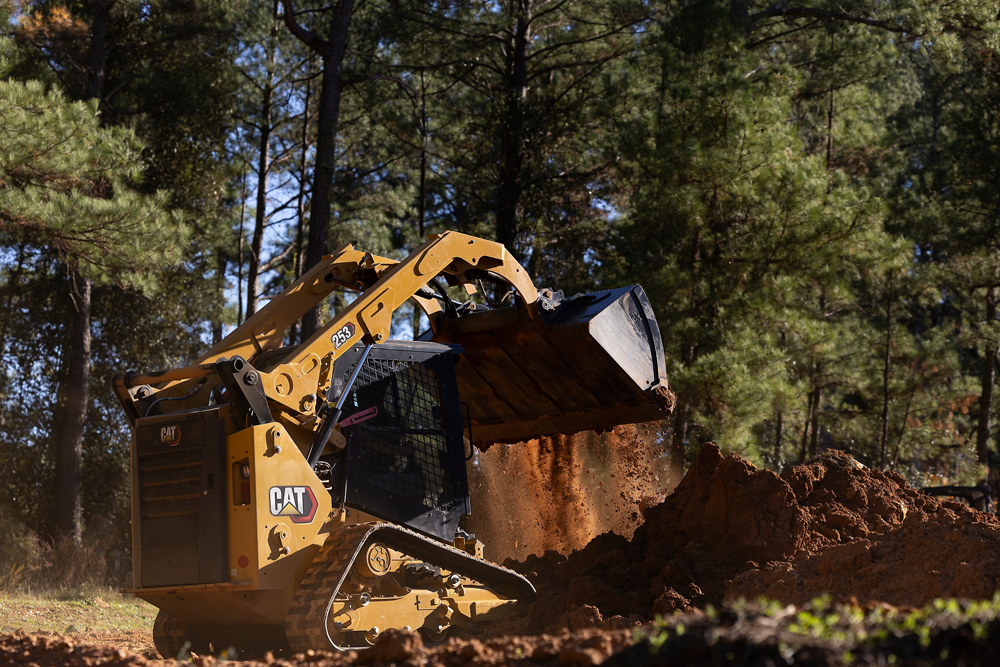
Caterpillar’s plans for a new manufacturing facility in Sanford, North Carolina, will increase production of telehandlers and compact track loaders to meet customer demand.
Photo courtesy of Caterpillar Inc.
North Carolina’s Flourishing Manufacturing Base
In North Carolina, investment in new and expanded manufacturing sites is driving growth. The pipeline of projects is vast, with top-performing industry sectors recorded in Site Selection’s Conway Data Projects Database from September 30, 2025, to September 30, 2026, including machinery, equipment & construction (43); business & financial services (28); the life sciences (26); IT & communications (22); transport & logistics (18) and food & beverage (17).
The following metropolitan areas had the most investment activity according to the Conway Data Projects Database in that one-year timeframe: Charlotte-Concord-Gastonia (82), Raleigh-Cary (41), Greensboro-High Point (23), Durham-Chapel Hill (21), Winston-Salem (14) and Hickory-Lenoir-Morganton (10).
One project adding to the growing list comes from the world’s largest manufacturer of construction equipment, Caterpillar Inc. Headquartered in Irving, Texas, Caterpillar announced in September 2026 it would spend approximately $1 billion expanding manufacturing capacity in North Carolina, including a new facility in Sanford, where the company already employed more than 2,000 workers at the time of a May 2026 announcement that the site would add 600 new jobs. The investment is geared toward developing the company’s Cat Compact products (compact track loaders and telehandlers). The company is also building out its neighborhood-store model, which aims to serve small contractors and growing businesses.
According to a company press release, North Carolina was chosen due to Caterpillar’s longstanding presence in the state, the local workforce and the ability to expand existing operations.
Northwest of Charlotte, furniture fitting manufacturer Blum is expanding its Stanley location in Lincoln County. The Austrian-based maker of hinges, drawer sliding hardware and cabinet lift systems will add a new 67,000-sq.-ft. office building and showroom expected to open in 2028 and serve as “an experience center” where industry can interact with company products.
The $82 million expansion will also include upgrades to a shipping warehouse and facility equipment. Twenty jobs will be added to support the site expansion, adding to Blum’s 500 employees in the county. Notably, this is the 12th expansion of the site since Blum started operations in Lincoln County in 1979 and the fourth largest economic development investment in the county since 2013.
“These investments in our facility and for our employees demonstrate our commitment to manufacturing in the U.S., as well as continuing to employ and support our local community,” said Shannon Lafferty, CEO and general manager of Blum, Inc., when the Stanley expansion was announced in September 2026.
Other manufacturing projects announced within the past year in North Carolina include exterior building products manufacturer ProVia LLC’s $120 million, 580,000-sq.-ft. window manufacturing facility in Mocksville, and electric components producer Shemar USA’s first U.S. manufacturing facility, which the company announced in September 2026 would land in Charlotte. — Kelly Barraza
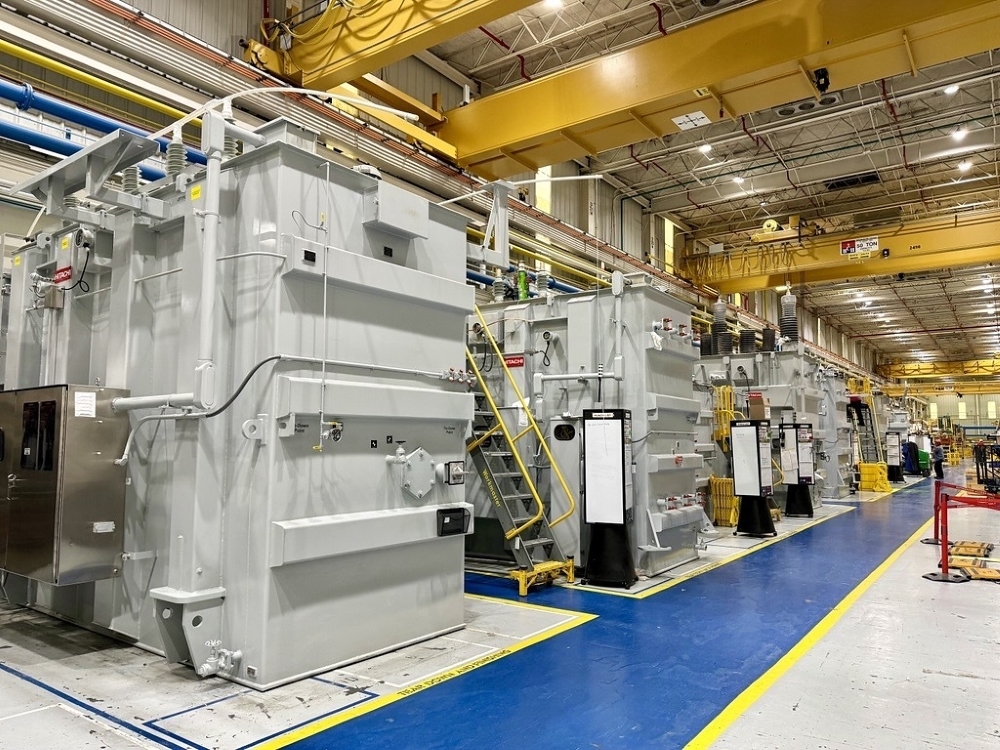
After seven decades of transformer production, a Crystal Springs, Mississippi, facility will become home to Hitachi Energy’s operational, warehousing and workforce training needs.
Photo courtesy of Hitachi Energy
Mississippi Snags a Transformative Investment
Asouthwest Mississippi site dedicated to churning out innovative power transformers for seven decades will now serve a new purpose.
Just 6.5 miles away from the Crystal Springs facility originally owned by Kuhlman Electric Corporation and later acquired by ABB and then Hitachi Energy, an incoming $528 million facility is set to absorb its operations.
This substantial investment represents Hitachi Energy’s largest U.S. transformer project to date. It surpasses recent announcements of a $457 million expansion of the company’s large transformer plant in South Boston, Virginia, in June 2026; a combined $70 million toward expansion of two high-voltage component manufacturing locations in Westmoreland County, Pennsylvania, in August 2025; and a $106 million transformer components facility expansion in Alamo, Tennessee.
“This investment in Mississippi, our largest ever in the U.S., reflects our long-term commitment to American manufacturing and building the grid infrastructure that will help power America’s growth for decades to come,” Hitachi Energy CEO Andreas Schierenbeck said in the company’s September 2026 announcement.
The company has opted to construct the new transformer production plant minutes down the road from Crystal Springs in the unincorporated community of Gallman. It’s a relocation that will spur a facility over twice the size of the existing Crystal Springs operations, making room for more than double current production capacity. The nation’s growing electricity demands, driven by rapid expansion of energy-intensive industries and the need for grid infrastructure modernization, require a vital supply chain boost into which Hitachi Energy has now injected $1.5 billion.
Construction is slated to begin in late 2026, building out over the next two years until operations launch in 2029. Over 700 new direct jobs will be created as a result, scaling Hitachi Energy’s total U.S. job creation to 1,600 since 2025. Once production begins at the Gallman site, activity at the Crystal Springs site will transition to serve operational needs, employee training and warehousing. — Alexis Elmore
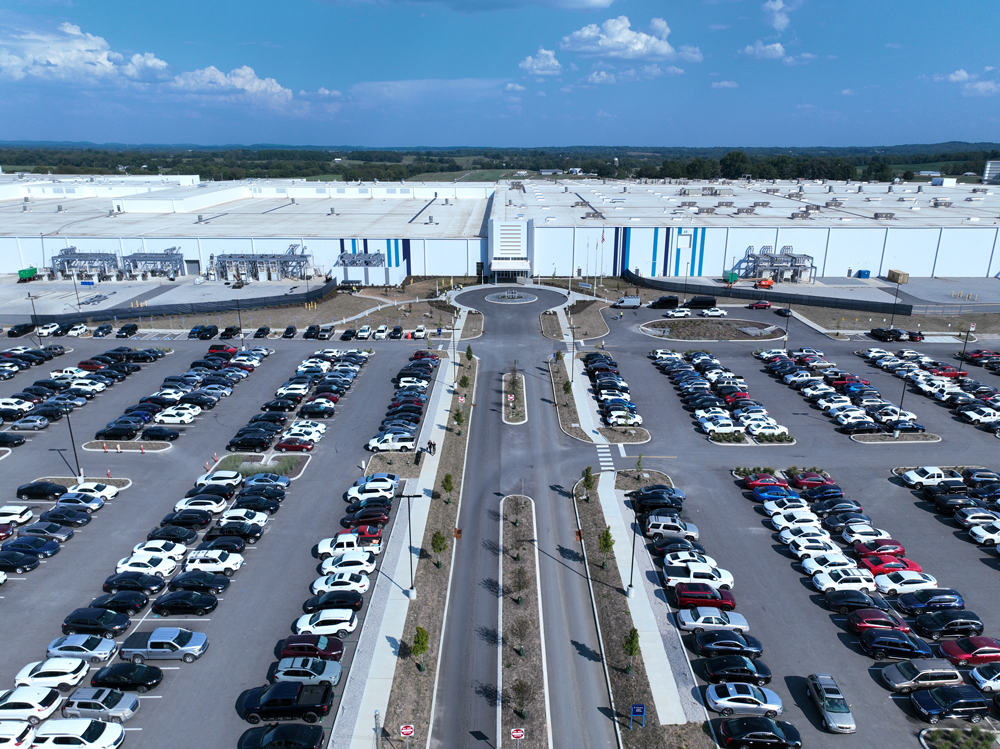
Nearly 1,300 employees work at LG Energy Solutions and General Motors joint venture, Ultium Cells, in Spring Hill, Tennessee. An additional $1 billion of investment at the site was announced in September 2026.
Photo courtesy of Ultium Cells
Assembling Innovation in The Volunteer State
Tennessee is used to building cars and the parts that make cars. At Nissan’s Smyrna plant 20 miles southeast of Nashville, the Japanese automaker started production of the new Infiniti QX65 model in April 2026, leveraging AI technologies and automation at the site that measures more than 6 million sq. ft. and can produce up to 640,000 vehicles annually. The plant’s first vehicle — a white 720 pickup truck — rolled off the line in June 1983.
South of Nashville, Ultium Cells announced in late September it would invest an additional $1 billion in its battery cell manufacturing operations in Spring Hill. The company is a joint venture of LG Energy Solutions and General Motors and is expected to be the first to mass produce prismatic lithium manganese-rich (LMR) battery cells.
The LMR batteries are expected to push the envelope on EV technologies. GM Vice President of Battery and Sustainability Kurt Kelty said that “establishing LMR prismatic cell production at Ultium Cells in Spring Hill is a key step in GM’s strategy to match the right battery technology to customer needs and strengthen our leadership in domestic battery manufacturing and innovation.” Spring Hill, originally picked to assemble the Saturn brand, saw its first vehicle — a Saturn S-Series sedan — roll off the line in July 1990.

“Our community spaces are the heart of our communities and that is why the Good Neighbor Plan includes funding for the construction and rejuvenation of community centers in Douglass, Mason, Dancyville and Stanton.”
— Gabby Bruno, Director of Community Relations, Ford Motor Company
Beyond sprawling automotive campuses and cutting-edge technology development, the automotive world in Tennessee is also about community. Gabby Bruno, director of community relations at Ford Motor Company, wrote to me about Ford’s Good Neighbor Plan in April 2026, noting that the company’s nearly $11.7 million spent on community investment in rural West Tennessee was “responsive to what residents would find most impactful.”
She added that “based on this input, residents have seen investments in community gathering spaces, community preservation, protecting the environment, literacy programs, support for farmers and businesses, workforce development, youth programs and Ford Philanthropy partnerships to remove barriers and expand opportunities.”
The Good Neighbor Plan aims to serve residents within a 15-mile radius of Ford’s former BlueOval City campus near Stanton, which itself sits between the towns of Brownsville, Covington and Somerville. Bruno writes that “our community spaces are the heart of our communities and that is why the Good Neighbor Plan includes funding for the construction and rejuvenation of community centers in Douglass, Mason, Dancyville and Stanton. And grants were made available for community centers that need facility improvements and funding for programs.”
BlueOval City made headlines this past year, as the original $5.6 billion project planned around manufacturing next-generation electric trucks changed considerably in December 2025. The facility is now set to produce gas-powered trucks at its Tennessee Truck Plant starting in 2029. — Kelly Barraza
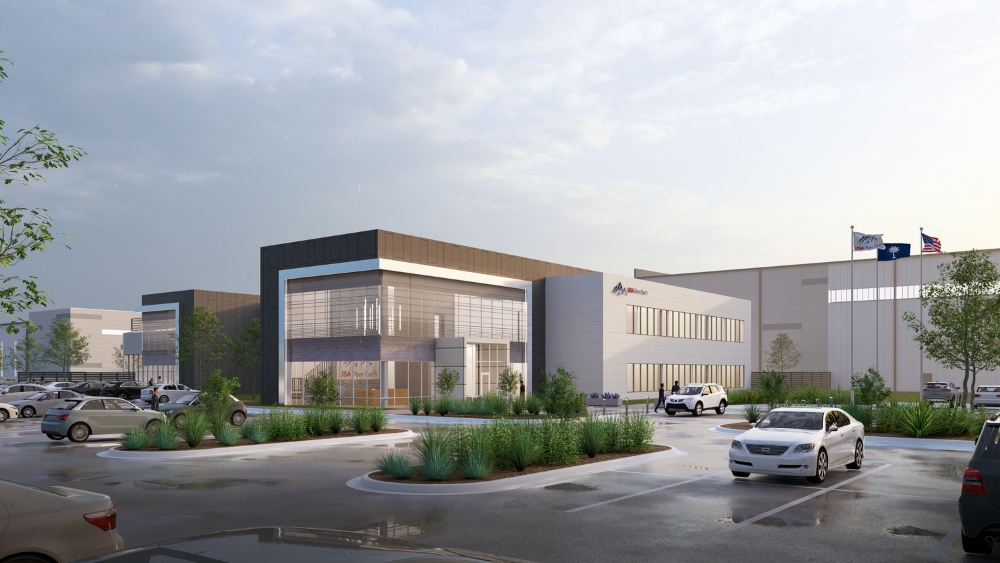
Cyclic Materials’ site in McBee, South Carolina
Photo courtesy of Cyclic Materials
Rare Earth Activity Becomes Commonplace in the Palmetto State
The progress of two rare earths projects as summer turned to fall was just the latest sign of the sector’s evolution in South Carolina.
In August, capital from a financing round brought total equity funding for Cyclic Materials’ plans to $237 million, accelerating deployment of the company’s planned $82 million rare earth recycling campus in McBee, South Carolina, and expansion of its planned hub-and-spoke infrastructure across the United States, “increasing domestic production capacity for rare earths and critical minerals used across the AI, semiconductor, robotics, defense, automotive, medical and other advanced manufacturing sectors,” the Toronto-based company said, including a new site in Mesa, Arizona.
The company plans to break ground on the integrated rare earth recycling campus in South Carolina in Q4 2026. “The additional capacity will complement the company’s Arizona magnet separation and critical mineral recycling plant, which is expected to commence operations in Q3 2026,” Cyclic Materials said.
In an email interview about the company’s projects in the two states, Cyclic Materials Chief Commercial Officer Tomasz Poznar says, “South Carolina’s established automotive industry and growing advanced manufacturing base position Cyclic near potential sources of magnet-bearing end-of-life products and manufacturing scrap, as well as manufacturers across the Southeast seeking a reliable domestic supply of recovered critical materials. In addition, McBee will offer proximity to our magnet manufacturing partner VAC’s recently opened facility in Sumter, creating an opportunity to recover rare earths from magnet production byproducts (swarf) close to where they are generated.”
VAC is Vacuumschmelze, a global manufacturer of advanced magnetic solutions, rare-earth permanent magnets and inductive components that employs nearly 4,000 people around the world. Poznar says Cyclic has a 10-year agreement to recycle VAC’s swarf, with VAC also having the option to reintegrate recycled mixed rare earth oxides from Cyclic Materials into its own production processes, enabling fully circular magnet manufacturing. “This is a tangible example,” he says, “of how regional ecosystems can strengthen the U.S. rare earth supply chain.”
The United States has designated the recovery of critical materials already in circulation a national defense and supply security priority. A Presidential Determination on July 30, 2026, identified end-of-life rare earth permanent magnets, manufacturing swarf and other critical-mineral-bearing scrap as recoverable resources essential to national security.
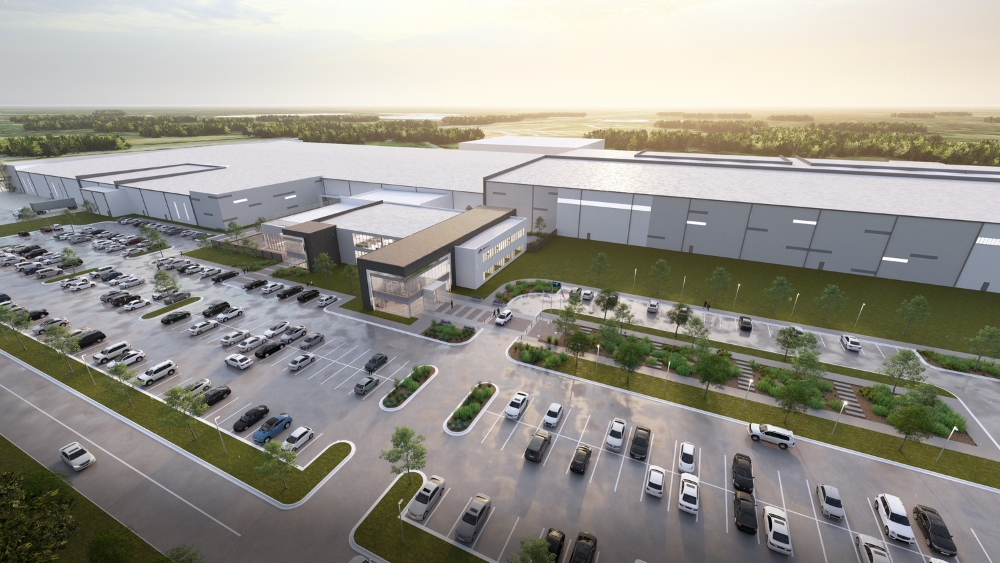
A rendering of USA Rare Earth’s planned $1.2 billion complex in Blacksburg, South Carolina.
Rendering courtesy of USA Rare Earth
In September, another major rare earth project moved forward in South Carolina as construction began on USA Rare Earth’s new $1.2 billion advanced manufacturing facility in Blacksburg, which is expected to create around 490 high-skill, high-wage manufacturing jobs and strengthen the company’s integrated mine-to-magnet value chain. The approximately 800,000-sq.-ft. facility is located on a 124-acre site in Bailey Industrial Park along the I-85 corridor in Cherokee County.
“Once online, the facility is targeting production capacity of 6,400 metric tons per annum (tpa) of sintered neodymium-iron-boron (NdFeB) permanent magnets and 5,000 tpa of strip-cast metal and alloy, with commissioning targeted to begin in 2028,” the Oklahoma-based company said.
“Breaking ground in Blacksburg is an important moment because it moves our vision from plans on paper to infrastructure taking shape,” said Barbara Humpton, CEO of USA Rare Earth.“We’re building the capabilities America needs to make critical rare earth materials and magnets at home, while making a long-term investment in the people and communities that will help us do it.”
The company said it selected Blacksburg following “a comprehensive evaluation of nearly 275 potential sites across the country. South Carolina stood out for its skilled advanced manufacturing workforce, reliable power, transportation infrastructure, proximity to customers and suppliers, and strong support from state and local partners.” The Bailey Industrial Park site had been part of Duke Energy’s Site Readiness Program.
The company said the Blacksburg facility will complement its existing magnet manufacturing operation in Stillwater, Oklahoma, where the first commercial production line was commissioned earlier this year. Together, Blacksburg and the planned expansion at Stillwater are expected to provide USA Rare Earth with 10,000 tpa of domestic NdFeB magnet manufacturing capacity. The company said it is also investing in and expanding capabilities across its broader global platform, supporting local production and economic development while connecting critical rare earth resources with advanced manufacturing markets globally.
“A secure rare earth supply chain isn’t built with a single mine or a single factory. It requires rebuilding every link,” said Gregory Bowman, chief global policy officer of USA Rare Earth. “Blacksburg adds critical manufacturing capacity to that broader platform and brings the United States closer to producing more of the materials and magnets our industries depend on outside of Chinese control. What starts with a groundbreaking here in South Carolina ultimately strengthens America’s industrial and national security.” — Adam Bruns