
How can a University of Illinois Urbana-Champaign (UIUC) student gain an adequate understanding of an international culture without physically moving through its various communities?
Traditionally, study abroad programs have been key to immersing students in international environments, acquainting them with the people and daily life of diverse global locations. UIUC Clinical Food Science Professor Toni Gist recognized that the ability to study abroad for many students is hindered by obstacles such as cost, work commitments or lack of flexibility as they move through their degree. She and UIUC College of ACES Study Abroad Director Ali Freter began discussing collaborative online international learning (COIL) opportunities.
“UIUC has a passion for making sure our students have the ability to interact with other individuals and learn from them in a collaborative way,” Gist says. “They learn cultural competence through either studying abroad, partnering with other institutions or research that builds bridges between different schools.”
The concept of leveraging video and virtual reality technologies to form educational partnerships with international institutions intrigued Gist, who has been teaching this course for over 25 years. It not only presented the opportunity for students to interact with foreign students but also to get a feel for the cultural differences that separate us.
Gist first connected with National Taiwan University Institute of Food Science and Technology Chair and Professor Yi-Chen Lo, as the international institution reflected the shared sense of global connection and supported a diverse student body. She flew to Taiwan to build a roster of videos designed for virtual reality use, recording a walk through a Taiwanese food market and food offerings delivered within worship temples. The same process was repeated at home in Champaign County, such as highlighting an array of food offered at a UIUC tailgate.
A pilot cohort launched with 10 students in the 2024-2025 semester, limited based on the availability of VR headsets, while 20 students participated from the National Taiwan University. Throughout this process, language barriers between the two institutions were eased by Zoom’s AI translation features, enabling students to form authentic relationships.
“Those groups created a food and culture handbook,” says Gist. “Oftentimes, these individuals who are at UIUC or in Taiwan want to create global connections and travel abroad in the future. Showing the similarities and then learning from the differences can help students feel comfortable participating in a culture without feeling like they’re doing something wrong.
“I have to give a huge shout-out to the College of ACES because they helped fund this project, as well as the Center for Innovation in Teaching and Learning because they allowed us into their design studio,” she added. “Each week they set aside time for us to take over their space and didn’t charge us a penny to use it because they echoed the learning goals of the project.”
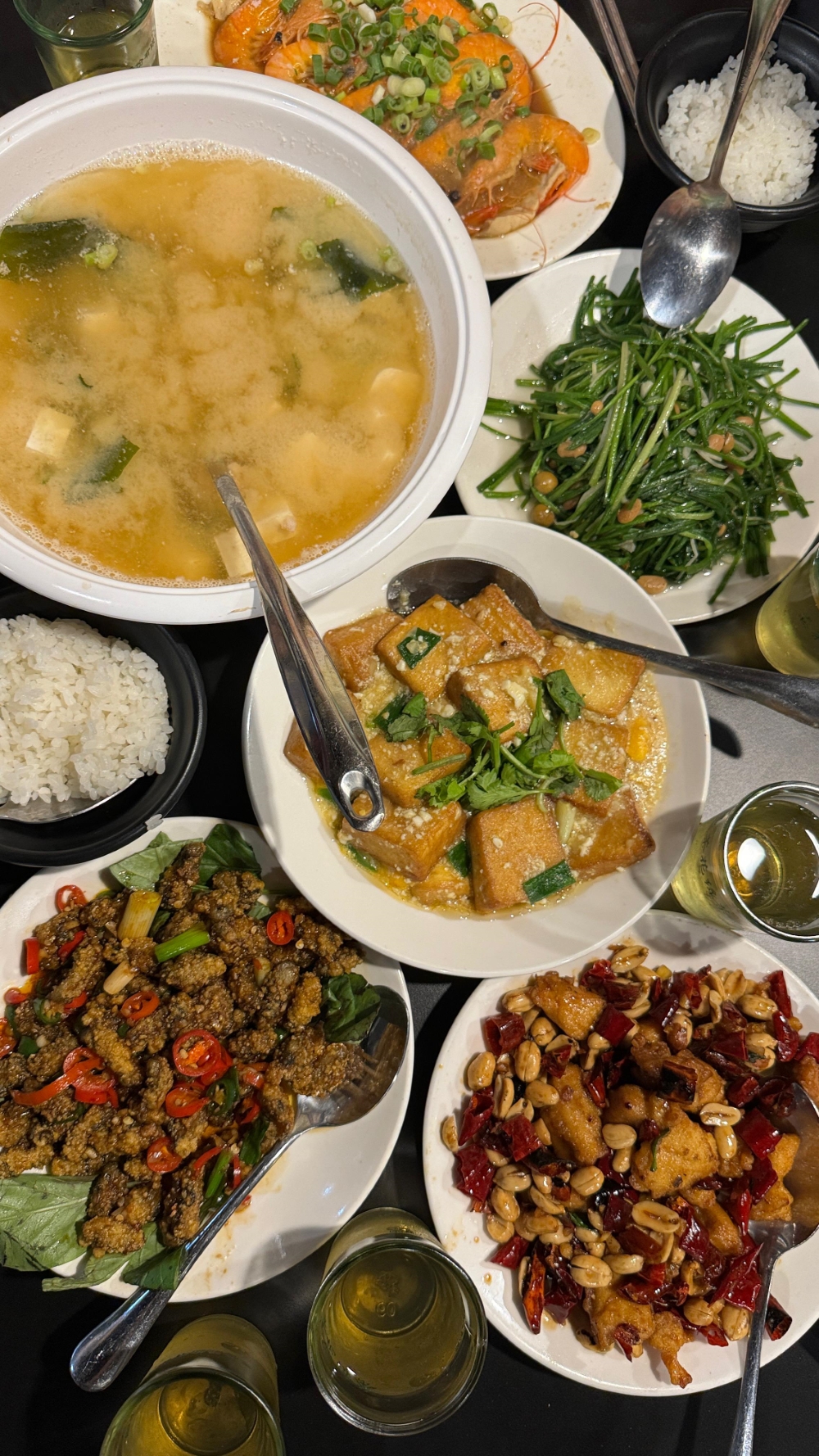
U of I and National Taiwan University students in the program observed cultural cuisine differences and how these environments shape international food practices.
Photo courtesy of University of Illinois
After the pilot cohort wrapped, Gist set out to expand the collaborative scope, turning to Universidad Veracruzana Clinical Chemistry, Biochemistry and Toxicology Professor José Antonio Palma Jacinto. The two decided to zone in on health disparities impacting Mexico, such as a rise in Type 2 diabetes. Due to a high density of impoverished areas in the country, food stability often relies on highly processed foods. The new COIL cohort focused on food science, creating informational videos highlighting how to read nutrition labels and interviewing locals about dietary patterns to serve as public service announcements.
The Mexico cohort launched in the 2025-2026 academic school year, welcoming 15 UIUC students and 30 Universidad Veracruzana students. While the Taiwan project took an observational approach to understanding food and culture, as students witnessed Mexico’s farm-to-table practices, market vendors and plantation farmers were eager to talk through processes such as making coffee or tequila. In turn, these VR 360 interactions led to a different learning opportunity.
“If there’s one message I hope readers take away, it’s that technology has the potential to make global education more accessible, more equitable and ultimately more human,” says Gist.
The prospect of sharing thousands of miles apart in a shared virtual classroom such things as cooking practices, perceptions of nutrition and how international environments shape ways in which food is gathered and prepared has been a gamechanger. Gist says she hopes to establish this educational connection across each continent in years to come, exploring new avenues to apply VR technology.
“One of the most meaningful outcomes also wasn’t something we originally planned,” she says. “As students built relationships, they began checking on one another during political unrest, natural disasters and other world events. Faculty did the same.Those moments reminded me that global learning isn’t simply about understanding another culture — it’s about genuinely caring for the people who live within it.”
Advancing AI+ Skills
Beginning in the fall 2026 semester, Southern Illinois University (SIU) will unveil its Bachelor of Science degree in Artificial Intelligence Plus (AI+). The public university will be the first in the state to offer the pathway, while representing one of the few universities in the nation to hold the bachelor’s degree.
“Artificial intelligence technology is advancing rapidly,” said SIU College of Engineering, Computing, Technology and Mathematics Dean Xiaoqing Liu. “Many students are expressing that they want to learn this technology in a systematic way. This program will fill an educational need in Illinois, particularly Southern Illinois.”
SIU pursued an all-hands-on-deck approach over the past three years to craft this program, encompassing the School of Computing and other partnering programs on campus. It will add to SIU’s current computing curriculum with an added emphasis on AI and machine learning. The AI+ degree program aims to teach students how to apply AI technologies within a selected 12-hour credit minor such as advertising, business analytics, computer science, construction management, geographic information systems, information technologies, marketing, mathematics or sustainability.
“This is unique because not only will students take AI classes, but they also need to think about how to apply this technology to the public domain,” noted Liu.
The degree will be available to all SIU students, regardless of whether they’re enrolled in the SIU College of Engineering, Computing, Technology and Mathematics. In years to come, SIU plans to expand the program to include more minors for application, create an online version and introduce an AI+ minor, certification and graduate degree.
One anticipated impact would be increasing a student’s opportunity to land an internship or full-time employment within leading industries such as IT & communications, aerospace & defense and construction.
University of Illinois Clinical Food Science Professor Toni Gist
Clear Career Pathways
Phi Theta Kappa recently released its 2026 Transfer Honor Roll, which highlights institutions that demonstrate exceptional success in creating pathways for community college students seeking a bachelor’s degree. The list was a combination of 275 four-year colleges and universities around the nation, 25 of which are located in Illinois.
Illinois State University (ISU) was among those on the Honor Roll. The recognition builds upon a partnership the university formed with Heartland Community College earlier this year, as the duo look to ease the transition special education and engineering students encounter as they prepare to shift into Illinois State.
In the upcoming fall 2026 semester, the institutions will launch new articulation agreements that aim to simplify a student’s transfer process, reduce coursework redundancy and create a structured transfer route. The first program introduced under these agreements is the Paraprofessional Unlocking License in Special Education (PULSE) program. Heartland students with a minimum of two years of classroom experience qualify for the program, which is designed to take them through earning a bachelor’s degree, a Professional Educator’s License with a Learning Behavioral Specialist 1 endorsement. ISU offers the PULSE program online, enabling students to earn paraprofessional experience while earning a degree.
Two more agreements center on moving Heartland students directly into the final two years of the university’s Engineering and Mechanical Engineering bachelor’s degree programs. Students moving through these programs build skills that can apply to automotive, aerospace, energy systems and advanced manufacturing industries. One added feature of the initiative includes a dual-enrollment opportunity for Mechanical Engineering students in their final semester at Heartland, offering designated Illinois State courses prior to transferring.
“Strong partnerships between community colleges and universities are essential to meeting workforce needs and expanding opportunity for students,” said ISU Vice President for Academic Affairs and Provost Dr. Ani Yazedjian. “These agreements create clear, affordable pathways for learners to advance their education while staying connected to our region. Together with Heartland, we are preparing the educators who support every learner and the engineers who will design what comes next.”