
Workforce, healthcare and infrastructure initiatives create a “virtuous cycle” in the Mountain State.
What has West Virginia been doing to promote itself for business the past few years? The better question is “What has the Mountain State not been doing?” An exclusive Q&A with West Virginia Governor Patrick Morrisey highlights the inroads the state is making in developing its workforce and healthcare systems while also winning high-ticket projects.
Site Selection: What is West Virginia doing to promote site readiness and deepen business infrastructure in the state?
Patrick Morrisey: For the first time, West Virginia is investing heavily in site selection and remediation. Our philosophy to succeed in economic development is to win the fundamentals. Good site selection and remediation, water and sewer, affordable energy, broadband access, safe bridges and good roads, and ready-made workers in high-demand fields will help our state improve in the economic ranks.
We are making strategic investments to ensure our infrastructure keeps pace with economic growth. Through H.B. 2014, 5% of all tax revenue generated from certified high-impact data centers is dedicated to water infrastructure improvements, while another 5% is directed toward electrical infrastructure upgrades.
In addition, H.B. 5381 requires the Office of Energy to develop a comprehensive statewide energy plan that identifies future transmission needs, evaluates existing infrastructure and provides policymakers with a clear picture of the state’s energy readiness. The legislation also includes the Comprehensive Grid Stabilization and Energy Security Act, which focuses on protecting critical infrastructure, including the electric grid, communications systems, water treatment facilities and other essential assets.
Together, these efforts help ensure West Virginia has the infrastructure capacity necessary to support long-term economic growth and major private-sector investments.
West Virginia has recently announced several initiatives, including $200 million to fund rural healthcare expansions and the WorkFIRST Taskforce. How do you think these investments will pay off for West Virginia, both in terms of economic and workforce development, but also in improving the lives of residents?
Morrisey: These initiatives are fundamentally about helping more West Virginians achieve self-sufficiency and fully participate in our economy.
The Rural Health Transformation Program is designed to improve health outcomes, reduce barriers to care and address some of the underlying health challenges that contribute to West Virginia having the lowest workforce participation rate in the nation. If more people are healthy enough to work, pursue training and support their families, that benefits both the individual and the broader economy.
Similarly, the WorkFIRST Task Force is focused on identifying ways to connect more West Virginians with employment opportunities and pathways to success.
Together, these initiatives create a virtuous cycle. As health outcomes improve, more people can enter or reenter the workforce. As workforce participation grows, economic activity increases, family incomes rise and communities become stronger. That growth generates additional resources that can be reinvested into health care, education, infrastructure and other priorities that improve quality of life across the state.
Your state is quickly becoming a leader in big data center projects. Some states are starting to shy away from data centers. What are you doing to grow this sector while balancing market demand and public concerns about data center buildout?
Morrisey: At the heart of West Virginia’s success is a simple principle: We want to be the most business-friendly state in America while ensuring growth is done responsibly.
H.B. 2014 created a framework that gives large data centers greater flexibility in meeting their energy needs, streamlines permitting and siting processes, and establishes a one-stop concierge service to help companies navigate workforce, infrastructure and regulatory requirements.
At the same time, we have carefully studied both the successes and challenges experienced in other states. We are working to replicate what has worked while avoiding pitfalls that have created concerns elsewhere. That is one reason we retained Glenn Davis, Virginia’s former Director of Energy, to help guide our strategy.
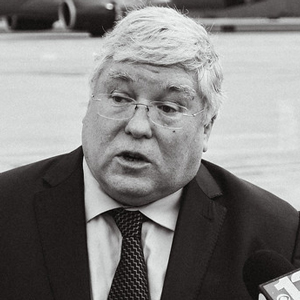
“West Virginia is open for business, and there has never been a better time to invest in energy development in our state.”
— West Virginia Governor Patrick Morrisey
West Virginia also requires applicants seeking High Impact Data Center Certification to disclose information about nearby schools, residences, churches, businesses, historical sites and unique environmental or geological considerations. We believe economic growth and responsible stewardship can go hand in hand, and our approach reflects that balance.
Walk me through an example or two of a company locating or expanding in the state last year that involved your participation in site selection decision-making.
Morrisey: I push our economic development team to focus heavily on on-site readiness because the feedback we receive from business leaders is clear: Having a shovel-ready site is often more important than many of the incentives a state can offer. By focusing on the fundamentals — water, sewer, affordable energy, site remediation and broadband — we eliminate barriers to entry and make it easier for companies to say “yes” to investing in West Virginia.
While site selection involves many moving parts, I make it a priority to stay informed about companies considering West Virginia. I want to understand their goals, their needs and any obstacles standing in the way of investment.
When a project decision is on the line, it’s important to become deeply involved. I want investors to know that the entire West Virginia state government is committed to helping them succeed. Many CEOs are surprised when a Governor calls them directly while they are still evaluating sites, but I believe that personal engagement matters.
Our recently announced deal with Sandvik and Alpha Metallurgical Resources is a good example. The companies formed a joint venture to build a $25 million manufacturing facility in Putnam County that will create 120 new jobs. As the companies evaluated their options, my economic development team handled the initial discussions and worked to highlight West Virginia’s advantages. Once the decision narrowed, we reached out to company leadership to make the case for West Virginia. We discussed our skilled workforce, our manufacturing capabilities, our deep roots in the mining industry and our commitment to being responsive and easy to work with.
The feedback we consistently receive is that companies appreciate West Virginia’s direct and responsive approach. They know they have partners at every level of government who are focused on helping projects move forward and succeed.
The Wolf Summit Energy project broke ground this year, adding to the state’s push to be the “Battery of the Nation.” Do you have anything to say to energy companies looking at West Virginia for their next potential site?
Morrisey: West Virginia is open for business, and there has never been a better time to invest in energy development in our state.
Our “50 by 50” energy plan sets an ambitious goal of increasing West Virginia’s generation capacity from approximately 16 gigawatts today to 50 gigawatts by 2050. Few states are positioned to meet America’s growing energy demand the way West Virginia can.
We are a top producer of both coal and natural gas, giving us the resources necessary to support reliable baseload generation. We have also taken major steps to embrace emerging technologies, including the recent repeal of West Virginia’s prohibition on nuclear power development.
West Virginia is already a net exporter of electricity within PJM, the nation’s largest regional transmission organization. As demand from manufacturing, data centers, artificial intelligence and advanced industries continues to grow, we are uniquely positioned to provide the affordable, reliable energy those industries require.
Simply put, if you are looking for a place where supply meets demand, West Virginia should be at the top of your list.
What is the state doing to promote workforce development, attraction and retention?
Morrisey: Workforce development is one of our administration’s top priorities because economic growth ultimately depends on having talented people ready to fill the jobs being created.
West Virginia is expanding workforce training and upskilling opportunities through initiatives such as the Recharge Act and recently enacted micro-credentialing programs that help people quickly gain skills aligned with employer needs. We are also modernizing workforce policies through licensing reciprocity reforms that make it easier for skilled professionals to move to West Virginia and get to work.
At the same time, innovative policies such as portable benefit accounts give independent contractors and nontraditional workers greater flexibility and control over their benefits.
Our goal is simple: Create more pathways into good-paying careers, attract talented workers to West Virginia and give employers confidence they can find the workforce they need to grow and succeed here.
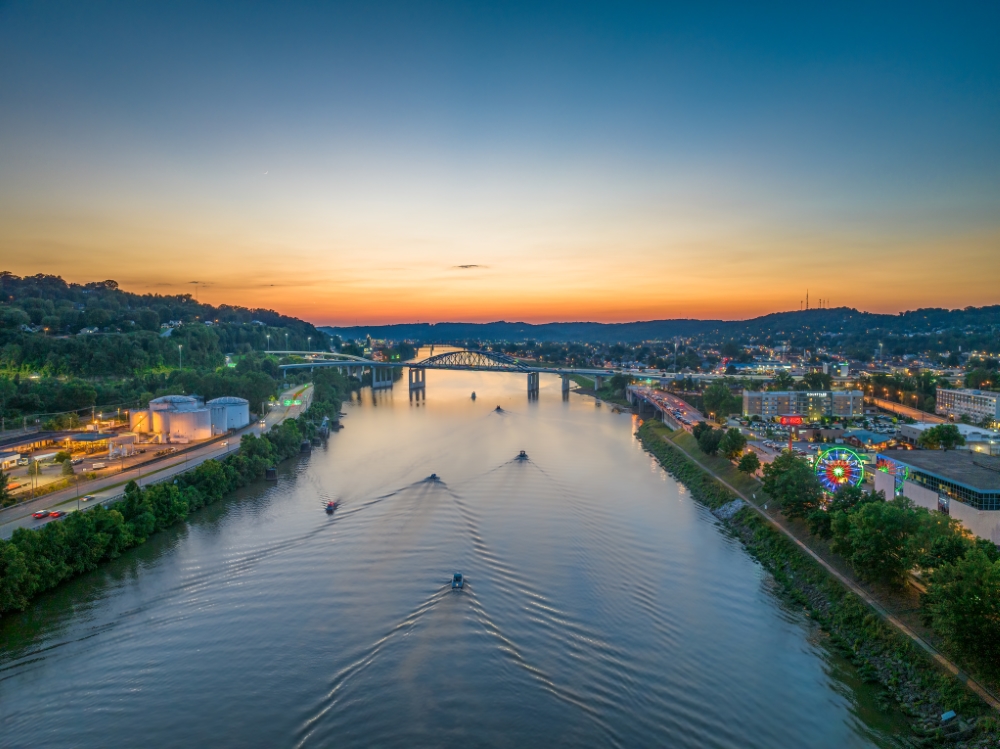
The West Virginia capital of Charleston (pictured) has received 1,400 applications alone since its addition to the WV Ascend program in September 2025.
Photo credit: Getty Images/UA-Visions
What’s Working for West Virginia’s Remote Workers?
Five years ago, Ascend West Virginia started in the Mountain State with the clear-eyed vision of adding remote workers to its population and workforce. The idea was hatched and implemented by West Virginia native, former Intuit Executive Chairman, cofounder of the Wing 2 Wing Foundation and current Marshall University President Brad D. Smith who, with his wife Alys, made the idea a reality.
“Ascend WV was built on a simple belief: When talented people have the freedom to live anywhere, communities that invest in quality of life, connection and opportunity can compete on a national stage,” says Smith. “West Virginia offers something increasingly rare — world-class outdoor access, strong communities and the chance to build a meaningful life at a different pace. Through Ascend, we’re not just welcoming new residents; we’re helping shape the future of the state by attracting people who want to contribute, innovate and put down roots here.”
Ascend WV emphasizes the vast and beautiful natural landscape of the state and its affordability to those wanting to relocate. Program participants are provided a free outdoor recreation package and coworking space after they relocate to the Mountain State. They are also paid $12,000 to move there.
Emily Huguenin, director of talent attraction & retention at Ascend WV/First Ascent, explains that remote workers often have the freedom and flexibility to prioritize quality of life rather than proximity to the workplace when considering where to live.
Since launch, Ascend WV has welcomed 1,412 residents from 48 states (with Virginia, Maryland, Pennsylvania, Florida and North Carolina topping the list) and seven foreign countries (Canada, Chile, Colombia, Germany, Mexico, UAE and the United Kingdom) and has an average retention rate of 96.1%. Ascend WV has received a total of over 87,800 applications since 2021.
All Ascend WV relocation sites are evaluated through a Community Readiness Process which involves scoring in different areas: Essential Assets (broadband, housing availability), Livability (schools, health care, groceries), Economic Factors, Community Vibrancy (local restaurants, shopping, music, art) and Outdoor Assets (proximity to trails, climbing, rivers, skiing). Local community buy-in and funding must also be secured before a town is added to Ascend WV.
Participants can choose between six West Virginia communities that have joined the program over the years: Morgantown (April 2021), Eastern Panhandle (June 2022), Greenbrier Valley (September 2022), Greater Elkins (November 2022), New River George (June 2023) and Charleston (September 2025).
When the capital city of Charleston was added to the program, its popularity was indisputable. Huguenin notes that the program received over 1,400 applications for Charleston alone and approved dozens of incoming Ascend members who requested to transfer from their original chosen community to the Charleston Area.
“We anticipate the first 50 people accepted to this region will complete the move by the end of this summer,” she says about Charleston, adding that all six featured Ascend WV communities offer a good balance of town size, outdoor assets and community factors. “One exciting expansion that layers on our current programming is the recent announcement of Ascend Heroes, which welcomes military veterans to relocate to West Virginia. We are eager to serve those who served us through relocation benefits, wraparound supports and community-minded programming.”
— Kelly Barraza