Building an educated and skilled Texan workforce is a bold undertaking.
What’s bringing workers to Austin? Houston? The state’s runaway tech, energy and life sciences sectors have been big attractors to business-friendly Texas, which has much lower business operating costs compared to other states in the country and benefits from the lure of no corporate or personal income tax.
According to Chairman Joe Esparza, who leads the Texas Workforce Commission (TWC) that serves over 660,000 Texas employers and 3.5 million small businesses, the state is known to draw back workers over and over again, earning a “sticky state” designation that keeps people and jobs in the area.
“The Texas Workforce Commission is not only serving the workforce as we need it now, but also by working with our industry partners, we can see what the industry and the economy is going to need years into the future,” says Esparza. “All of our programs are aligned to create opportunities that help people capitalize on what we’re seeing as far as prosperity for new jobs coming to Texas.”
A Robust Workforce Tool Kit
The TWC has several grants and financial incentives for employers to train local workers to meet employment needs. One such example is the Skills Development Fund (SDF), which offers grants of up to $500,000 to community and technical colleges, workforce boards and Texas A&M Extension Services (a statewide educational agency) to partner with businesses who want to train new workers or upskill existing ones.
SDF grants trained more than 16,000 Texans over the last two years, addressing high-demand occupations in AI, advanced manufacturing and healthcare. Esparza notes that this wealth of workers and set of successful workforce grant programs is a big flex to industry, signaling to businesses that Texas has a robust tool kit for employers looking to grow.
There is also the Skills for Small Businesses Program, which provides grant funding and training for businesses with fewer than 100 employees, and TIRA (the Texas Industry-Recognized Apprenticeship program, administered by the TWC), which is the state’s answer to the federal Registered Apprenticeship Program. TIRA reimburses state employers offering full-time paid work to apprenticing workers as they learn a new job or skillset.
The “Bigger. Better. Texas.” Statewide Economic Development Strategic Plan developed under Governor Greg Abbott and the Texas Workforce Investment Council has given the TWC and similar entities a push in building out its workforce development programs and ensuring they are aligned with education, economy and businesses.
“We are naturally blessed with energy and refinery,” Esparza says about in-demand fields the state and companies are targeting for workforce development. “We’ve moved into being the [state] leading in health care and research and various other targeted industries. We’re also being looked at as the destination for advanced manufacturing, specifically in aerospace, with Blue Origin, SpaceX and Firefly Aerospace just literally right down the road from us right here.”
Notably, in September 2025, Gov. Abbott announced a Texas Semiconductor Innovation Fund grant of $250 million to Samsung Austin Semiconductor, LLC, which has an over $4 billion semiconductor fabrication facility in the Austin suburb of Taylor, a state-of-the-art project exemplifying the local advanced manufacturing industry.
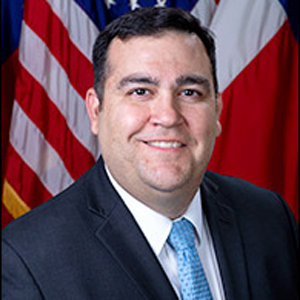
“All of our programs are aligned to create opportunities that help people capitalize on what we’re seeing as far as prosperity for new jobs coming to Texas.”
— Joe Esparza, Chairman and Commissioner Representing Employers, Texas Workforce Commission
A Higher Calling for Texas Grads
Schooling and professional development go hand-in-hand in the Lonestar State, with rising students breaking records when it comes to pursuing higher education. In fall 2025, Texas saw 1.6 million students enrolling in undergraduate, graduate and professional programs, the highest amount ever, according to the Texas Higher Education Coordinating Board (THECB).
According to THECB Commissioner Dr. Wynn Rosser, Texas is strengthening higher education by aligning policy, funding and data around measurable outcomes, particularly completion and workforce results. “At the THECB, this work is grounded in Building a Talent Strong Texas, which sets clear statewide goals for credential attainment tied to workforce needs,” says Rosser. “The focus is not just on getting students into college, but on helping them complete programs that lead to meaningful employment.”
The Building a Talent Strong Texas is the state’s 10-year strategic plan for higher education, which focuses on getting students to earn valuable credentials as well as attaining degrees and certificates at higher rates, keeping student debt low and strengthening the state’s R&D infrastructure.
In terms of state policy shaping education, Texas House Bill 8 was passed by the Texas Legislature in 2023, which means starting in the 2027-2028 school year, the state will replace annual standardized testing for public school students from third to 12th grade with smaller, year-round tests.
HB 8 also redesigned how community college funding works in the state, with funding more closely tied to student outcomes such as completion, transfer and earnings.
AI and new technologies are also seeing integration in the classroom, and Texas is helping fund the development of AI curricula through its Texas Reskilling and Upskilling through Education (TRUE) grants, administered by THECB. TRUE grants prioritize credentials for new, high-demand occupations. Recently, TRUE grants funded AI integration into curricula at Texas State Technical College, which has 11 campuses across the state, and the development of new short-term AI and cybersecurity programs at Alamo Colleges and San Jacinto College.
Other higher education institutions leveraging AI in their instruction include immersive and virtual learning systems at Lee College in Baytown (HVAC training), North Texas Community College Consortium (welding, electrical work and health care training), Collin College (robotics, advanced manufacturing and Industry 4.0 student readiness), Texas A&M Engineering Extension Service (emergency response and public safety training) and Lone Star College (health care and patient care training).
Other areas of study seeing the strongest growth in the state are applied and technical fields, including construction trades and precision production (showing strong demand in skilled trades and infrastructure-related industries) and computer and information sciences as digital fluency continues to be an essential skillset. Engineering, biological and biomedical sciences, and transportation-related programs are also seeing steady increases.
Dallas Doubles Down on Workforce
Though part of the state’s largest metro population, the city of Dallas ranks third in Texas behind Houston and San Antonio and ninth in the United States overall. The northern Texas city, despite having all the quality of life markers of a large metropolitan — a sprawling parks and trails system, delectable restaurant scene, the largest contiguous urban arts district in the United States (Dallas Arts District) and high-quality public and private schools — still has a relatively low cost of living (slightly below the national average).
In 2023, the Dallas metro area had a GDP of around $744.7 billion and accounts for about 3% of total U.S. metropolitan GDP. With a labor pool of over 4 million that has almost 40% of workers holding a bachelor’s degree or higher, companies in the Dallas area have multiple paths for filling open vacancies and hiring support.
“Employers in Dallas have a variety of options when seeking workforce assistance,” says City of Dallas Office of Economic Development Director Kevin Spath about the city’s offerings to companies looking to recruit, hire, train and upskill their workers. “Workforce Solutions of Greater Dallas can help with recruitment and hiring events and offers qualified individuals training. Working in partnership with Workforce Solutions of Greater Dallas, and through funding offered by the State of Texas Skills Development Fund, Dallas College can specialize curriculum for training or upskilling of new or incumbent workers at no cost to the employer. Additionally, Dallas College and our school districts are focused on equipping current students with the workforce skills that employers are looking for and can adjust curriculum to reflect employers’ needs.”
The city has a diverse economy with no single industry making up more than 15% of the Dallas economy, Spath explains. Top occupational fields in Dallas County include IT and telecom, advanced and semiconductor manufacturing, health care, public safety, hospitality, business administration, construction, industrial production and transportation and logistics. Since 2020, the Dallas-Fort Worth area has added about 700,000 new jobs, driving population growth in the region as well.
“Dallas is business-friendly, with no personal or corporate income taxes and centrally located, with great access to the rest of the United States,” says Spath, also adding the city “often requires workforce partnerships as part of our economic development incentive agreements.”
Dallas and Richardson Independent School Districts (Dallas ISD), Dallas College, Paul Quinn College and UNT-Dallas have all developed such workforce partnerships with employers, establishing programs that benefit all parties involved and include internships and other first-hand learning experiences. Overall, nearly 134,000 pupils make up the Dallas ISD student body across early education establishments and elementary, middle and high schools.
— Kelly Barraza